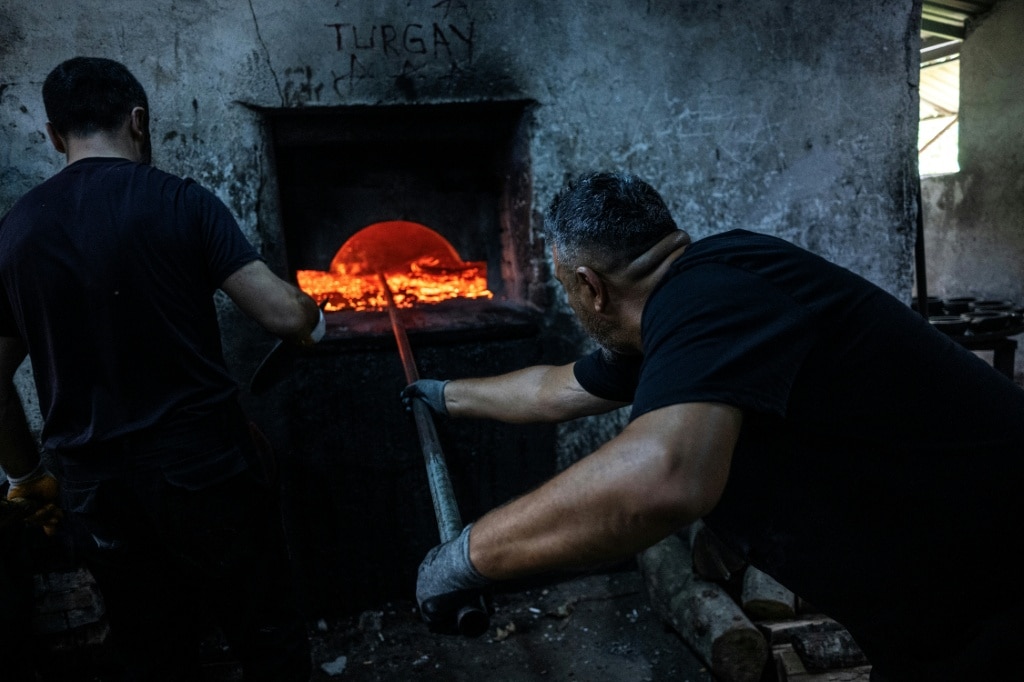
Beneath the vaulted ceilings of a sun-dappled Istanbul workshop, the steady, rhythmic clang of hammers striking red-hot bronze fills the air. Three skilled craftsmen stand side by side, their calloused hands striking uniform, precise blows that slowly transform unrefined metal discs into one of music’s most iconic percussion pieces: the handcrafted Istanbul cymbal. What began as a tool of war on the battlefields of the Ottoman Empire has evolved over four centuries into a cornerstone of global music, beloved by jazz drummers around the world for their one-of-a-kind, rich tones.
The story of modern Istanbul cymbals begins in the early 17th century, when cymbals already held a firm place in Ottoman culture. Military mehter marching bands relied on the loud, resonant clash of early cymbals to intimidate enemy forces and rally Ottoman troops during the empire’s expansion across the Mediterranean and Near East. It was not until 1623, however, that an Armenian alchemist named Avedis Zildjian revolutionized the craft through a proprietary metal alloy and heat treatment process that solved the biggest flaw of early cymbals: brittleness.
Ethnomusicologist Audrey Wozniak, a leading scholar of Turkish musical traditions, notes that Zildjian’s innovation was no small feat. “It’s really hard to make good cymbals because they’re consistently being crashed, so to make something that wasn’t brittle which could withstand continuous use is quite an achievement,” she explains. Impressed by the quality of Zildjian’s creation, the Ottoman sultan granted him permission to open his first workshop in Istanbul, launching a dynasty of cymbal making that survives to this day. The closely guarded secret of Zildjian’s process was passed down through generations of the family, and even after the original Zildjian operation relocated to the United States in the final years of the Ottoman Empire, local craftsmen who trained with Zildjian’s masters kept the ancient tradition alive in Istanbul.
Today, Istanbul remains the global epicenter of high-end handcrafted cymbals, with a handful of independent brands continuing to produce instruments using the same core techniques developed more than 400 years ago. At Bosphorus Cymbals, located on Istanbul’s northern outskirts, every step of the production process follows traditional methods, relying on coal and wood for heat rather than modern electric or gas power. The entire process to cast and finish a single cymbal can take up to a full week, with every stage holding equal importance.
The journey from raw metal to finished instrument starts with casting. Master craftsmen mix copper, tin, and a closely guarded third secret ingredient that alters the metal’s consistency and final sound quality. The alloy is melted into molten bronze, poured into molds, and cooled to form rough disc-shaped blanks. Next, blanks are cycled through a glowing furnace and rolling mill up to 15 times, with each pass compressing and stretching the metal before it is tempered in cold water. “We use copper and tin and one more ingredient which is secret. Even though it’s in very small quantities, it gives the cymbal a different character in terms of consistency and sound,” explains 56-year-old Hasan Seker, a master cymbalsmith and co-founder of Bosphorus Cymbals who has worked in the trade since he was 12 years old.
After shaping the central raised bell and cutting the cymbal to its final size, the most critical step begins: hand hammering. “Not a single blow is random,” Seker says, as the workshop’s three craftsmen land expert, targeted strikes that create the dark, complex tone that is the hallmark of Istanbul cymbals. Unlike mass-produced instruments, each hammer blow leaves a subtle unique mark on the metal’s surface, and the craftsman’s emotional state shapes the final sound. “When someone is hammering, he might hit softly, then something comes to mind, he gets angry and hit harder. Those variations in the metal’s surface, the reservations, the tension patterns diversify the sound. In a way, he gives the cymbal its soul,” Seker adds. Today, musicians from across the globe travel to the Istanbul workshop on a sort of pilgrimage to select their own custom cymbals, with the workshop’s walls lined with vintage posters of legendary jazz drummers who have become loyal devotees of the craft.
At Nardis Jazz Club, a cozy, dimly lit venue tucked in the shadow of Istanbul’s iconic Galata Tower, drummer Derin Bayhan says he will never play any cymbals outside of those handmade in Istanbul. “Even if you bought two from the same series, the same weight and structure, the two cymbals wouldn’t perfectly match. Because it’s handmade, it’s basically an adventure,” Bayhan says. “So you search for one and when you find it, no-one else will have it: that sound is yours.”
Jazz historian Berk Ozler explains that the enduring global popularity of Istanbul cymbals, even after the Zildjian family launched mass production in the United States, comes down to this pursuit of uniqueness among jazz musicians. “Mass production started when Zildjian went to the USA whereas the ones that stayed in Istanbul were handcrafted and still are. Jazz musicians chase after that uniqueness so that’s why they are very valuable,” Ozler notes. For centuries, the craft of Istanbul cymbal making has evolved from a weapon of war to the beating heart of global jazz, and with each strike of the hammer, a new one-of-a-kind piece of musical history is born.