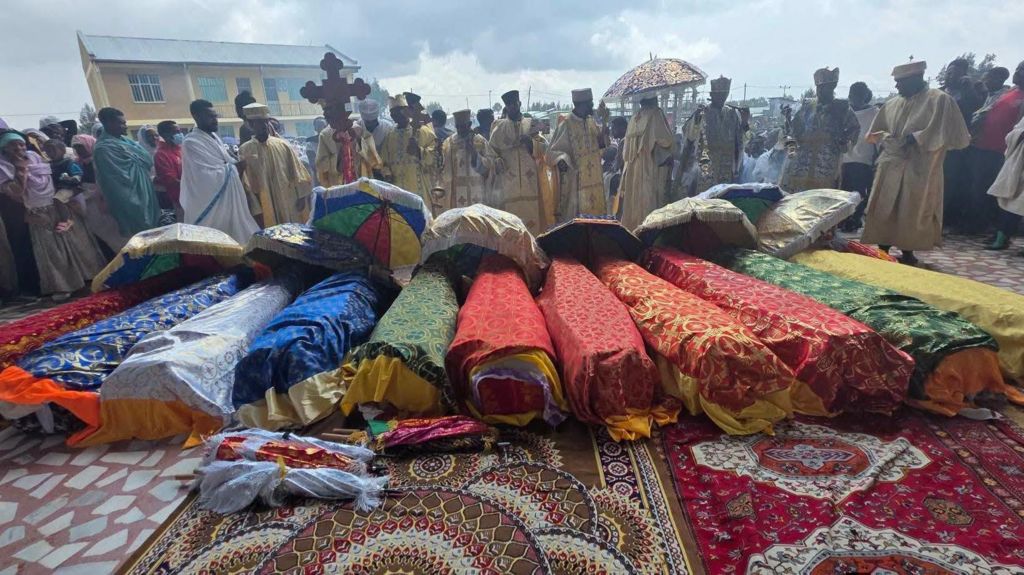
A deadly landslide that struck an ancient Orthodox Christian monastery in Ethiopia’s northern Amhara region has claimed 14 lives, leaving communities in mourning after authorities called off search operations for people still trapped beneath collapsed hillside debris. The disaster unfolded in the early hours of Monday morning, when a saturated slope above the Tsadqane Debre Mitmaq St Mary Monastery gave way following a full night of unrelenting heavy rain, according to senior local administrator Dagnachew Azbite.
The monastery’s sacred prayer chamber, carved directly into the side of the mountain, had become a gathering place for worshippers taking part in an overnight prayer retreat centered on a popular holy water cleansing ritual. The ritual draws Orthodox Christian pilgrims from across the region seeking spiritual healing for chronic health conditions, making the gathering a meaningful spiritual event for those in attendance. In addition to the 14 fatalities, seven people were pulled alive from the debris with injuries, five of whom were categorized as serious, Azbite confirmed.
As of this week, 11 of the deceased have been laid to rest in ceremonies held at the monastery itself, while the remains of the remaining three victims have been transported back to their home communities for private funerals. Megabe Hadis Neka Tibeb Ababu, general manager of the local North Shewa Diocese, told reporters that identifying a number of the victims remains a significant challenge for authorities and church leaders. The head of the diocese, Archbishop Abune Klementos of the Ethiopian Orthodox Church, traveled to the disaster site to lead funeral prayers for the deceased, offer blessings for the injured, and extend condolences to families who lost loved ones in the tragedy.
In the immediate aftermath of the collapse, a multi-agency response effort brought together emergency search teams, local security personnel, medical workers, and scores of volunteer residents from nearby communities to comb through the debris for survivors. That effort has now been formally wrapped up, with no further searches planned for those still unaccounted for.
Landslides are a recurring, deadly hazard across Ethiopia during the country’s annual main rainy season, which runs from June through August each year. This recent disaster marks one of multiple weather-related mass casualty events to strike the East African nation in recent years. In March of this year, more than 100 people were killed in floods and landslides set off by heavy rainfall in southern Ethiopia’s Gamo Zone. Just last year, in July 2024, a massive landslide in the adjacent Geze Gofa Zone killed more than 229 people, including active rescue personnel responding to an initial weather event, making it one of the deadliest climate-related disasters in the country’s recent history.
Climate researchers have documented a clear long-term trend across East Africa over the past 20 years: both extreme, prolonged wet spells and extended dry periods are becoming more common across the region. Scientific consensus repeatedly confirms that anthropogenic climate change is increasing the frequency and intensity of severe weather events, including the long, heavy downpours that create the saturated soil conditions that lead to deadly landslides across hilly regions of Ethiopia.