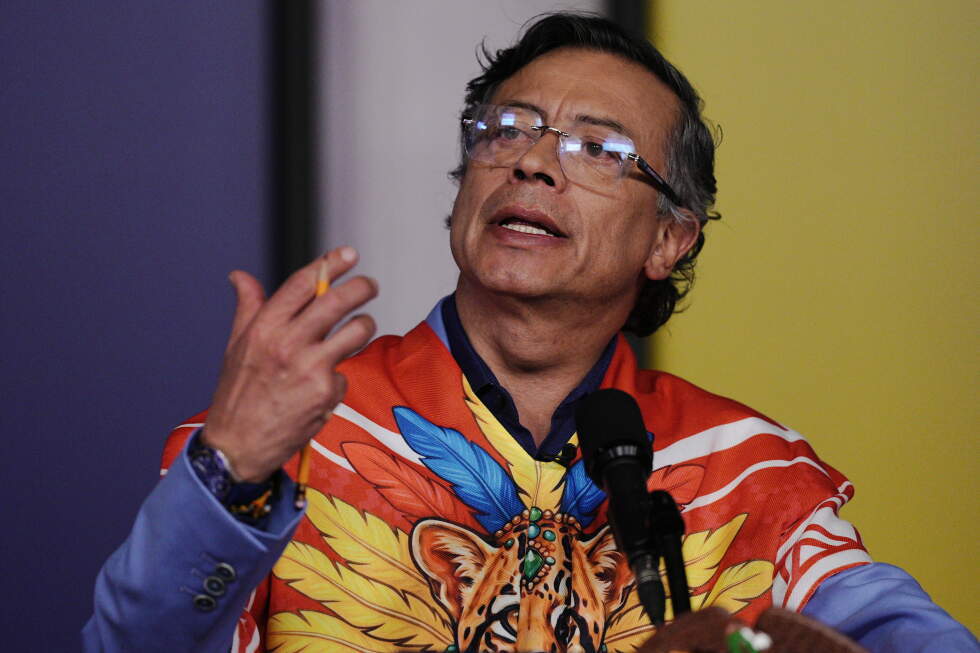
BOGOTA, COLOMBIA – As Colombia prepares to swear in its newly elected conservative head of state this week, outgoing President Gustavo Petro has doubled down on unproven allegations of widespread electoral fraud in the country’s June presidential vote, where his party’s candidate lost by a narrow margin to conservative Abelardo de la Espriella.
During a 60-minute address to reporters on Monday, Petro laid out his claims that programmers manipulated data from thousands of vote tally sheets after preliminary results were transmitted to the headquarters of Colombia’s National Registrar, the government body tasked with overseeing the country’s electoral processes.
These fraud accusations have already been thoroughly rejected by both international election monitoring missions and Colombia’s independent electoral authorities. In late June, officials formally certified de la Espriella’s victory, confirming he defeated Petro’s close ally Ivan Cepeda by roughly 250,000 votes. The president-elect is set to begin his four-year term this Friday, when he will be inaugurated during a joint session of Colombia’s Congress.
Petro, a lifelong opponent of Colombia’s traditional political establishment who has never accepted the June election results, went further in Monday’s remarks, accusing electoral bodies of running an “obscure” process manipulated by foreign actors. He also claimed officials failed to release key metadata for scanned tally sheets published on a public portal that allows voters to verify results at every individual polling station.
“We are facing a profound institutional problem,” Petro told the assembled press. “And it’s the inauguration of an illegitimate president.”
Under current Colombian law, Petro has no legal pathway to block de la Espriella’s inauguration, as the conservative candidate’s victory has already been formally validated by electoral courts. However, political analysts warn that Petro’s repeated fraud claims could erode public trust in the incoming administration among a segment of Colombian voters and deepen already severe political divides across the country.
Cepeda, Petro’s defeated candidate, has already announced plans to hold a series of nationwide protests against the new president. He has stated he will not recognize de la Espriella’s authority until the incoming leader meets a set of demands, including renouncing his dual United States citizenship.
Earlier on Monday, Petro, a former member of a Colombian rebel group, also called on rural communities across the country to form local committees he labeled “liberation guards,” which he said would resist actions by military units he claims are aligned with local criminal mafia networks.
Andres Macias, a political science professor at Bogota’s Externado University, warned that Petro’s rhetoric could have dangerous consequences for conflict-affected regions of Colombia, where tensions already run high between state military forces, drug trafficking organizations and leftover rebel factions. Macias said the outgoing president’s comments could effectively “justify the use of weapons by civilians” in these already volatile areas.
Petro also shared concerns about his own future after leaving office, when he will transition to leading the country’s main opposition bloc and continue pressing his fraud claims. He stated he fears he could be forced out of Colombia once he steps down.
“I’ve been told to behave well,” Petro said. “But as a democrat I cannot accept this electoral fraud.”