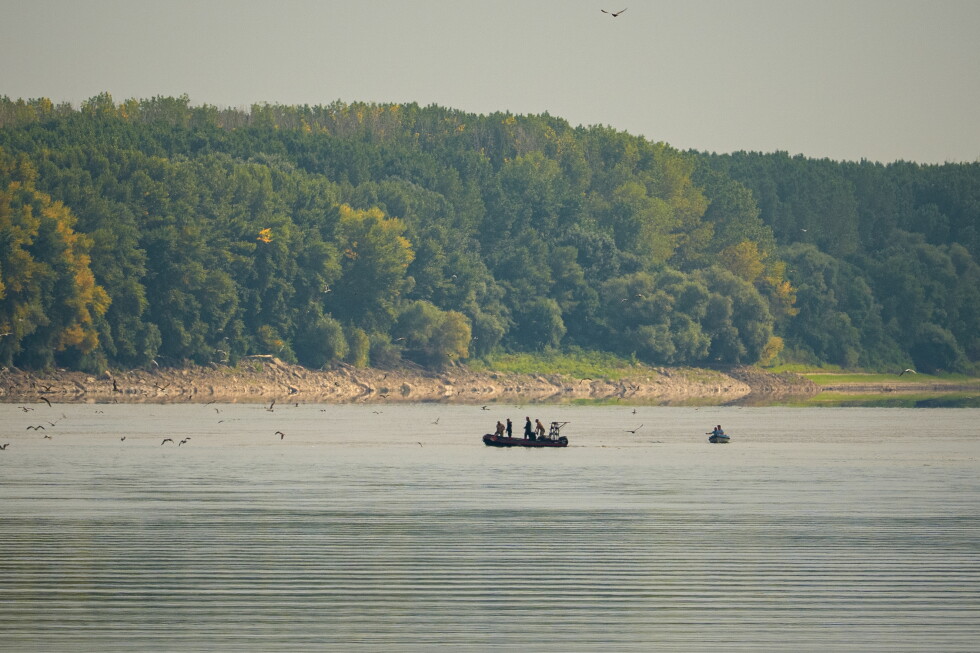
A devastating combination of prolonged drought and repeated extreme heat waves has pushed the Danube River, one of Europe’s most critical water and energy infrastructure arteries, to historically low water levels, triggering a regional energy crisis that has forced governments across Central and Eastern Europe to implement urgent power conservation measures.
On Monday, water levels at the Danube running through Hungary’s capital Budapest dropped to approximately 10 centimeters (4 inches), a reading far below the previous all-time low of 33 centimeters (13 inches) recorded in 2018. With no substantial rainfall forecast in the coming days or weeks, and a new blistering heat wave bringing daytime temperatures above 38 degrees Celsius (100 degrees Fahrenheit) driving sharp increases in both electricity and water demand, hydrological conditions are not expected to improve any time soon.
The most pressing crisis is unfolding at Hungary’s Paks Nuclear Power Plant, the nation’s single largest source of electricity, which relies on Danube water to cool its four Soviet-built reactors. Now in its 44th year of operation, the facility is teetering on the edge of a total shutdown for the first time in its history. By Monday, successive reactor power reductions had cut output from the plant’s typical 2,000 megawatts to just 240 megawatts.
In a Facebook video posted Monday, Hungarian Prime Minister Péter Magyar announced that engineering teams had successfully kept the plant’s last operating turbine running temporarily, staving off a full shutdown that was projected over the weekend. Magyar noted that a complete power down is still likely to occur as early as Tuesday or Wednesday, but called the temporary reprieve good news, especially amid peak summer energy demand.
Located roughly 90 kilometers (55 miles) south of Budapest, Paks supplies nearly half of Hungary’s total electricity generation and meets around a third of domestic consumption. To offset the massive output gap created by the plant’s reduced operations, Hungary has turned to regional electricity imports and scaled up utilization of renewable energy sources.
Last week, the Hungarian government called on large industrial energy users to cut consumption and asked households to voluntarily reduce power use during peak demand hours between 5 p.m. and 10 p.m. Starting Monday, the government banned electric freight trains from operating during peak hours, a measure expected to save between 70 and 90 megawatt-hours of electricity daily. What began as voluntary conservation became mandatory for large industrial and commercial users after the government issued an official decree Saturday. Magyar reported that the collective effort cut national electricity use by 700 megawatts on Sunday, and thanked Hungarian residents for their cooperation.
The crisis extends far beyond Hungary’s borders, with neighboring Serbia and Romania also grappling with crippling low water levels that have disrupted energy production, shipping, and agricultural activity.
In Romania, the Danube’s water flow has dropped to 1,500 cubic meters per second, less than a third of the average July flow. To redirect water into the Danube’s main channel and secure cooling supplies for the state-owned Cernavoda Nuclear Power Plant, the Romanian military used 180 kilograms (397 pounds) of explosives to clear rock formations near the lower Danube’s Bala Canal on Monday. Authorities have already shut down one reactor unit at Cernavoda, cutting the plant’s total output to half its normal capacity, and warn the second reactor could also be taken offline if water levels do not rise. Romania declared a nationwide energy sector state of alert Friday, and Acting Prime Minister Ilie Bolojan has appealed to citizens to voluntarily cut electricity use during evening peak hours.
In Serbia, record low Danube levels have forced the country’s primary hydroelectric power plant to operate at just 20% of its normal capacity. Prime Minister Djuro Macut convened an emergency energy crisis meeting in Belgrade on Monday, and urged residents to minimize use of high-power household appliances, particularly air conditioning. Over the weekend, Macut described the unfolding situation as “serious and demanding.”
Associated Press correspondents Jovana Gec in Belgrade, Serbia, and Stephen McGrath in Leamington Spa, England contributed reporting to this article.