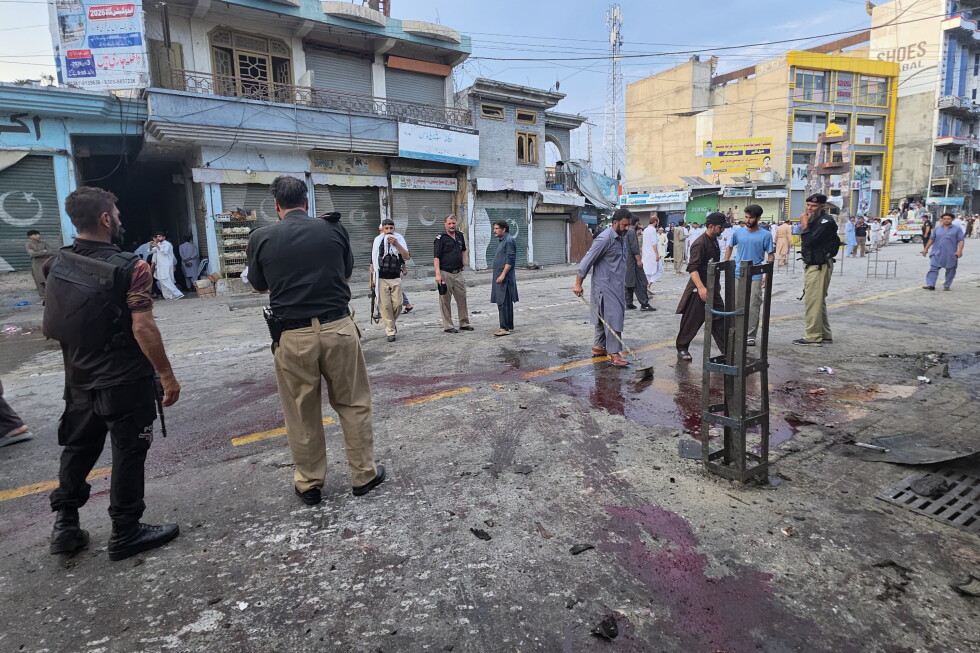
On a Sunday in northwestern Pakistan, a devastating suicide bombing targeted a crowd of demonstrators gathering to speak out against violent extremism, leaving at least 14 people dead and more than 20 others injured, according to senior local officials. Among the fatalities were at least five on-duty police officers, who had been deployed near the site of the protest.
The attack unfolded in Kabal, a small town located within Swat Valley, Khyber Pakhtunkhwa province. Eyewitness and official accounts confirm that the crowd had assembled within close proximity of a local police station, unified in chants condemning militant activity and calling for an end to regional violence. District police chief Omar Khan detailed that the bomber struck the gathered protesters mid-demonstration, turning a peaceful call for peace into a scene of tragedy.
Bilal Faizi, spokesperson for the Khyber Pakhtunkhwa provincial emergency response service, confirmed that the attacker specifically targeted the group of demonstrators engaged in anti-militant protest. Pakistan’s Interior Minister Mohsin Naqvi quickly issued a formal statement condemning the violent attack, extending heartfelt condolences to the families of those who lost loved ones, and offering official prayers for the rapid recovery of those wounded in the blast.
The Swat Valley carries deep historical context for Pakistan’s fight against domestic militancy: the region was once a primary stronghold for Islamic militants, who enforced a harsh, extreme interpretation of Sharia law across the area until the Pakistani military launched a large-scale counterinsurgency operation in 2007. That operation successfully pushed militant forces out of the valley and reestablished formal government control over the territory.
As of the immediate aftermath of the bombing, no organized militant group has stepped forward to claim responsibility for the attack. But counterterrorism analysts and local officials widely expect suspicion to fall on Tehrik-e-Taliban Pakistan (TTP), the Pakistani Taliban. The TTP operates as an independent group distinct from Afghanistan’s ruling Taliban, but maintains close ideological and operational alliances with the Kabul-based government. Since the Afghan Taliban returned to national power in 2021, many TTP leaders and fighters have relocated to safe havens across the border in Afghanistan, according to Pakistani security officials.
Pakistan’s government has repeatedly levied formal accusations against Afghanistan’s Taliban administration, claiming it harbors TTP militants and allows the group to plan cross-border attacks from Afghan territory. The Taliban government in Kabul has consistently denied these allegations. In recent years, Pakistan has seen a marked uptick in militant attacks across the country, with police personnel and other security forces consistently the most common targets.