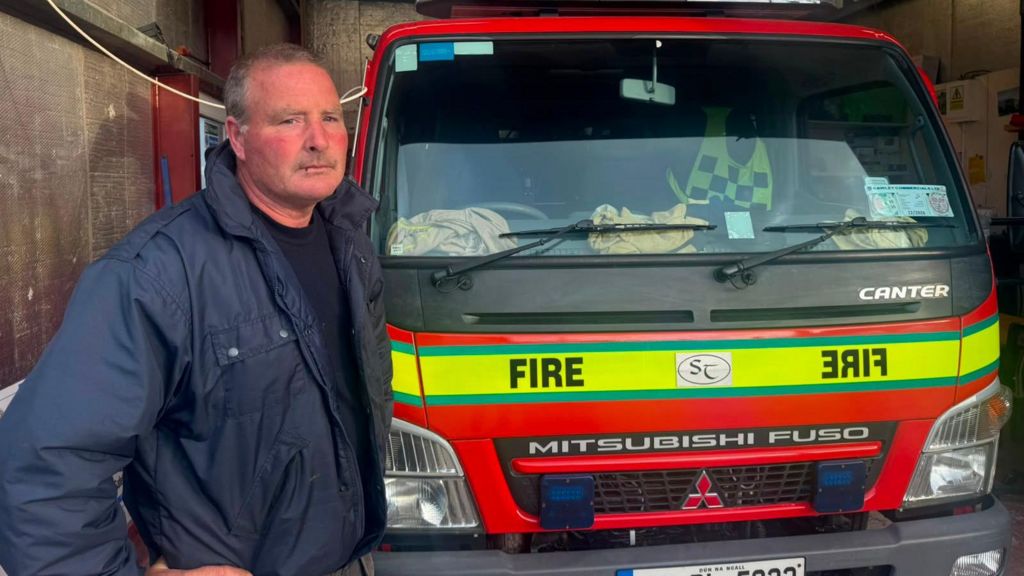
Off Ireland’s northwest coast, the remote inhabited island of Arranmore is facing a growing conflict over emergency services, as locals push back against Donegal County Council’s plan to phase out the island’s last retained paid firefighters and transition to an all-volunteer fire brigade once the current personnel retire.
For decades, Arranmore’s fire service has operated under a hybrid model: two full-time paid retained firefighters backed by a team of local volunteers. But that structure is set to change, with the council moving to an entirely volunteer-led service to fill upcoming vacancies created by retirement. For island residents, the shift raises urgent questions about the reliability of emergency response during a high-risk season for wildfires.
Longtime local firefighter Finbar Gallagher, one of the most vocal critics of the plan, explained that the island’s unique geography and seasonal population swings make an all-volunteer force unworkable. Arranmore is particularly prone to fast-spreading gorse fires during the warm summer months, when the island’s permanent population of roughly 500 swells to as many as 900 people as tourists descend on its Atlantic coastlines. Gallagher noted that many current volunteers already split their time across multiple critical emergency services, serving on both the RNLI lifeboat crew and local ambulance service in addition to fire brigade duties.
“The days of relying solely on volunteers for an essential service like fire response are gone,” Gallagher told BBC Radio Foyle. “Every community on the mainland has access to retained paid firefighters, and there’s no logical reason why Arranmore should be different. The additional cost to the council is negligible, especially when weighed against the risk to human life.”
Residents have already launched a formal petition demanding the council reverse its decision and commit to hiring six full-time retained firefighters for the island. Siobhan Cox, a member of the community committee organizing the petition, said locals are united in their deep concern over the proposed changes. She pointed to a recent gorse fire that was extinguished in just 10 minutes by the existing on-island crew – a response time that would be impossible if the island had to wait for reinforcements from the mainland.
Cox explained that rough Atlantic seas regularly suspend ferry services to Arranmore, meaning mainland fire crews could face delays of up to an hour or be unable to reach the island at all during an emergency. That window, she said, is more than enough for a small gorse fire to spread to residential areas and cause catastrophic damage. Beyond emergency response, Cox added that creating new paid positions would also support long-term efforts to attract young people to move to the island, boosting its declining permanent population. She also noted that the Aran Islands, another inhabited Irish island group, currently receive funding for 12 retained firefighter positions, making the council’s refusal to approve six posts for Arranmore even more confusing.
For its part, Donegal County Council has defended its plan, arguing that current volunteer recruitment efforts meet and exceed the requirements laid out in national government policy for fire services on inhabited offshore islands. The council noted that five new local residents have already expressed interest in joining the volunteer brigade to fill the gaps left by upcoming and recent retirements. It added that the island’s fire equipment has essentially the same functional capability as that used by mainland retained brigades, with only minor differences in water capacity and ladder size.
But community leaders remain unconvinced, accusing the council of ignoring their concerns and attempting to sweep the issue under the rug. As the peak summer wildfire season gets underway, the fight over Arranmore’s fire service highlights the ongoing challenges facing remote island communities in Ireland, as local authorities balance budget constraints with the need for reliable, accessible emergency services for year-round and seasonal residents alike.