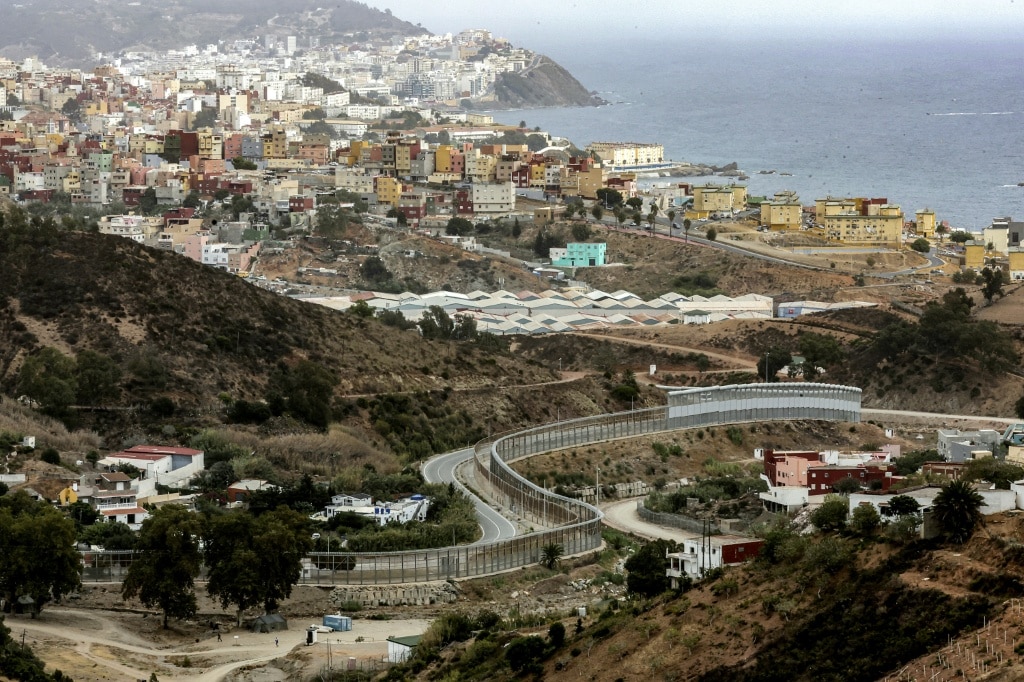
A major new influx of irregular migrants into Spain’s North African exclave Ceuta from neighboring Morocco has sparked a diplomatic row between European nations, prompted a military security deployment, and escalated domestic political tensions in Madrid this week.
Hundreds of migrants have crossed into the territory over recent days, with most completing the journey by swimming around the fortified sea-border fence that separates Ceuta from Morocco. By Thursday, recovery teams had recovered the bodies of nine migrants who drowned during the dangerous crossing, according to Spanish government sources speaking to Agence France-Presse.
In response to the crisis, Madrid announced Thursday it would deploy military personnel to reinforce local security forces. The Spanish Interior Ministry confirmed armed forces will back up the Civil Guard to maintain public order in the densely populated exclave, which covers just 18.5 square kilometers. While the exact number of deploying troops was not released, officials confirmed Civil Guard numbers will nearly double from the current 80 officers, with additional diving teams and coastguard vessels also being dispatched to the area.
Local Ceuta leader Juan Vivas confirmed that roughly 1,500 migrants have arrived in the enclave over the past three days, warning that local reception facilities have reached maximum capacity. “There is no more room for anyone,” Vivas told Spanish broadcasters Wednesday. Despite the overstretched infrastructure, on-the-ground AFP reporting Thursday evening found hundreds more migrants, including children, gathered on the Moroccan side of the border near the town of Fnideq, waiting for an opportunity to cross. Many migrants told reporters they had heard rumors the border had been opened, prompting their journey to Ceuta.
Witnesses in Ceuta reported mobs of newly arrived migrants walking through local streets, greeting police and celebrating their arrival after leaving Morocco. Local law enforcement has largely taken a restrained approach, guiding arrivals to the overcrowded local reception center rather than turning them away. Local residents expressed sympathy for the vulnerable arrivals, with one young Ceuta resident telling AFP: “It really breaks my heart to see so many people suffering, and who knows how many have actually drowned along the way. When they arrive, they’re faced with the harsh reality that they have nothing and that people treat them as if they were nobody.”
The crisis has spilled over into international diplomacy, after Italian Foreign Minister Antonio Tajani called Thursday for Spain to be temporarily suspended from the Schengen Area, the 29-nation European open-border agreement that eliminates routine internal border checks. Writing on social media platform X, Tajani argued that “Irregular and uncontrolled immigration poses a danger to national security,” adding that the Spanish government’s prior decision to grant citizenship to more than 500,000 undocumented migrants was “profoundly wrong” and encouraged transnational human trafficking networks.
The call drew an immediate angry rebuke from Madrid, which summoned the Italian ambassador to deliver a formal protest. Spanish Foreign Minister Jose Luis Albares accused Tajani of weaponizing the humanitarian crisis for domestic political gain, saying the comments were “improper” for a friendly European partner. “We expect European solidarity, not partisan demagoguery,” Albares said.
Domestically, Prime Minister Pedro Sanchez has faced intense pressure from right-wing opposition parties over the government’s handling of the surge. Opposition Popular Party leader Alberto Nunez Feijoo called the situation a national security crisis, saying the government cannot abandon its security duties. Far-right Vox party leader Santiago Abascal directly blamed Sanchez for the influx of migrants.
Sanchez responded via X, saying his administration was “focussed on providing an immediate response to the crisis in Ceuta”, adding that “We are mobilising all necessary resources, working with Moroccan and international authorities, and preparing the necessary measures to restore normality as soon as possible.” A statement from Ceuta’s regional government confirmed Sanchez spoke with Vivas to receive a first-hand briefing on the severity of the situation, while Interior Minister Fernando Grande-Marlaska will travel to Ceuta Friday to personally oversee the government’s response.
Irregular migration across the Morocco-Spain border, which includes Europe’s only two land borders with Africa at Ceuta and the nearby exclave Melilla, has long been a thorny politically sensitive issue between Madrid and Rabat, with large surges of arrivals occurring periodically.