A seismic rift has opened at the highest level of global football after all 55 member associations of European football’s governing body UEFA voted unanimously to boycott every FIFA competition if FIFA proceeds with its controversial proposal to sell minority stakes in its top tournaments, including the men’s and women’s World Cup, to private investors. The historic decision was reached during a virtual emergency meeting chaired by UEFA president Aleksander Ceferin, held to address the plan FIFA unveiled earlier this week to the shock of the global football community.
FIFA’s proposal would establish a new commercial subsidiary called FIFA Forward Enterprise (FFE), which would hold ownership of FIFA’s flagship competitions. The governing body has opened the door for third-party private investors to acquire minority, non-controlling stakes in FFE, a plan that requires a formal approval vote from FIFA’s 211 global member associations. To secure backing for the initiative, FIFA president Gianni Infantino has offered a $40 million payout to every member association that votes in favor of the plan, with an initial $20 million available to supporters who confirm their backing by the September 19 deadline. If approved, the investor group is set to be led by Thrive Eternal, an American venture capital firm founded by Joshua Kushner, brother of Jared Kushner, former US President Donald Trump’s son-in-law.
UEFA has emerged as the most vocal opponent of the plan, and Thursday’s vote cemented the unified opposition of every European national federation. In a hard-hitting statement released after the meeting, UEFA stressed that the World Cup is far more than a commercial asset, calling it one of the greatest sporting legacies in global football, built over generations by players, national teams and fans across every continent. “The World Cup cannot be treated as an investment product. No part of it should ever be surrendered to private investors. The World Cup is not for sale,” the statement read.
The organization doubled down on its criticism of FIFA’s process, condemning the plan as having been developed in complete secrecy without any meaningful consultation with global football stakeholders, calling the lack of input “irresponsible and indefensible.” The statement went further, framing the move as a fundamental failure of global football leadership: “This is not merely a profound failure of leadership, but an abdication of FIFA’s duty as the custodian of world football. National associations around the world are now presented with an ultimatum: accept the irreversible capture of football’s greatest competitions or bear the consequences. This is not a ‘democratic decision’, but governance by intimidation – an act of coercion unworthy of an institution entrusted with the stewardship of the global game.”
Major European federations have already lined up to back the unified stance. England’s Football Association confirmed it stands “shoulder to shoulder” with European colleagues, adding “We oppose Fifa’s plans – the Fifa World Cup belongs to football and always will.” The Scottish Football Association echoed the criticism, highlighting deep concerns over the lack of full consultation and disregard for good governance in how the proposal has been rolled out with a tight binding deadline.
Under the boycott terms, all UEFA member nations will withdraw from all FIFA-run competitions if the proposal passes, with the first potential test of this commitment coming as early as October, during the scheduled Women’s World Cup play-offs. Other upcoming FIFA tournaments include the Women’s Under-20 World Cup kicking off in Poland on September 5, well before the September 19 vote deadline for the proposal.
Industry analysts and football insiders warn this confrontation represents one of the most existential challenges to global football’s governing structure in modern history, drawing comparisons to the 2021 failed European Super League breakaway as a threat to the core identity of the sport. Simon Stone, BBC Sport’s chief football reporter, notes that private investment in FIFA competitions would almost certainly lead to frequent expansion of tournament size and frequency, putting massive pressure on global football calendars that would trickle down through every level of the domestic game in every football-playing nation.
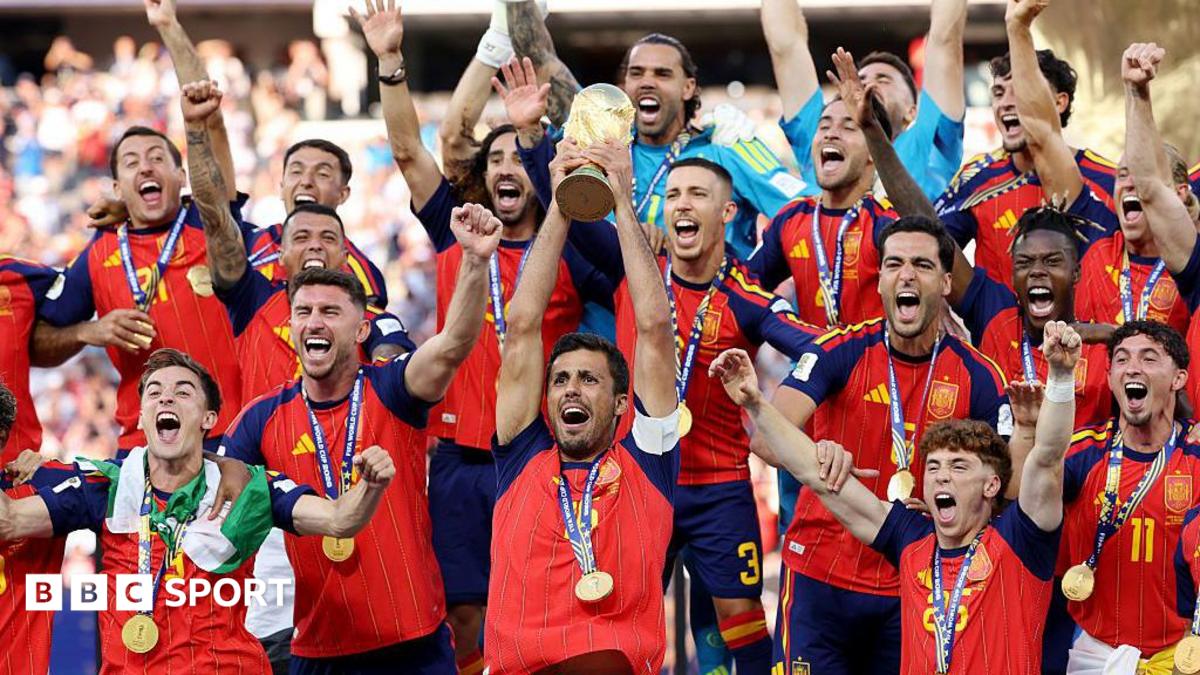
While UEFA only represents 25 percent of FIFA’s total global membership, its member associations include the majority of the world’s most successful and commercially valuable national teams. Data from recent World Cups underscores UEFA’s outsize influence: at this summer’s men’s World Cup, six of the eight quarter-finalists were European sides, including eventual champion Spain. The 2022 and 2018 men’s World Cups saw five and six European quarter-finalists respectively, and European nations have won 13 of the 23 men’s World Cups held to date. The pattern holds across other FIFA competitions: three of the four semi-finalists at the last Women’s World Cup were European, and three of four semi-finalists at the 2025 Club World Cup also came from European confederations.
Football insiders say a World Cup held without participation from top European sides would be commercially unviable, as it would lack the star power and fan appeal needed to generate the revenue FIFA requires to fund the $40 million payouts it has promised to voting supporters. For now, the global football world waits for the September vote, with the future of the sport’s most iconic tournament hanging in the balance.