Fourteen years after his name became a global sporting headline for upsetting swimming icon Michael Phelps to claim Olympic gold, South African swimmer Chad le Clos has etched his name deeper into the history books, becoming the most decorated athlete in the entire history of the Commonwealth Games.
The 34-year-old swimmer reached the unprecedented milestone of 21 Commonwealth Games medals at the 2026 Glasgow Games this week, breaking the previous record held by Australian swimming great Emma McKeon. His historic bronze in the men’s 4x100m medley relay on Wednesday capped a run of three medals at the Games: it followed an earlier bronze in the 4x100m freestyle relay that earned him his 19th career Commonwealth medal, and a silver in the mixed 4x100m medley relay. As he celebrated the 19th medal, an emotional Chad called the moment a landmark for both himself and his family, expressing deep gratitude for the journey that brought him to that point.
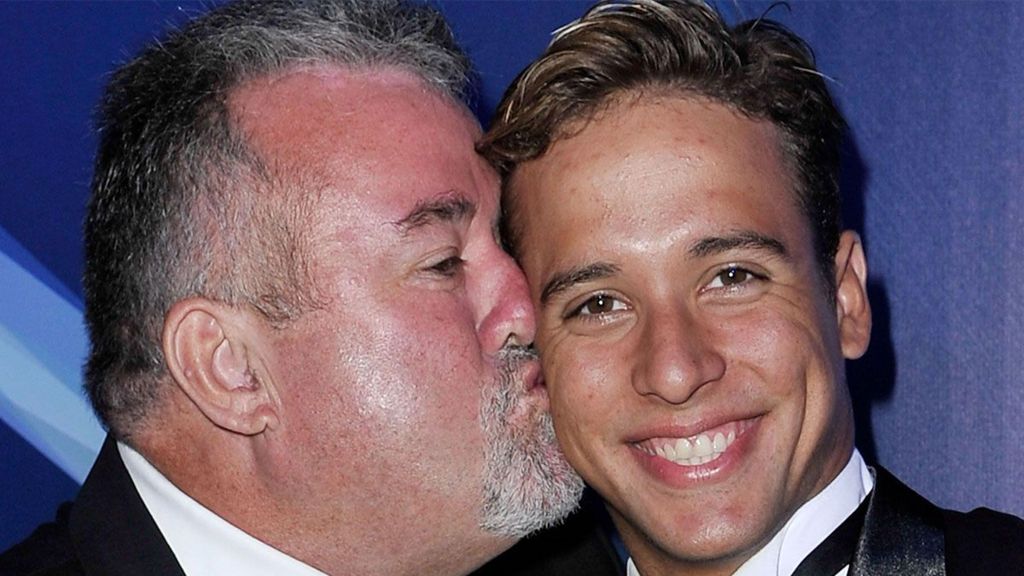
For anyone who knows Chad’s story, that journey has always been intertwined with his father, Bert le Clos, who became a household name in his own right after his unbridled, viral post-gold interview with the BBC’s Clare Balding immediately after Chad’s stunning 2012 London Olympic win. That electrifying reaction, where Bert exclaimed the moment felt like “dying and going to heaven”, turned him into an overnight celebrity, a status Chad has often joked means his father is more famous than he is.
In a new wide-ranging interview with BBC Scotland from Glasgow, 69-year-old Bert opened up about the decades of behind-the-scenes growth, struggle and joy that led to this latest historic milestone, revealing how Chad not only built a legendary athletic career, but completely transformed Bert’s own life.
The elder le Clos, born in Mauritius one of 10 children and raised in Durban, South Africa from age six, recalled how a 12-year-old Chad changed his path forever when he asked his father to give up smoking as his Christmas gift, instead of requesting a toy or present. Bert has not touched a cigarette since that day. He also overhauled other harmful habits: at the time he weighed 140kg and drank daily, but he cut out alcohol and dropped 41kg, a change he says saved his life. “I would probably be dead now if I had continued the way I was. That’s a good lesson for other parents,” Bert said.
Bert, a serial entrepreneur who has built careers in butcheries and horse racing bookmaking, also shared the gentle parenting philosophy that he credits for allowing Chad to thrive still in the pool at 34, long after many of his peers have retired. When Chad first joined a local swimming club at age eight, Bert intentionally delayed pushing him into a gruelling six-day, 4:45 a.m. training routine, pushing back against the common trend of forcing young children into elite-level training too early. “A lot of parents and coaches they push the kids too hard too soon. Why would you want your 11 or 12-year-old doing as much mileage as an Olympic champion? That’s why Chad is still swimming at 34,” he explained. Bert added that he never forced Chad into swimming, letting the sport choose his son, who also played provincial-level football and rugby growing up. No matter how Chad performed in any race, Bert always celebrated him with a “man of the match ice cream”, focusing on encouragement over pressure.
That patience paid off even after an early setback: when 13-year-old Chad finished second-last and third-last in his first international competition finals in Sheffield, Bert worried his son would never make it as an elite swimmer – but his coach insisted Chad had real potential, and just three years later, Chad was named junior swimmer of the year at the junior Commonwealth Games, racing the same competitors.
Chad made his senior Commonwealth Games debut in Delhi 2010 at age 18, immediately claiming five medals, and two years later he delivered the upset that shook the global swimming world: at the 2012 London Olympics, he beat Phelps – who had not lost the 200m butterfly since 2001 and was already a 14-time Olympic gold medallist – by just 0.05 seconds to take gold. The moment left a stunned Chad staring at the scoreboard in disbelief, and a euphoric Bert celebrating wildly in the stands.
The path to this week’s historic milestone has not been without hardship: in the lead-up to the 2016 Rio Olympics, both Bert and his wife Geraldine, Chad’s mother, received cancer diagnoses. Despite the immense stress, Chad still won two silver medals in Rio, becoming the most decorated South African Olympian in history. Later, ahead of the Covid-delayed Tokyo Olympics, Chad struggled with a severe spiral in his mental health, a challenge Bert said the family faced together with love and resilience. Today, after competing at the 2024 Paris Olympics, 34-year-old Chad has his sights set on qualifying for a fifth Olympic Games in Los Angeles in 2028.
Off the pool deck, Chad has built a legacy beyond competition: he launched his own foundation focused on water safety education and life-saving swimming skills for vulnerable communities. For the le Clos family, the Commonwealth Games have always held a special place, dating back to Chad’s 2010 debut. Bert recalled the 2014 Glasgow Games as one of the family’s brightest highlights, when Chad won seven medals to equal Ian Thorpe’s record for the most medals in a single Games. When the 2026 Games lost their original Australian host to cost overruns, Glasgow stepped in to host for a second time, and Bert said even with a scaled-back format, the quality of competition remains world-class.
Reflecting on his son’s 18 years of elite competition, 21 Commonwealth medals and a list of records that stretches from the Olympics to the world stage, Bert called the entire journey simply unbelievable. “How lucky am I? Do you think as a father I could imagine that this little rabbit could get all these accolades? Absolutely not. It has been beautiful. What a journey,” he said.