As a global leader in advanced technology manufacturing, South Korea has built its international reputation on cutting-edge innovation in smartphones and semiconductor production. But behind this widely celebrated tech success story lies a devastating underbelly: a growing epidemic of digital sexual violence against women, with AI-generated deepfake pornography emerging as the newest and fastest-spreading threat. Today, a team of dedicated women digital investigators are on the front lines of this fight, working tirelessly to remove illegal non-consensual content from the internet and support survivors of this abuse.
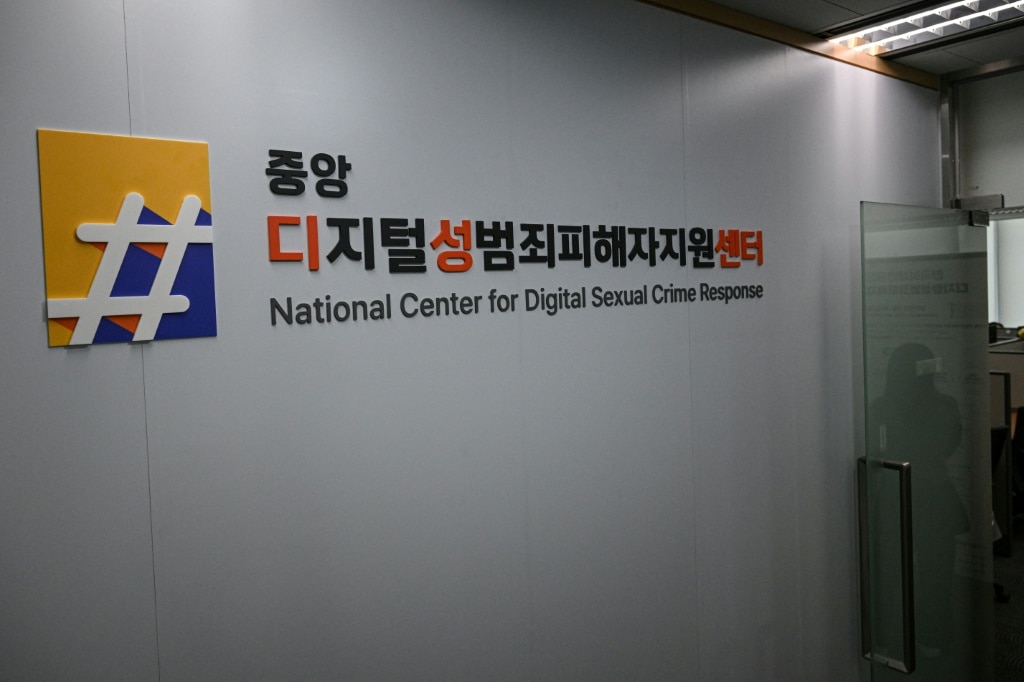
Based in a sunlit Seoul office, the National Center for Digital Sexual Crime Response employs 23 trained specialists who scour the web to identify exploitative deepfake content, spycam footage, and non-consensually shared intimate imagery, then file formal removal requests backed by the threat of legal prosecution. Founded in 2018 in response to mass anti-spycam protests that drew tens of thousands of women demanding government action, the center expanded to 17 regional branches, offering additional support including legal guidance, emotional counseling, and evidence collection for criminal prosecutions.
In 2023 alone, the organization removed more than 318,000 pieces of illegal exploitative content on behalf of 10,600 survivors, 75% of whom are women and girls. Center director Kim Mi-soon told AFP that South Korea’s faster policy response compared to other nations stems from two key factors: digital sex crimes became widespread earlier here, and South Korean women mobilized quickly and forcefully to demand change.
For survivors, the center’s support has been life-changing. A 33-year-old military service member, who requested to be identified only by her surname Kim, said deepfakes of her were shared on encrypted messaging apps that were initially outside the center’s reach. Even so, she said the center’s help made an enormous difference for someone navigating abuse alone. The organization provided financial assistance to obtain a formal trauma diagnosis for court proceedings, a support that left her feeling validated and relieved. “Navigating the whole legal procedure alone while suffering trauma would have been impossible,” she explained.
The threat of digital sexual violence has evolved rapidly over the past five years. The 2020 “Nth Room” scandal shocked the nation when it was revealed that hundreds of men were exploiting dozens of women and girls in paid “sextortion” chatrooms, where victims were coerced into producing extreme explicit content. After that crackdown, sexual deepfakes emerged as the dominant new threat. Global data from web safety firm Security Hero shows that circulation of deepfake content surged 550% between 2019 and 2023, with nearly 98% of all deepfake content being non-consensual pornography of women, and more than half of all global victims located in South Korea.
While high-profile K-pop idols have been among the most high-profile targets, police data shows digital sex crimes now account for 40% of all sexual offenses in the country, and ordinary women are increasingly targeted. Deletion specialist Kim Yun-hee noted that the trend has shifted sharply: “Since last year, we’ve seen more and more deepfakes of ordinary women and girls — with the images becoming way more sophisticated than before and victims getting younger and younger.” To keep pace, the center has developed its own AI tools, including a continuous monitoring system that can detect exploitative material and grooming messages targeting children.
For the specialists who do this emotionally heavy work, the impact makes the effort worthwhile. “This job is not easy,” 31-year-old Kim Yun-hee said. “But it feels really rewarding whenever our clients say our service is a true life-saver.”
South Korea has implemented strict legal penalties to curb the crisis: deepfake pornography is explicitly illegal, with creators facing up to seven years in prison and even possessors can be sentenced to up to three years behind bars. Penalties were strengthened in 2024, after a major scandal uncovered a network of Telegram chatrooms where users shared deepfakes of female classmates, colleagues, acquaintances, and relatives, often made by stealing photos from victims’ public social media profiles.
International experts say South Korea’s holistic response has positioned it as a global leader in addressing this emerging harm. Clare McGlynn, a law professor at Durham University in the UK and a leading expert on image-based sexual abuse, called South Korea’s approach a model for the rest of the world, noting that it “is leading the way on providing holistic support services and investing in the latest technology to try to reduce the harm.”
Even with these advances, campaigners warn that technical and legal responses alone cannot solve the crisis. Activists point to patriarchal cultural norms that frame women as sexual objects without inherent dignity as the root cause of the epidemic. Kim Yeo-jin, head of the nonprofit Korea Cyber Sexual Violence Response Center, argues that online harm requires offline change. “Unless we tackle this fundamental cause by fostering more gender equality in wider society and strengthening gender equality education at school, no amount of removal efforts will be enough,” she said.