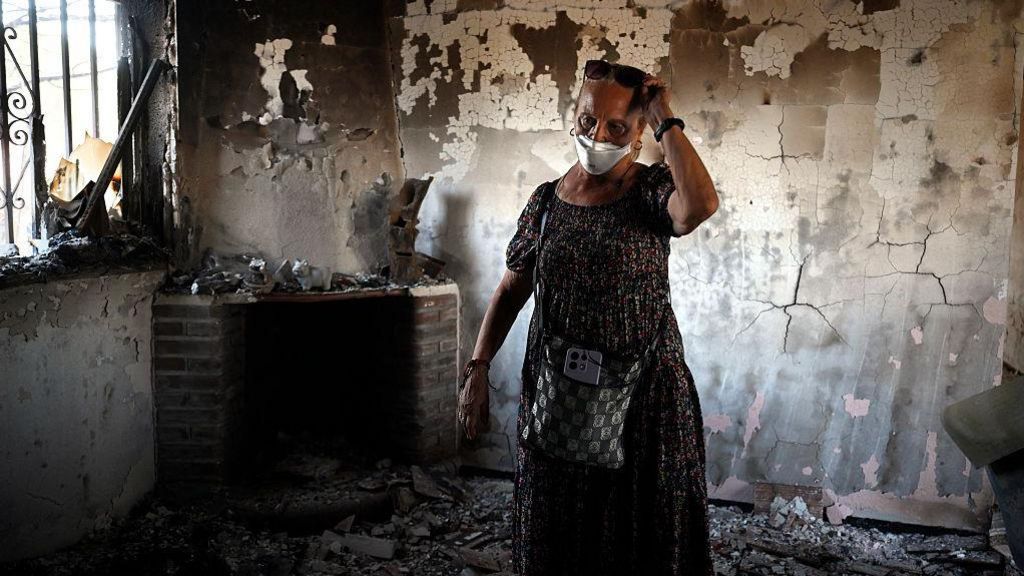
A weeks-long wave of catastrophic wildfires has scorched vast swathes of Southern Europe, with tens of thousands of evacuees finally permitted to return to their homes in Spain this week as authorities across the Iberian Peninsula and France brace for the region’s fourth major heatwave of 2026.
In Spain, officials have lifted evacuation orders and access restrictions across four affected regions: Toledo, Madrid, Ávila, and Castellón. In the Madrid autonomous community alone, 24,000 displaced residents have been cleared to return to their properties, while movement restrictions have also been removed for an additional 20,000 people living in high-risk fire zones. For many residents like the woman from Navas del Rey, this marks the first time they have set foot on their property since wildfires swept through their community.
Despite the lifting of evacuation orders for most areas, the threat of new fire outbreaks and flare-ups of existing blazes remains critically high amid the incoming heatwave. Spanish Prime Minister Pedro Sánchez has warned that the next 12 hours will be a decisive period for containing the blazes near the capital, noting that while containment efforts have progressed favorably, rising temperatures, plummeting humidity and unpredictable wind gusts create significant new risks.
One wildfire near Vall d’Uixó, northwest of Valencia, remains completely out of control. The blaze at Burgohondo in Ávila province, already the largest recorded wildfire in Spanish history, has scorched more than 108,000 acres of land and forced 40,000 people to flee their homes. Firefighting coordinator Francisco Bolaños reported that the blaze held stable through the previous night, but officials remain on high alert for reignition amid the heat, with crews working to secure the fire’s 112-mile perimeter.
Across the border in southwestern France, the largest wildfires in the Gironde region are currently classified as “stabilized,” but officials have warned that new flare-ups have already been recorded, and forecasted dry winds and temperatures reaching 106°F (41°C) threaten to reignite large blazes. Blandine Sarrazin, mayor of the Gironde town Le Barp, noted that two new blazes broke out just one day prior, warning that the situation is growing increasingly difficult and requiring constant hyper-vigilance from residents and crews.
Sixteen French departments are currently under orange heatwave alerts, including the southern Landes region. French fire services have deployed specialized emergency protocols to protect critical defense and aerospace industrial sites in Gironde, including high-risk “Seveso” sites that produce hazardous materials for missiles and rocket systems. In a small moment of goodwill amid the crisis, animal rescue volunteers in the Gironde town of Le Porge successfully rescued a young roe deer trapped in fire-affected woodlands.
More than 2,000 people displaced by Spanish fires in the Tiétar Valley were housed by volunteer groups in the southern town of Talavera de la Reina, with around 300 evacuees still sheltering there as of Wednesday morning. Local mayor José Julián Gregorio confirmed that evacuees would continue to receive the same full level of care they received at the start of the emergency.
Tragically, authorities in the southern Spanish city of Seville confirmed this week that a woman who suffered severe burns in the earlier Los Gallardos fire in Almería has died of her injuries in hospital. The Almería fire outbreak has now claimed 14 lives, with victims including citizens from Spain, the United Kingdom, Belgium, the United States, and France. No other fatalities have been reported from the current round of fires around Madrid and Castellón.
The wildfire crisis extends beyond Spain and France this summer. Northern Portugal’s Vila Real district is currently battling an active blaze with a one-kilometer active fire front, and civil protection crews are maintaining constant surveillance to protect a local water treatment plant and a nearby gas depot near the town of Valpaços. In Greece, new wildfires have broken out on the Aegean island of Paros and in the southern mainland town of Trifylia, adding to the strain on European firefighting resources across the Mediterranean.