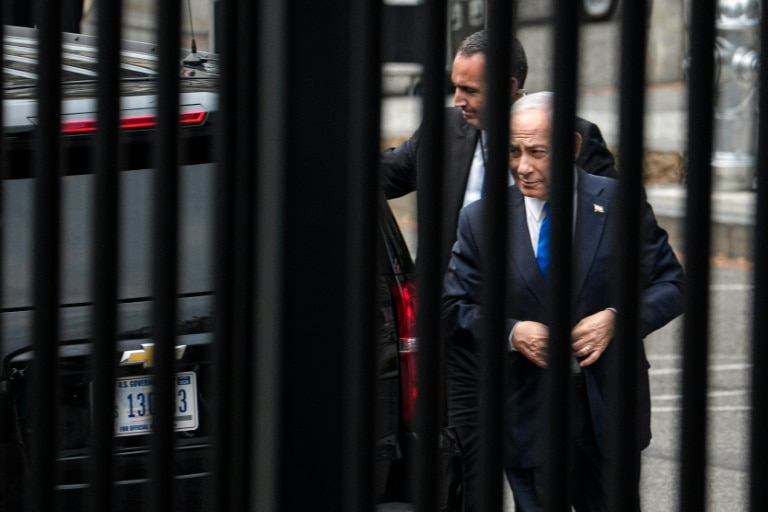
Israeli Prime Minister Benjamin Netanyahu traveled to Washington D.C. on Tuesday to hold his first face-to-face meeting with U.S. President Donald Trump at the White House since the outbreak of open hostilities with Iran, a gathering that came as U.S. military forces confirmed they had intercepted a fresh volley of ballistic missiles launched by Iranian operatives against American personnel in the Middle East.
The closed-door discussions, which the White House characterized as “positive and productive,” ran for approximately 90 minutes. The meeting was intentionally scheduled to repair visible public rifts between the two leaders over the conduct of the war against Iran, which erupted in late February following coordinated U.S.-Israeli airstrikes on Iranian targets. A temporary ceasefire has held in recent days, as the U.S. has signaled it is willing to create space for diplomatic negotiations to de-escalate the conflict.
Shortly after wrapping up the talks, Netanyahu released a video statement praising the discussion, calling it “one of the best conversations I’ve ever had with the president of the United States.” He added that the talks centered on the two sides’ shared core objective: preventing the Islamic Republic from acquiring a functional nuclear weapons arsenal.
Even as the two leaders met, new signs of regional instability linked to the Iran conflict emerged. On Tuesday, Yemen’s Iran-aligned Houthi movement announced it had launched a ballistic missile attack on the Saudi oil tanker NCC Ghazal in the Red Sea, accusing the vessel of breaking a Houthi-imposed blockade on Saudi commercial ports. While Riyadh had not issued an official response to the tanker attack claim by Tuesday evening, Saudi defense officials confirmed they had intercepted a drone assault targeting eastern Saudi oil infrastructure, blaming the attack on pro-Iranian militias operating out of Iraq.
U.S. Central Command also released a formal statement Tuesday confirming that “Islamic Revolutionary Guard Corps forces launched multiple ballistic missiles from Iran in an attempted surprise attack on US forces based in the Middle East.” The command added that all incoming missiles were successfully intercepted before they could reach their targets, with no casualties or damage reported. This recent attempted attack came after nearly two weeks of sustained nightly U.S. airstrikes on Iranian targets, paired with repeated missile and drone strikes from Tehran targeting U.S. allies across the Persian Gulf. A mutual ceasefire held over the weekend, after the previous ceasefire brokered in April collapsed earlier this month, reigniting open hostilities that Israel has opted not to join in this latest round.
Tuesday’s meeting marked the eighth face-to-face encounter between Netanyahu and Trump since Trump returned to the U.S. presidency in early 2025. The gathering also comes as both leaders face critical electoral contests later this year: Israel will hold national legislative elections, while Trump will lead Republican efforts in U.S. midterm congressional polls.
Ahead of the official talks, Netanyahu participated in a private memorial dinner in Washington Monday night honoring the late U.S. Senator Lindsey Graham, a long-standing outspoken supporter of Israel. He also attended a formal public memorial service for the senator earlier Tuesday.
Relations between the two leaders hit a public low point during April ceasefire negotiations with Iran, when multiple reports confirmed Trump launched a profane public tirade against Netanyahu, later describing the Israeli prime minister as a “very difficult guy” in a media interview. Netanyahu has sought to downplay the friction, framing the exchange as nothing more than “tactical disagreements” and insisting the two sides remain fully aligned on the core goals of the war against Iran.
In comments ahead of Tuesday’s talks, Israeli officials emphasized that there has been no lasting rift in the U.S.-Israeli alliance. On the agenda for the meeting was discussion of implementing the U.S.-brokered framework agreement between Israel and Lebanon signed last month, an agreement that has faced significant challenges in on-the-ground execution. Leaders also planned to address the ongoing stalemate in Gaza, where international diplomatic efforts to launch reconstruction of the war-ravaged Palestinian territory have stalled entirely.
Nearly three years after the outbreak of the Israel-Hamas war, the humanitarian situation in the Gaza Strip remains catastrophic, with widespread food insecurity, collapsing healthcare infrastructure, and ongoing Israeli military operations targeting individuals the Israeli Defense Forces identify as Hamas militants.
Israel’s United Nations Ambassador Danny Danon told reporters Tuesday that Netanyahu’s visit came at a “critical time for the Middle East,” arguing that Iran continues “to choose terrorism over negotiations” and has blocked the Strait of Hormuz, one of the world’s most critical global oil shipping chokepoints.
Yonatan Freeman, an international relations scholar at the Hebrew University of Jerusalem, told Agence France-Presse that the core goal of the White House meeting was to push back against widespread media reports that the U.S.-Israeli alliance was fraying. “I think that the main issue…is to show the world, to show Iran, and also even Lebanon and others…that there is no break or any kind of major disagreement between the United States and Israel,” Freeman explained.