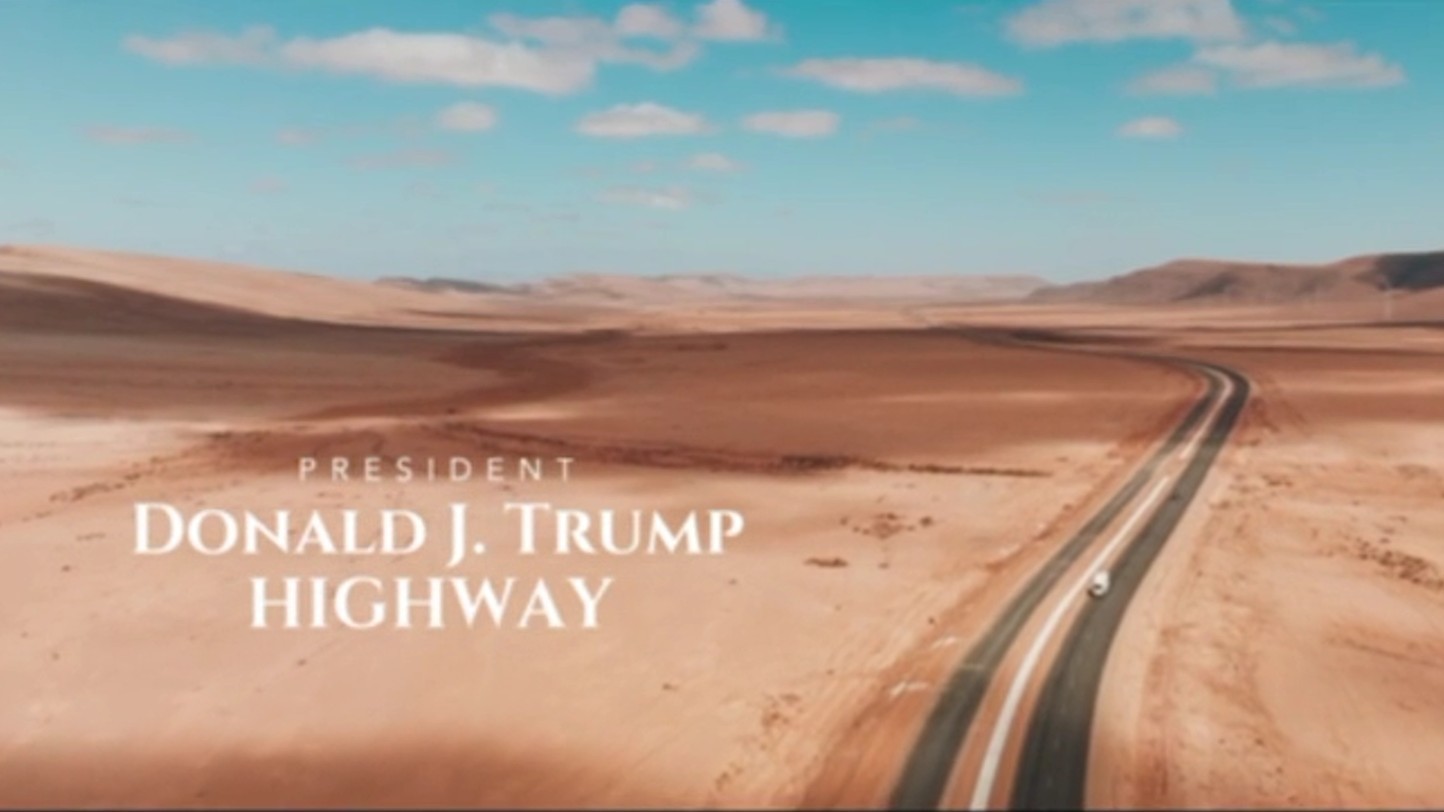
A controversial new infrastructure project in the contested territory of Western Sahara has thrust long-simmering regional tensions back into the global spotlight, after Morocco officially named a 1,055-kilometer highway spanning the region after former U.S. President Donald Trump. The major $1 billion road corridor stretches from the Moroccan coastal city of Tiznit in the north all the way south to Dakhla, a strategic port city in occupied Western Sahara, cutting nearly the full vertical length of the disputed territory and passing through its largest urban center Laayoune. Construction of the highway first launched back in 2015, years before the naming announcement that drew international attention.
Within hours of the announcement, Trump issued a public statement of thanks via his social platform Truth Social, calling the honor a high mark of his diplomatic legacy. In his post, the former president praised Moroccan King Mohammed VI, and shared a video highlighting the billion-dollar infrastructure investment. “Thank you to Highly Respected Mohammed VI, the King of Morocco — Such a Great Honor! I look forward to traveling the entire length of this Great Highway someday, hopefully soon,” Trump wrote.
The naming of the highway comes against a decades-long bitter territorial dispute over Western Sahara, a region widely recognized as Africa’s last remaining colonial holding. Morocco first seized control of most of Western Sahara in 1975 following the withdrawal of Spanish colonial rule, a claim that has been disputed by the indigenous Sahrawi people. Backed by neighboring Algeria, the Polisario Front, the Sahrawi independence movement, has waged a campaign for full statehood for decades, and hundreds of thousands of displaced Sahrawis have lived in sprawling refugee camps across the Algerian border since the occupation began. Independence activists remaining in Moroccan-controlled Western Sahara have repeatedly documented systemic repression by Moroccan state authorities.
The 2020 diplomatic deal brokered during the Trump administration reshaped the dispute’s geopolitical landscape: the U.S. became one of the only nations in the world to formally recognize Morocco’s sovereignty over Western Sahara, in exchange for Morocco agreeing to normalize diplomatic relations with the State of Israel, which in turn also recognized Moroccan rule over the territory. Despite broad international refusal to acknowledge Morocco’s territorial claim, the past several years have seen a steady uptick in foreign investment and commercial activity in the region, a trend that has drawn growing criticism from Sahrawi activists and international human rights groups.
Most recently, earlier this same month, a coalition of rights organizations and Sahrawi campaigners launched a call to boycott acclaimed filmmaker Christopher Nolan’s upcoming film *The Odyssey*, after production teams filmed key scenes in Western Sahara without gaining the consent of the indigenous Sahrawi population. Activists argue that unapproved filming and foreign investment projects like the new highway implicitly legitimize Morocco’s illegal occupation, erasing the rights of the native population to self-determination.