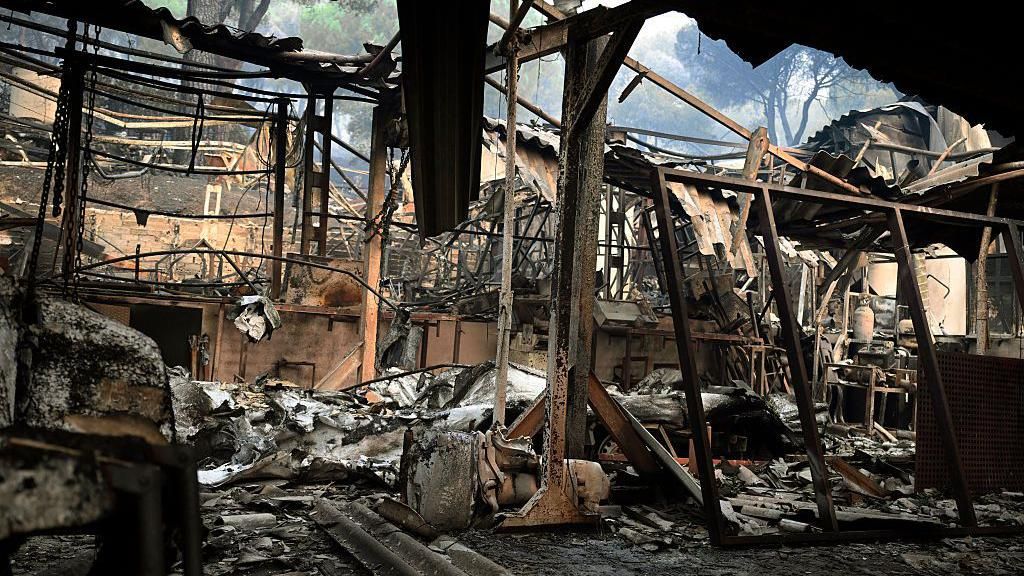
For seven consecutive days, hundreds of firefighters across Spain have battled an unprecedented outbreak of destructive wildfires that have swept through rural landscapes, put dozens of populated communities at severe risk, and displaced more than 90,000 residents from their homes. As emergency crews work to contain the spreading blazes, forecasters warn a new, prolonged heatwave will descend on the country starting Wednesday, creating dangerous conditions that threaten to undermine weeks of hard-won progress.
Three large, fast-moving fires burning in the Madrid region have emerged as the primary focus of national concern. On Monday, regional president Isabel Díaz Ayuso visited the scorched affected areas alongside Spanish Prime Minister Pedro Sánchez, where she described the unfolding crisis as a hellish landscape that has turned affected regions into what resembles a war zone. Ayuso has previously characterized the outbreak as the single largest natural catastrophe in Spain’s modern history.
As of Tuesday, the national scale of displacement remains staggering: more than 56,500 residents have been evacuated from the Madrid region alone, with an additional 27,800 ordered to shelter in place under lockdown. Four Madrid municipalities remain under full lockdown, while 12 others have been fully evacuated. Evacuation orders have also been issued for communities across Ávila, Toledo, and Valencia, bringing the national total of displaced people to over 90,000.
Speaking to reporters on Tuesday, Prime Minister Sánchez acknowledged that the coming hours and days would bring extraordinary challenges for emergency crews, but noted that there is now a glimmer of hope at the end of the tunnel. The prime minister officially designated all wildfire-affected regions as disaster zones, and used the briefing to issue a sharp call for national unity in addressing climate change, saying “the climate emergency is worsening year after year, and we are required to be united to fight against fire, as well as in prevention and reconstruction. Climate denial is the worst fuel for the fight against the climate emergency.”
Spain’s national meteorological agency Aemet forecasts that temperatures will climb as high as 40C across many regions in the coming days, with the heatwave expected to persist at least through Sunday. The agency has warned that rising temperatures will push fire danger to extreme levels, creating dangerous working conditions that will slow containment efforts. The Madrid region is already under a red-level weather alert, with forecasts calling for highs of 35C in mountain areas and 38C across lower-elevation parts of the region.
Despite the looming threat of extreme heat, emergency officials have reported incremental progress in containing the blazes. Interior Minister Fernando Grande-Marlaska told state broadcaster La 1 that overnight firefighting operations on Monday delivered relatively positive results. “This morning, we are very satisfied with the work done. We are going to consolidate the work that has been done,” he said, adding “we must be positive; we have the emergency under control” while conceding that “weather conditions are not helping us at all.” Ayuso also noted on social media platform X that the situation is improving little by little, and that some displaced residents could be allowed to return to their homes in the near future.
Local leaders in evacuated Madrid communities have echoed the call for continued vigilance ahead of the heatwave. Mayors of two affected towns described the unpredictable blazes as “a kitten by night and a lion by day”, noting that fire activity dies down overnight but surges dramatically with daytime heat. Robledo de Chavela mayor Fernando Casado said his community would continue fighting “with their knives out”, while Valdemaqueda mayor Ricardo Meneses added that “we can’t let our guard down and we’re on high alert because now is the time to stop the fire.”
On-the-ground reporting from the affected region paints a grim picture of the destruction. Spanish journalist Juan Navarro, reporting from Cebreros, a town 40 miles west of Madrid, told the BBC that local residents are gripped by fear as they wait for the incoming heatwave. Driving through nearby burned villages, Navarro said “everything is black”, leaving little intact after the passing of the flames.
As of the latest government update, the massive fire burning in the Madrid region remains active and uncontrolled, with Tuesday’s firefighting operations focused on increased surveillance and cooling hot spots in preparation for the forecast heat surge. Ecological Transition Minister Sara Aagesen confirmed that the wildfires have already burned roughly 77,000 hectares (190,000 acres) of land across Spain, with the Ávila-area blaze ranking as the largest wildfire in Spain’s recent history. More than 50,000 hectares have burned in Ávila alone, though officials reported “quite favourable” progress overnight, with only small new flare-ups that are now being closely monitored by emergency crews.
In eastern Spain, the Valencian regional government has lifted lockdown orders for the town of Vall D’Uixo, where a fire that broke out on July 25 forced 16,000 residents from 20 nearby municipalities to evacuate. The crisis has also spread beyond Spain’s borders: neighboring Portugal is currently battling a large wildfire with three active fronts in the eastern Guarda region, where local firefighters are working around the clock to contain the spread.