For more than a decade, widespread violence carried out by a fragmented network of armed groups has terrorized civilian populations across Nigeria, leaving thousands dead and hundreds of thousands displaced. Now, a recent high-profile arrest has pulled long-simmering allegations of insider collusion between military personnel and violent non-state actors into the public spotlight, prompting renewed scrutiny of the country’s struggling security apparatus.
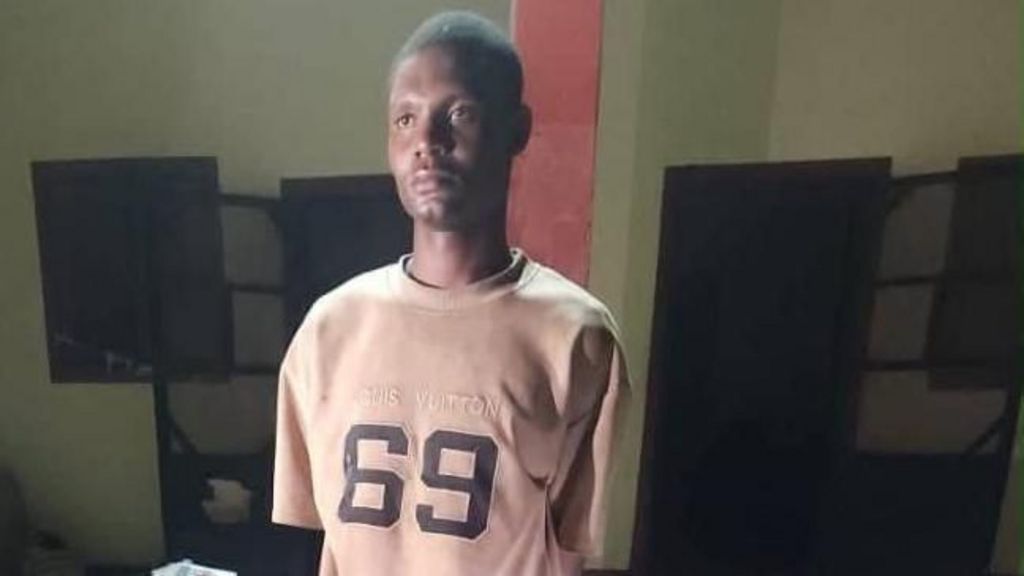
According to Nigerian military spokesperson Mohammed Goni, Private Mohammed Yusuf was taken into custody Saturday evening at a bus terminal in Maiduguri, the largest city in Nigeria’s violence-plagued northeastern Borno State. The arrest came less than two weeks after Yusuf deserted his post at an army equipment manufacturing facility, where he had access to standard-issue military uniforms. Goni confirmed that the soldier had been hiding in Maiduguri with assistance from an unidentified associate, and was intercepted while attempting to cross the border into neighboring Cameroon to evade capture. Yusuf has not issued any public response to the allegations against him as of this reporting.
The arrest has immediately reignited widespread public and expert speculation that covert cooperation between serving military personnel and armed groups is a key driver of Nigeria’s persistent insecurity crisis. Multiple factions of armed actors – including jihadist insurgents Boko Haram and its offshoot Islamic State’s West Africa Province (ISWAP), separatist militias in the country’s southeast, and bandit gangs that target civilians for ransom in the northwest – regularly operate disguised in stolen military uniforms to carry out attacks and avoid detection.
Official data underscores the staggering scale of the violence. Between January 2024 and April 2025 alone, Nigeria’s National Human Rights Commission recorded at least 3,000 kidnappings and 3,580 killings linked to armed groups. Mass abductions have surged in recent years, driven largely by ransom-seeking bandit gangs and insurgent attacks, with school kidnappings emerging as a particularly devastating recurring threat. Data from the International Centre for Investigative Reporting (ICIR) shows that between April 2014 and May 2026, 26 major attacks on educational institutions resulted in the abduction of at least 2,416 students. Official estimates put annual ransom payments to criminal groups in the millions of dollars.
The claim of insider collusion is not new. In April 2025, Borno State Governor Babagana Zulan, who has overseen years of counter-insurgency efforts in his state, publicly alleged that Boko Haram informants and collaborators operated within the Nigerian armed forces, national political leadership, and local communities. “What we need to do is to strengthen our intelligence and to deal with them ruthlessly,” Zulum stated during a public security meeting at the time. Just months after Zulum’s remarks, a special court-martial sentenced three Nigerian soldiers to life imprisonment after convicting them of involvement in a large-scale illegal arms and ammunition trafficking scheme, finding them guilty of theft, unlawful weapons dealing, and “aiding the enemy.”
Security analysts point to multiple root causes for this alleged corruption within military ranks. Retired army major and security analyst Bashir Galma told the BBC that inadequate compensation for low-ranking soldiers creates financial incentives for corrupt collaboration, while ideological alignment with armed groups also drives some personnel to secretly support extremist or criminal factions. “I know there have been instances where plans are made for an attack on a location and the information finds its way to either Boko Haram or another criminal gang,” Galma explained, confirming long-reported patterns of insider tip-offs to armed groups.
A serving Nigerian soldier, who spoke to the BBC on condition of anonymity to protect their safety, confirmed that collusion cases are regularly discovered but frequently handled internally without public transparency. “There have been instances of soldiers caught dealing with the other side, but such matters are often hushed and dealt with internally,” the soldier said.
Accounts from kidnapping survivors add chilling anecdotal weight to the collusion claims. One recently freed hostage, whose family paid a 57 million naira ($42,000) ransom for their release, described a disturbing encounter after his release: “They dropped us off in one location and there were security personnel who they shook hands and laughed with,” the survivor said, speaking on condition of anonymity. While he has no concrete proof, the survivor said he believes the security personnel he encountered received a cut of the ransom payment.
Other survivors have raised allegations of high-level collusion. A farmer who was held hostage for 30 days in late 2024 recalled hearing a military helicopter land just meters from the remote camp where he was held blindfolded. “The first time I heard it I was expecting that the Nigerian Air Force had come to rescue us,” he said. “But we could hear the helicopter leaving afterwards.” He told the BBC he heard the helicopter return multiple times, leading him to conclude that the gang holding him had high-level logistical support from within the security establishment.
Farmer Yahuza Isa, who survived a kidnapping in Nigeria’s northwestern Zamfara State, voiced the widespread frustration of communities living under constant threat of violence. “I myself know where these criminals are,” he said. “So why not deal with them completely?”
Security expert Abdullahi Abdullahi noted that armed groups benefit from collaboration not just from rogue security personnel, but from civilian informants embedded within local communities – a dual support network that has allowed the insurgency and criminal violence to persist for more than a decade despite repeated military crackdowns. “And that is why the issue is continuing after all these years,” he said.
While the decade-long security crisis has exposed deep systemic failures in Nigeria’s governance and security infrastructure, the arrest of Yusuf marks a rare public acknowledgment by the military that collusion within its own ranks is a real problem. Whether this acknowledgment will lead to widespread, systemic reforms that root out corrupt collaboration remains to be seen. Yusuf remains in police custody, and investigations are ongoing to identify any additional co-conspirators and map the full scope of his alleged smuggling operation. The BBC’s request for comment to Major General Markus Kangye, the Nigerian military’s director of media operations, went unanswered as of publication.