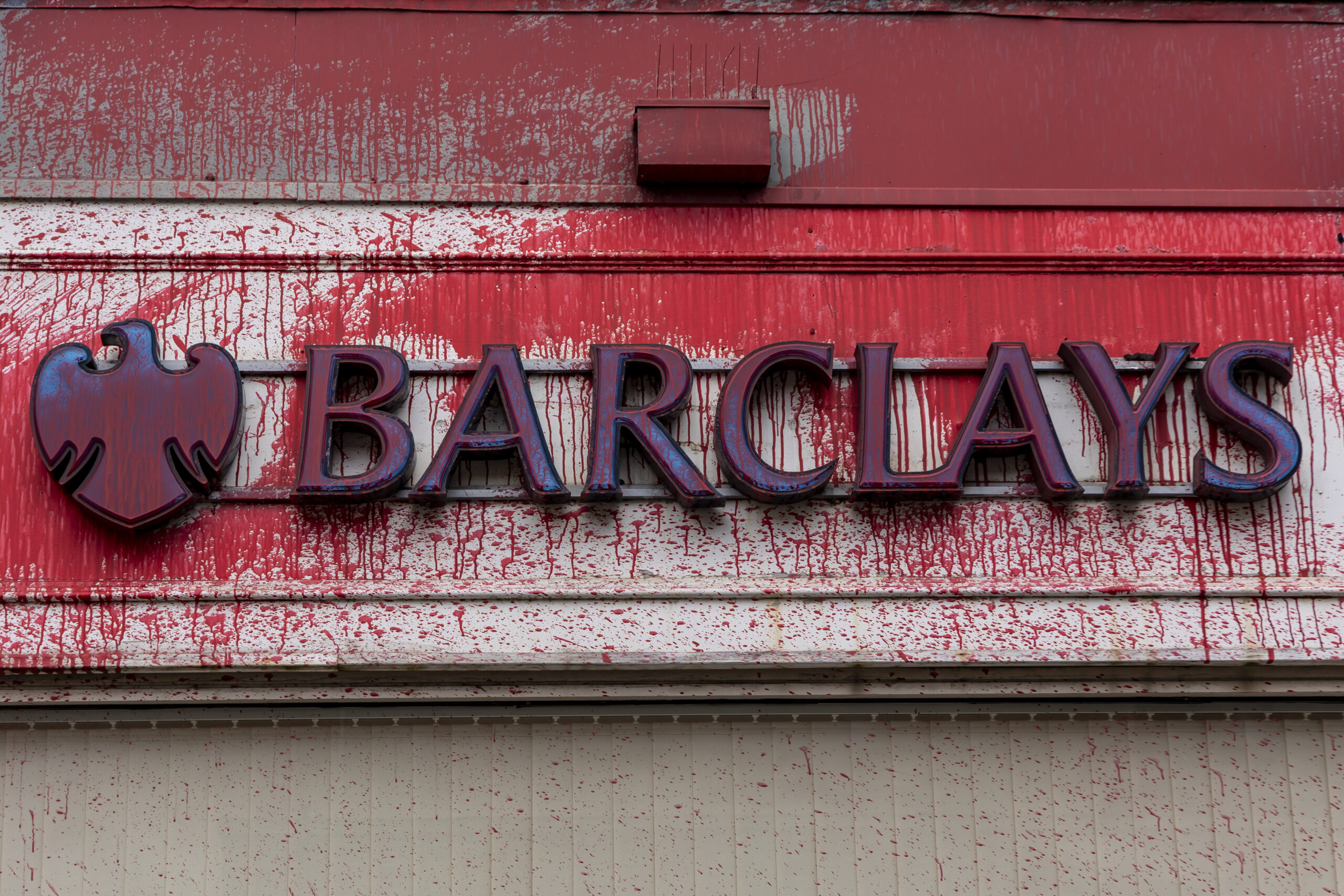
A controversial legal case unfolding in the United Kingdom has raised urgent alarms over expanding the use of terrorist sentencing designations for non-violent direct action protesters, after five Palestine Action activists convicted of criminal damage for a 2024 demonstration at a Barclays bank branch learned they could be punished as terrorists without the original trial jury ever being informed of this possibility.
The five defendants — Brendon O’Hagan, 28, Amanda Kelly, 31, Hmeera Atiqnisar, 31, Mohammed Malik, 28, and 70-year-old Alma Yaniv — were found guilty in June 2026 of causing £212,000 (approximately $283,000) in damage during the August 2024 protest at the Barclays location in Burnley, northern England. The demonstration targeted the bank because at the time, Barclays held public shares in Israeli defense contractor Elbit Systems, a major manufacturer of military technology used in the Israeli-Palestinian conflict. The bank has since divested from all of its 16,345 Elbit Systems shares, a change first reported by Middle East Eye (MEE) in October 2024.
Following the guilty verdict on criminal damage charges, presiding judge Phillip Parry notified defense legal teams that he is considering applying a formal “terrorist connection” to the offenders’ crimes, a classification that would trigger enhanced terror sentencing guidelines. Critically, jurors who delivered the guilty verdict were never informed during the trial that such a designation could be applied. To support his consideration of the classification, Parry circulated a prior ruling from Justice Owen Johnson, who handled an earlier high-profile Palestine Action case.
In that June 2026 case, Johnson applied the terrorist connection designation to four Palestine Action activists convicted of criminal damage for a raid on an Elbit Systems factory near Bristol, also carried out in August 2024. Johnson justified the classification on the grounds that the activists caused serious property damage, acted with the intent to influence UK government policy toward the Israeli-Palestinian conflict, and intended to intimidate segments of the British public. That sentencing marked a historic first for UK law: it was the first time the terrorist connection designation had been applied to activists who committed only non-violent direct action, had not been convicted of any formal terrorist offenses, and did not cause intentional physical harm to any person. The four activists received lengthy prison sentences and will be required to comply with strict 15-year terrorist notification obligations after their release.
The Crown Prosecution Service (CPS) has backed the application of terror sentencing in the Barclays case, despite the fact that prosecutors never mentioned the possibility of a terrorist classification during the full trial. For the defendants, this last-minute push for enhanced sentencing has come as a major shock.
Mohammed Malik, one of the five convicted activists, told MEE in an interview that the defense team had no advance warning that any terror-related designation would be added to the case, and that the prosecution never raised the issue at any point during proceedings. “I was shocked that broken windows and red paint can be deemed as terrorism,” Malik said. He added that the attempt to sentence the group as terrorists highlights the dangerous precedent set by Johnson’s earlier ruling, which punished four Palestine Action protesters as terrorists for destroying Israeli-made quadcopter drones owned by Elbit Systems.
If the terrorist connection is applied, the designation will drastically change the sentencing outcome for the five activists. Under UK rules, a terror-related sentence requires defendants to serve at least two-thirds of their full custodial term behind bars, and parole boards can require activists to renounce their core political beliefs as a condition of early release.
Notably, the 2024 Barclays demonstration took place before the UK government officially proscribed Palestine Action as a terrorist organization. The government’s proscription only links three specific Palestine Action incidents to terrorist activity, all of which involved more than £1 million in alleged damage — far more than the damage at the Burnley Barclays branch.
Palestine Action co-founder Huda Ammori has warned that Johnson’s original ruling established a dangerous legal precedent that paves the way for widespread use of terror designations against political protesters. She called the move to consider terror sentencing in the Barclays case a clear sign that the “flood gates are opening” for expanded criminalization of pro-Palestinian protest in the UK.
A sentencing hearing for the five activists is scheduled to take place on 4 September.