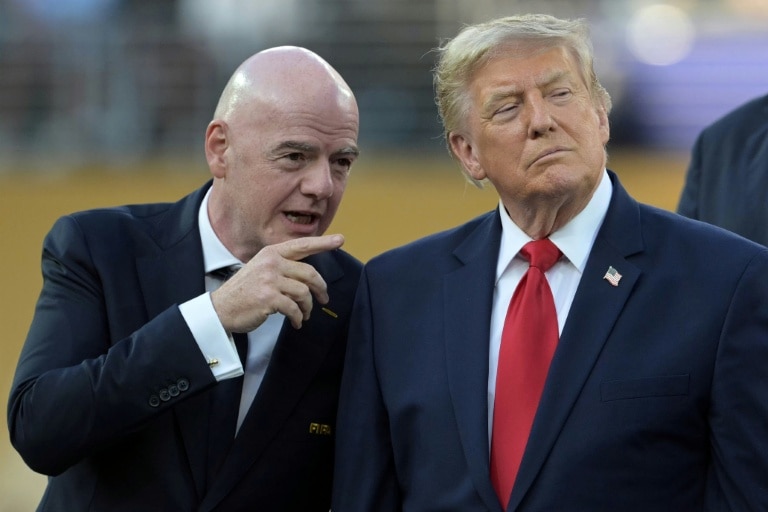
FIFA President Gianni Infantino has issued a fiery, comprehensive defense of the global governing body’s organization of the 2026 men’s World Cup hosted across Canada, Mexico, and the United States, lashing out at detractors for what he claims is a campaign of baseless hate and misinformation surrounding the tournament.
In a lengthy open letter distributed Monday across his personal Instagram account and FIFA’s official communication channels, Infantino pushed back against a cascade of pre-tournament and in-tournament criticism that spanned everything from exorbitant ticket pricing and widespread visa issues to geopolitical interference and officiating controversies. He accused critics of allowing their negativity to blind them to what he framed as an overwhelmingly successful global event.
“Sorry that you were so consumed by hate and criticism that you missed it all,” Infantino wrote. “To those behind their pens and papers, behind their screens, spreading hate and false rumours, I want to say that while you are sitting behind, we at FIFA are on the front lines organising, working hard, and delivering the best show in the world. We experienced no violence, no incidents, 100% safety and security, only joy and happiness.”
Leading up to the historic three-nation tournament, public discourse was dominated by a series of major concerns: skyrocketing attendance costs that put tickets out of reach for many casual fans, rising geopolitical tension around the globe, the ongoing shadow of regional armed conflict, and widespread fears that extreme summer heat across North American host venues would pose major risks to players and fans alike.
Particular scrutiny fell on visa and travel protocols, sparked by Iran’s participation in the tournament amid heightened diplomatic conflict with the United States, ongoing domestic political instability in Haiti, and the public health emergency of an Ebola outbreak in the Democratic Republic of Congo. One high-profile disruption came when Somali referee Omar Artan was barred from entering the U.S. as a direct result of restrictive immigration policies enacted during the previous Trump administration, making him the most visible casualty of hardline entry rules.
Infantino pushed back against claims that FIFA mismanaged visa access, arguing the governing body prioritized football’s unifying mission over political division. “While you spread hatred, we worked tirelessly to unite two countries at war. Iran entered the United States without incident or conflict,” he said. “The Iranian team received visas to enter because football is about peace. It’s not about politics. Countries facing serious health issues or other challenges were granted visas. You mentioned the few people denied visas and overlooked the millions who were approved, from all parts of the world.”
Infantino’s defense of Iran’s participation stood in stark contrast to public comments from the Iranian team’s own camp. Iran head coach Amir Ghalenoei publicly described his squad as the “most oppressed” team at the tournament, while star striker Mehdi Taremi called the team’s overall treatment at the event a “disaster.”
The FIFA president also addressed one of the tournament’s most controversial officiating and political interference scandals: reports that former U.S. President Donald Trump personally pressured Infantino to overturn a one-match suspension handed to American striker Folarin Balogun, clearing him to compete in the team’s round of 16 match against Belgium. European football governing body UEFA had publicly condemned the decision, calling it “unprecedented, incomprehensible and unjustifiable” and saying it “crossed a red line.”
Infantino argued that the decision was far from unusual, pushing back against critics by noting similar rulings are common in top global club competitions. “Your dissatisfaction with a few decisions made by the competent authorities is understandable, but please refer to public records: such decisions are common in some of the most important leagues,” he said. “Indeed, ‘arguable’ referees’ decisions or ‘strange’ disciplinary rulings such as for instance potentially mistaken red or yellow cards or subsequent decisions not to ban players in certain situations are routine and widely accepted in some of the biggest leagues worldwide. It’s curious that the same countries employing these practices are the ones criticising.”