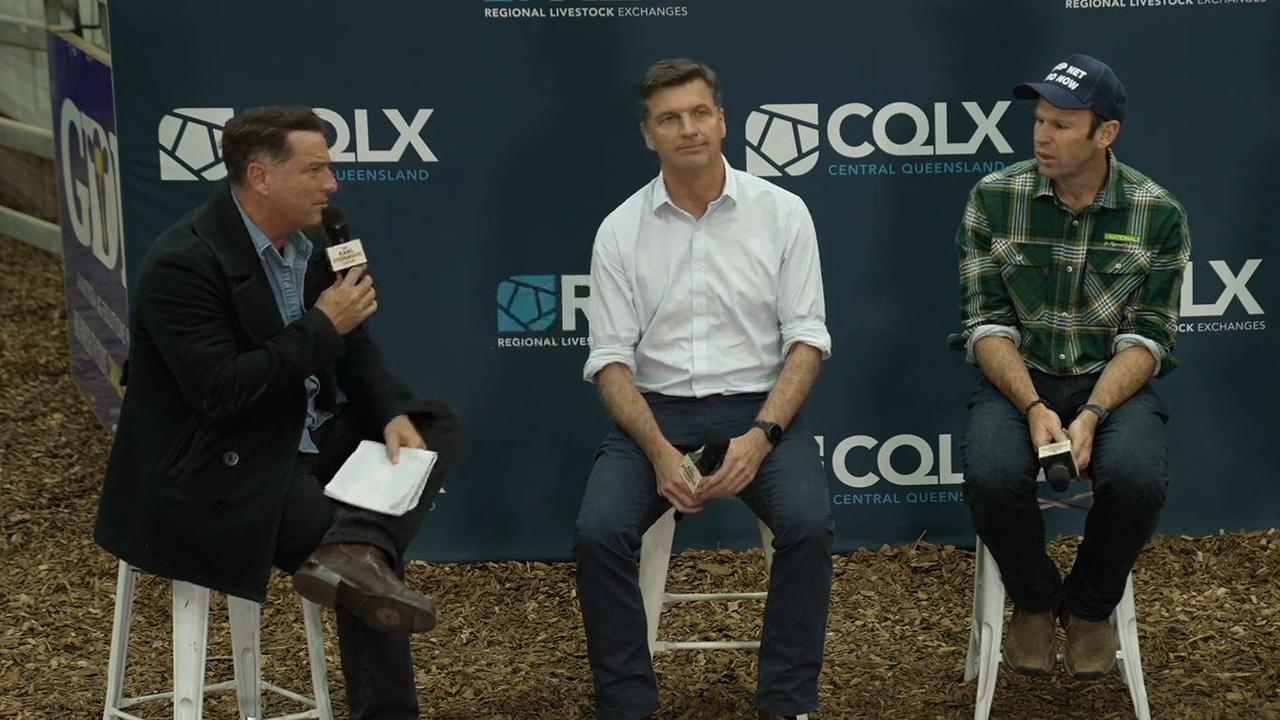
In a provocative live broadcast from Central Queensland’s CQ Energy Forum on Monday, prominent broadcaster Karl Stefanovic hosted senior opposition figures to unpack what he framed as an unvarnished look at one of Australia’s most divisive environmental policy frameworks: the national net zero emissions target. Joined by Liberal Opposition Leader Angus Taylor and Nationals leader Matt Canavan, the event drew thousands of online viewers and gave the opposition coalition a platform to amplify their fierce criticism of the current policy trajectory.
Taylor opened his remarks by arguing that everyday Australian households and producers are already bearing the unbearable cost of the transition to net zero, going so far as to claim the policy is actively destroying the long-held aspiration of agricultural ownership across rural Australia. He expanded that renewable energy development does not just create deep rifts within regional communities, but also pushes household energy costs higher while eroding the reliability of the national power grid.
“Over time, I’ve watched renewable projects desecrate some of the nation’s most productive agricultural land,” Taylor told the assembled crowd in Rockhampton. “They’ve driven electricity prices up and reliability down, leaving regional communities far worse off.” Taylor further claimed that meeting the country’s net zero targets would require clearing an area of land equal in size to the entire state of Tasmania to accommodate new solar farms, wind facilities and transmission infrastructure – a change that he says would impose irreversible harm on Australian farming communities.
“Our land ought to be used to grow food, sustain regional jobs, and keep rural communities alive – not act as a profit center for international investors that care nothing for Australia’s natural landscape or local communities,” Taylor added. Canavan echoed these criticisms, calling out federal government subsidies that attract foreign investment to renewable energy projects, questioning why Australian taxpayers should be forced to foot the bill for outside interests.
“We already pay enough in taxes, and our power bills are already sky high. Why should we also have to bankroll international investors to come in and take over our farmland?” Canavan asked. “This is not about protecting the environment. They’re destroying our local environment just to turn a profit for themselves.”
The free, ticketed Gracemere Energy Policy Forum was framed as an opportunity for the public to hear firsthand how net zero and renewable development are impacting Australian families, farmers and businesses, and to discuss the coalition’s alternative policy agenda. Alongside Flynn federal MP Colin Boyce, the opposition leaders opened the floor to regional farmers who shared their own experiences opposing large-scale renewable projects on agricultural land. Multiple farmers reported being labeled pejorative terms including “NIMBYs”, “fossil fuel lovers”, and even slurs comparing them to Nazis when they push back against project development.
“But the fact is, we’re just farmers trying to defend our children, our families, and our future,” one farmer told the assembled audience. Many participants called on regional communities to organize to protect their agricultural land from renewable development. The live broadcast, part of Stefanovic’s independent podcast, is marketed as unfiltered, unscripted and uncensored – a brand the host built after his high-profile split from major Australian media network Nine Entertainment earlier this year. Stefanovic’s contract with Nine and the Australian Radio Network was terminated in June after he conducted a controversial interview with British far-right figure Tommy Robinson. Nine’s leadership later said the split stemmed from irreconcilable differences of opinion over the interview.
Since launching his independent YouTube podcast, The Karl Stefanovic Show has attracted more than 68,000 subscribers and seen a 41% jump in his Facebook follower base, marking a rapid growth for the independent platform that continues to tackle contentious, divisive policy issues that mainstream media often avoids.