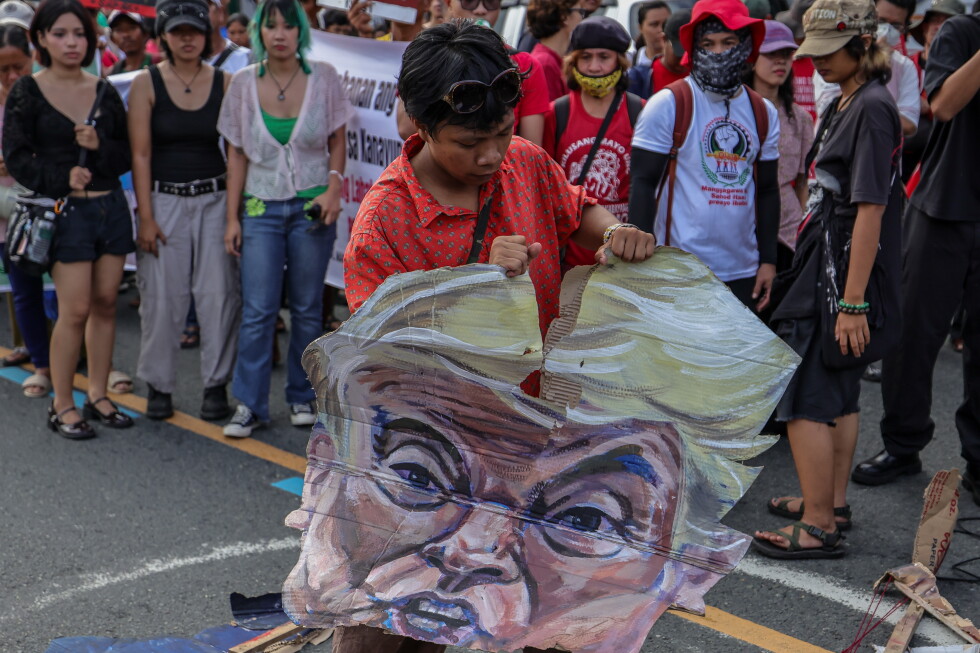
MANILA, Philippines — Philippine President Ferdinand Marcos Jr. is set to deliver his annual State of the Nation Address on Monday, stepping onto the national stage against a turbulent backdrop of overlapping political crises that have shaken his administration over the past year. The event, held at the House of Representatives in suburban Quezon City, will mark Marcos Jr.’s penultimate annual address before his six-year presidential term concludes in mid-2028, with over 23,000 Philippine National Police personnel deployed to secure the venue and surrounding areas. Key routes leading to Malacañang Palace, the official presidential residence in Manila, have been blocked with barbed wire barricades and riot police detachments to head off planned protests by disaffected groups. The expanded security measures come after two separate explosive-related incidents in the capital raised threat levels ahead of the address. A small improvised explosive device detonated before dawn Monday near the gate of the Philippine Department of Justice in Manila, causing no casualties and only minor structural damage. In a separate incident, unassembled bomb components were discovered near the Senate complex in suburban Pasay City, according to national police chief Gen. Jose Melencio Nartatez Jr., who told reporters the discovery was apparently intended “only to sow terror or fear” among the public ahead of the major national event. Beyond security threats, Marcos Jr. faces significant political headwinds as he prepares to speak to the nation. A massive corruption scandal first exposed by the president himself in last year’s State of the Nation Address has now ensnared several of his closest political allies, igniting public anger and calls for deeper accountability. During his 2023 address, Marcos Jr. delivered a sharp rebuke of systemic graft in national flood-control infrastructure projects, as the country was still recovering from catastrophic flooding and landslides that left dozens dead and displaced more than 200,000 residents across the archipelago. Subsequent joint investigations launched by the government and Congress have linked dozens of sitting and former House and Senate members, as well as public works engineers and senior government officials, to the scheme, where the co-conspirators allegedly siphoned off millions in kickbacks from contracted projects. Revelations of the conspirators’ lavish lifestyles, including fleets of private jets and high-end European luxury vehicles, sparked widespread public outrage and mass street protests earlier this year. To date, one sitting and one former member of the 24-seat Philippine Senate have been indicted and taken into custody on corruption charges tied to the scandal. A former House representative identified as a leading suspect has fled the country for Europe. Former Public Works Secretary Manuel Bonoan, who served in Marcos Jr.’s cabinet, has denied any wrongdoing but remains in hospital detention after being formally charged in the case. Despite the progress in investigations, many Filipino activists and political observers have pushed for faster prosecution of high-profile figures implicated in the scandal. Critics have repeatedly questioned why former House Speaker Martin Romualdez, Marcos Jr.’s cousin and one of his most influential political allies who has denied any connection to the graft, has not been charged to date. Marcos Jr. has repeatedly pledged that no individual, regardless of their political ties to his administration, will escape prosecution if evidence of wrongdoing exists. “We have done enough because we’re not done yet,” Marcos Jr. said of the ongoing investigation in recent comments. “Unfortunately, the more we look, the more we find.” Adding to the president’s political challenges is the ongoing impeachment trial of Vice President Sara Duterte, Marcos Jr.’s former political ally who is now estranged from the administration. Duterte faces multiple impeachment charges, including allegations of corruption and threats against the sitting president, with the trial formally opened by the Philippine Senate earlier this month. On the policy front, Marcos Jr. is expected to use his address to outline new government initiatives designed to cushion the Philippine economy from global market volatility stemming from the renewed armed conflict in Iran. Back in March, as hostilities intensified in the Middle East, Marcos Jr. declared a one-year national energy emergency to ensure stable supplies of fuel, food, and key agricultural commodities, while enacting new measures to crack down on price gouging and hoarding of essential goods.
Philippine president to deliver key speech in the shadow of corruption scandal and political tension