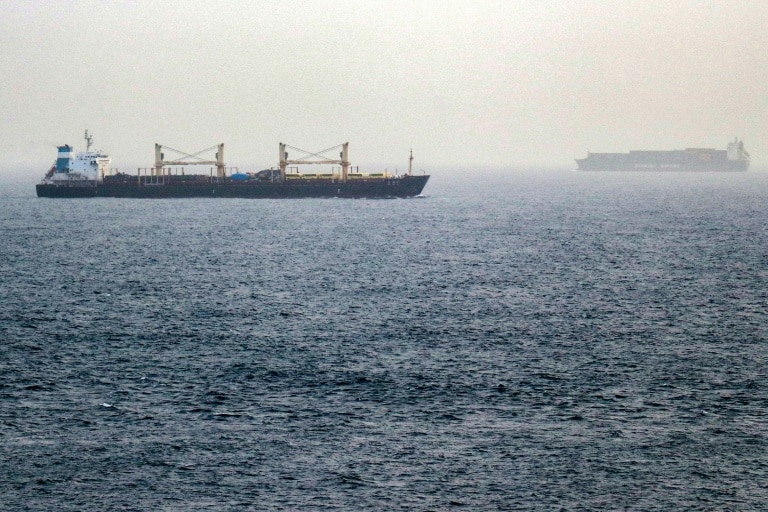
A sudden lull in cross-hostilities between Iran and the United States has brought a much-needed reprieve to Gulf shipping lanes and global energy markets, after US President Donald Trump signaled he was open to giving diplomatic negotiations a chance to de-escalate the five-month conflict.
By Sunday, both sides had held their fire: Iran confirmed it had halted all retaliatory strikes against US allies in the Middle East, following two consecutive nights without US bombing raids on Iranian targets. The US had conducted 13 straight nights of strikes on Iran through Thursday, the largest escalation of tensions since an April ceasefire broke down.
“These attacks continued until two nights ago, but over the past two nights the Americans have stopped their attacks,” said Iranian army spokesman Mohammad Akraminia. “Since our strategy has essentially been retaliatory, we have also halted our retaliatory operations.”
US Ambassador to the United Nations Mike Waltz confirmed the Trump administration’s stance on Sunday morning talk shows, noting that while US military forces remain “locked and loaded” for any resumption of hostilities, the president would give diplomatic talks “a little bit of room” to progress.
The pause in combat immediately rippled through global energy markets on Monday: early trading in Asian markets saw sharp drops in crude oil prices, which had spiked amid rising fears of disrupted supply through key Middle Eastern chokepoints. Thirty minutes into the trading session, international benchmark Brent Crude fell 5.89% to $91.08 per barrel, after briefly dipping below the $90 threshold. US benchmark West Texas Intermediate dropped a matching 5.73% to $84.19 per barrel, delivering a rare bit of positive news for consumers facing energy price volatility.
The de-escalation has revived tentative hopes for a resumption of diplomatic talks between Washington and Tehran, which collapsed entirely after fighting erupted around the strategic Strait of Hormuz earlier this year. The conflict quickly expanded beyond the vital energy corridor, with strikes targeting US military bases, commercial shipping, and regional US allies. Unconfirmed Iranian media reports did circulate Sunday claiming an oil tanker had been damaged by a sea mine off Yemen’s coast, though no major disruption to shipping was reported immediately.
Questions have emerged over what drove the decision to pause strikes, with some unnamed sources cited by The New York Times suggesting that shrinking stockpiles of Patriot air defense interceptors and other critical munitions have forced the Trump administration to shelve immediate plans for escalation. But Waltz pushed back firmly against those claims in an interview with NBC News’ *Meet the Press*. “I want to be crystal clear. The US military — and I’ve verified this every which way — has everything that it needs to conduct this campaign as effectively as it needs to be,” he insisted.
The next major turning point in the crisis is expected Tuesday, when Israeli Prime Minister Benjamin Netanyahu is set to meet with Trump at the White House. Netanyahu is widely expected to push the president to maintain a hard line on Iran, particularly over its nuclear program. The US and its allies have long alleged Iran is pursuing a nuclear weapons capability, a claim Iran has repeatedly denied, saying its program is exclusively for civilian energy and medical purposes.
Netanyahu signaled his position Sunday in an interview with Fox News, saying he fully backed Trump’s goal of ending Iran’s nuclear program. “If he can do so without returning to intense military fighting, that’s fine. Why not? But one way or the other, they have to end their nuclear programme, and with a deal or without a deal, that has to come to an end,” he said.
Beyond the munitions debate, The New York Times reported that Trump is also facing growing pressure to avoid a wider regional war that could estrange key Gulf allies and deliver another major shock to the already fragile global economy. Trump told reporters Friday that he had not yet made a final decision on whether to resume full-scale military operations, adding that “We’re talking to them right now. I think they’re getting more and more serious.”
For the moment, life in the Iranian capital of Tehran has returned to its usual rhythm, according to an Agence France-Presse reporter on the ground. On Sunday, locals navigated heavy rush-hour traffic amid a summer heatwave, with shops and restaurants operating as normal with no visible signs of mass panic or wartime disruption.
Despite the lull in US-Iran hostilities, fighting has opened a new front in Yemen, where Iran-backed Houthi rebels continued their campaign against Saudi Arabia. On Sunday, the group announced it had downed a Saudi drone in northwestern Yemen, just one day after it claimed responsibility for a series of attacks on Saudi Aramco oil facilities in the kingdom’s Jizan and Yanbu regions. The Houthi attack came in response to an earlier Saudi airstrike on Houthi targets Friday, marking a continuation of the years-long Yemeni conflict that has become entangled in broader US-Iran regional tensions.