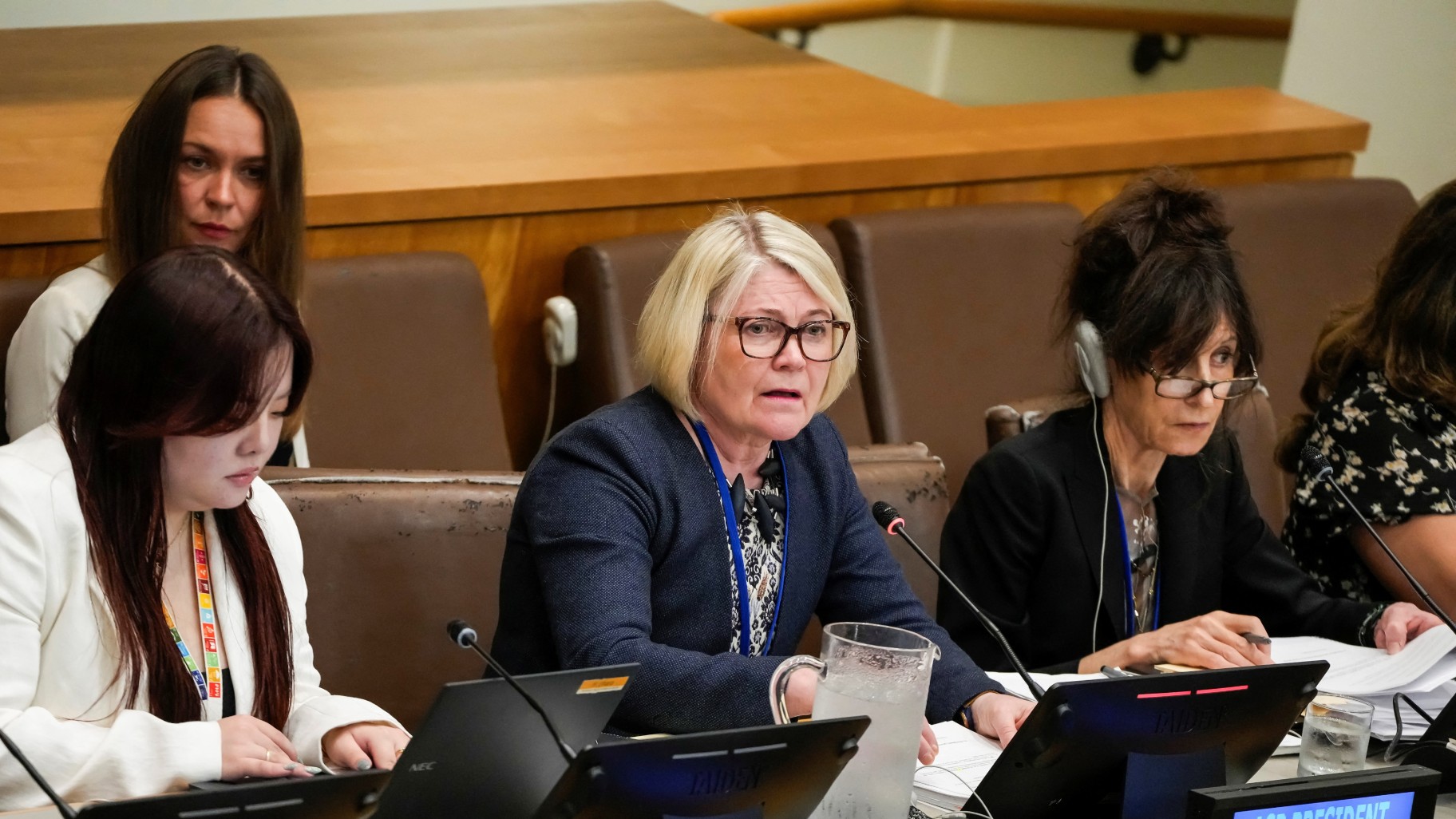
In a watershed moment marking the first such action in the 24-year history of the International Criminal Court (ICC), a majority of member states voted Friday during a special session at United Nations headquarters in New York to oust sitting chief prosecutor Karim Khan from office over allegations of professional misconduct. The dismissal takes immediate effect, with elections to select a new chief prosecutor slated to follow in the coming period.
Secret ballot results released by diplomatic sources show that 82 of the court’s 125 member states supported the motion to remove Khan, easily clearing the 63-vote absolute majority threshold required for the decision. Thirteen member states voted against dismissal, while 15 opted to abstain from the vote.
The allegations against Khan center on claims of a sexual relationship with a junior staff member in his office, which the complainant has described as non-consensual. The disciplinary process was initiated after the Bureau of the Assembly of States Parties (ASP)—the ICC’s governing executive body—concluded that evidence proved “beyond reasonable doubt” that Khan had engaged in the relationship, arguing that the inherent power imbalance between a sitting chief prosecutor and a subordinate staff member made such a relationship inherently inappropriate regardless of context.
Khan has repeatedly and forcefully denied that any sexual relationship occurred, while the complainant reaffirmed her allegations of non-consensual conduct in her first public interview on the case with CNN last week. Ahead of the vote, Khan had already stated that if removed, he would immediately appeal the decision to the International Labour Organization’s administrative tribunal, the body with jurisdiction over employment-related appeals for ICC personnel.
The historic vote has unfolded against a charged geopolitical backdrop, with heavy scrutiny over claims that the entire disciplinary process has been politicized. The removal comes just months after Khan’s office moved to request arrest warrants for Israeli Prime Minister Benjamin Netanyahu, former Israeli Defense Minister Yoav Gallant, and three Hamas leaders over alleged war crimes committed in the ongoing Gaza conflict, a step that triggered fierce pushback from major powers including the United States. U.S. Secretary of State Marco Rubio recently issued extraordinary threats to “dismantle the ICC brick by brick, if necessary,” and the U.S. has already imposed sanctions on most of the court’s senior judges and prosecutors, including Khan, over the court’s war crimes investigations into actions in Palestine and Afghanistan.
Widespread criticism has also been leveled at how the ASP Bureau managed the investigation into the allegations. A panel of independent ICC judges appointed to review the evidence unanimously concluded that no misconduct had been proven, but the ASP Bureau chose to disregard this binding legal opinion. More than 180 Palestinian civil society and human rights organizations signed an open letter last week arguing that the disciplinary process had been “reduced to a political referendum following the national interests of individual States Parties.”
A timeline of the allegations shows the alleged non-consensual conduct began in March 2023 and continued for nearly a year, with incidents reported on overseas missions and at the ICC’s headquarters in The Hague. The allegations were first brought to Khan’s attention by his own senior staff on May 2, 2024. The ICC’s internal oversight body launched an inquiry the following week, but closed it days later after the complainant refused to cooperate with internal investigators. Eighteen days after the allegations first emerged, Khan’s office formally submitted the request for arrest warrants for Israeli and Hamas leaders, leading some media outlets to suggest he moved forward with the request to shore up political support amid the scandal. However, an investigation by Middle East Eye later confirmed that the decision to pursue the warrants had been finalized six weeks before the allegations against Khan were ever made public, and the application was submitted only after the first internal inquiry had concluded.
The allegations reemerged in global media and on social media in October 2024, prompting a second internal inquiry that again closed when the complainant declined to cooperate. The ASP then commissioned an external investigation led by the United Nations Office of Internal Oversight Services (OIOS), which spent more than a year compiling evidence and presented a 150-page report plus 5,000 pages of supporting evidence to the independent judicial panel in December 2024. After nearly three months of review, the panel issued its unanimous March 2025 ruling that the evidence presented by UN investigators did not meet the “beyond reasonable doubt” standard to establish misconduct or a breach of professional duty.
Despite this independent ruling, a majority of ASP Bureau members voted to disregard the panel’s findings weeks later, advancing the motion to find Khan guilty of serious misconduct and suspend him from office. In another break with established protocol, the ASP Bureau altered the voting rules for the full member state session, changing the process from a two-stage vote—one on whether misconduct occurred, a second on whether removal was warranted—to a single up-or-down vote on a motion that combined both the finding of serious misconduct and the order for dismissal. This change lowered the threshold for removal, drawing further allegations of procedural manipulation.
A British barrister, Khan was elected as the ICC’s third chief prosecutor in February 2021, taking office two decades after the court was founded in 2002. During his tenure, he pursued high-profile investigations and arrest warrant requests against a number of global leaders, including Russian President Vladimir Putin, former Philippine President Rodrigo Duterte, Myanmar’s ruling junta leadership, and Taliban officials in Afghanistan, in addition to the Israeli and Hamas leaders targeted in the Gaza warrants.