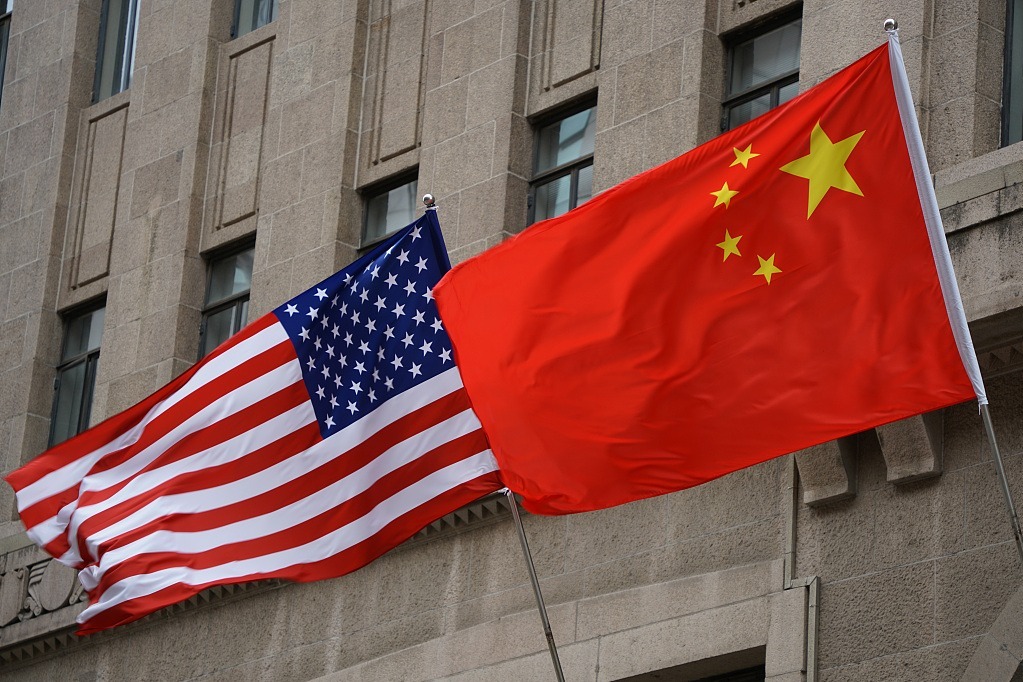
On a Thursday in New York, over 100 senior business executives, policymakers and academic scholars gathered for a landmark forum focused on resetting the trajectory of US-China economic relations, hosted by the China General Chamber of Commerce-USA (CGCC) and the CGCC Foundation. Titled “The Path Forward 2026: Mutual Benefit, Uncovering New Opportunities for US-China Economic and Trade Relations”, the event brought together cross-sector stakeholders to explore collaborative pathways for the world’s two largest economies, at a time of rising global geopolitical turbulence.
Against a backdrop of growing strategic competition between Washington and Beijing, participants universally highlighted sustained dialogue as an irreplaceable foundation for productive bilateral relations. Susan Elliott, CEO of the National Committee on American Foreign Policy, argued that calls for full economic decoupling between the two nations are neither practical nor beneficial for either side. “We have to figure out how to rebalance our economic ties in a way that supports sustainable growth, systemic resilience and long-term shared prosperity,” Elliott explained. “These adjustments will not be easy; they demand open, honest difficult conversations across all sectors. A healthier, more sustainable bilateral economic relationship will ultimately benefit not just our two countries, but the entire global economy.”
Elliott emphasized that competition between the two powers does not erase the urgent need for consistent communication, nor should ideological or policy disagreements block progress in areas where both sides stand to gain. “Moving forward requires patience, pragmatic problem-solving, and an unwavering commitment to keep talking,” she added.
Chen Li, China’s Consul General in New York, outlined the deep, mutually beneficial interconnectedness that still defines the bilateral economic relationship, noting vast untapped potential for both subnational and broad-based commercial collaboration. “US companies have long recognized the immense value of China’s massive consumer market and robust, comprehensive industrial supply chain support,” Chen said. “On the other side of the equation, Chinese firms seek to grow their operations in the United States within a stable, predictable regulatory environment, while simultaneously contributing to local communities and delivering better services to American consumers.”
Chen called on both governments to uphold the core principle of mutual benefit, ensuring cooperation delivers shared gains rather than one-sided advantages. He urged both sides to approach each other’s concerns with open minds and good-faith judgment, and to maintain momentum for ongoing dialogue and practical collaboration. “Going forward, China will continue to streamline processes for foreign trade and investment, protect the legitimate rights and interests of international businesses operating within our borders, and cultivate a world-class business environment,” he said. “We hope US companies will seize these opportunities and achieve stronger growth by tapping into the momentum of China’s ongoing development.”
Beyond national-level cooperation, participants highlighted that subnational engagement between cities, states and local business communities delivers tangible, immediate benefits for local economies on both sides. Steven Fulop, president of Partnership for NYC and former mayor of Jersey City, pointed to the decades-long contributions of Chinese international students to New York City’s economic growth. Student demand for housing has sustained local real estate development, while their everyday consumer spending has provided a steady boost to local small businesses and the city’s broader economy, he noted.
Glori Norwitt, Connecticut’s international engagement envoy at AdvanceCT, added that her state has already built deep people-to-people and commercial ties with China, with enormous room for further expansion. Connecticut is currently home to roughly 80,000 Chinese residents and nearly 2,000 Chinese-owned businesses, ranging from small local startups to large multinational corporations. “We have been actively building these connections, and we strongly encourage these relationships to continue and deepen moving forward,” Norwitt said.
New data from the latest CGCC Annual Business Survey underscored the resilience of Chinese firms operating in the United States, even amid a generally cautious broader business outlook. The survey found that around one-third of responding Chinese companies reported year-over-year revenue growth in 2025, while 81 percent remained profitable. Most notably, 79 percent of respondents said they plan to reinvest their profits back into their US operations — the highest share recorded in the history of the survey, a clear signal of Chinese businesses’ long-term commitment to the US market.