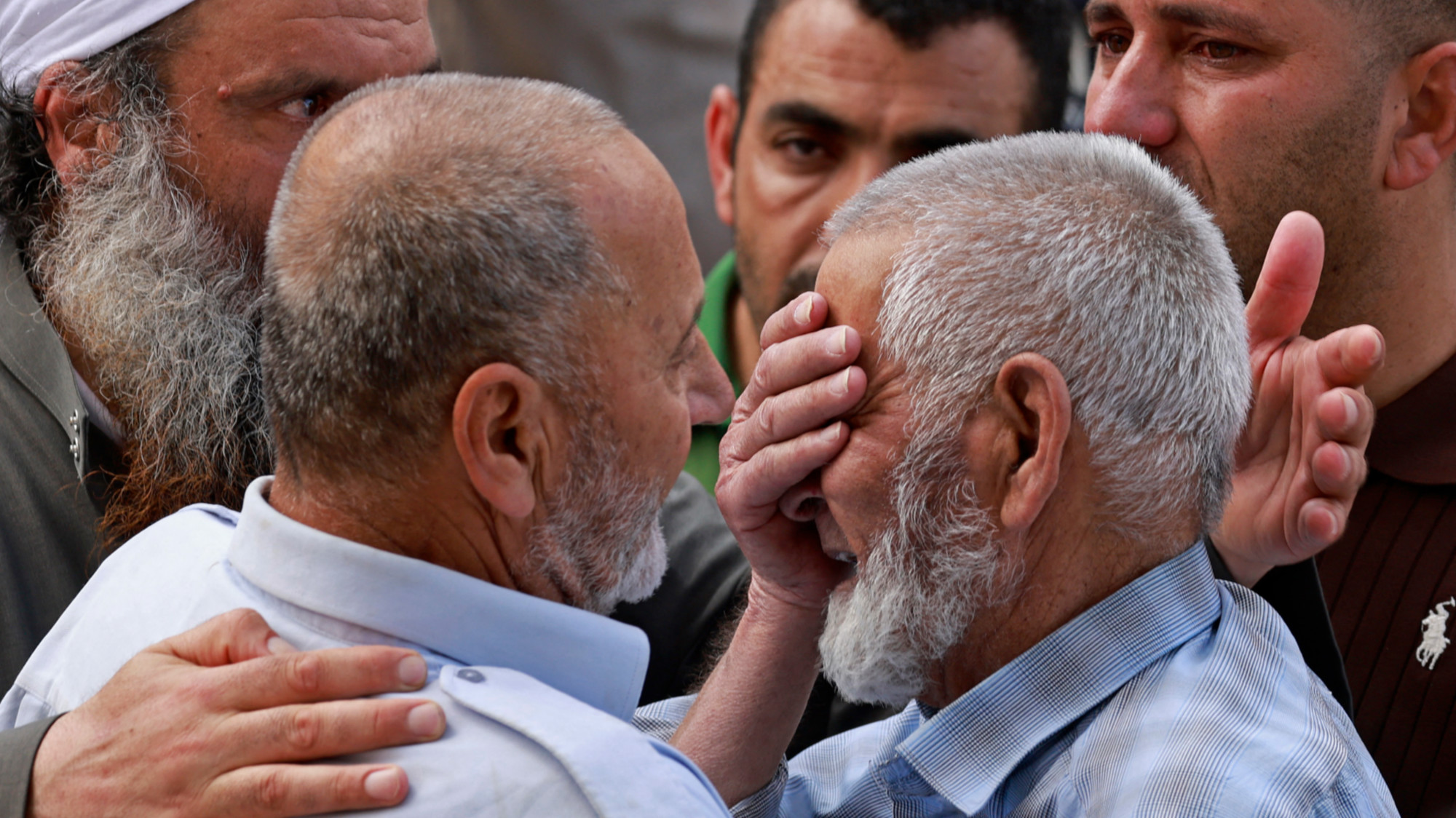
On a Friday morning in the occupied West Bank, a violent, deadly confrontation unfolded in the village of Tel, located southwest of Nablus, leaving four Palestinian residents dead and another Israeli settler killed in the crossfire, according to multiple on-the-ground accounts and official statements. The violence has sent already fraught regional tensions soaring, with top Israeli officials calling for harsh retaliation and Palestinian leaders decrying the attack as part of a systemic state-backed displacement campaign.
Eyewitnesses confirm that a contingent of armed Israeli settlers pushed into residential homes and agricultural plots on Tel’s outskirts in the pre-dawn hours. Village resident Mahmoud al-Hindi told Middle East Eye that local residents assembled quickly to push back the incursion, turning a targeted incursion into a full-scale confrontation. The clash pitted unarmed Palestinian villagers against heavily armed settlers backed by uniformed Israeli troops, with violence escalating rapidly when Israeli forces and settlement security personnel opened fire on the assembled Palestinian group.
The Palestinian Ministry of Health confirmed that four Palestinian men were killed in the shooting, with four additional people wounded, most by gunshots to the upper body. Three of the wounded remain in critical condition as of the latest updates. All four fatalities were members of the extended Saifi family: brothers Ibrahim Hussein Ali Saifi and Jawad Hussein Ali Saifi, their cousin Farouq Adnan Ali Saifi, and relative Imran Ahmed Ali Saifi. Al-Hindi noted that land grabs and incursions by settlers are a regular occurrence in the area, but Friday’s attack marked the most violent episode residents have ever experienced.
Video footage published by Quds News Network on social media platform X (formerly Twitter) documents the attack unfolding under the direct protection of Israeli occupation forces, confirming witness accounts of military backing for the settler incursion. Israeli state media, by contrast, has confirmed that one Israeli settlement security guard was killed in the clash, with three other settlers sustaining injuries.
The Israeli military has offered an alternate narrative of the incident, claiming the group of settlers was engaged in a recreational hike through the area when clashes erupted with local residents. According to the military’s account, settlers fired only warning shots before troops arrived to de-escalate the standoff. They claim a Palestinian attacker seized a weapon from a settlement guard, killed the guard and wounded three other settlers, before being shot and killed by an Israeli soldier. The military added that the deaths of the three other Palestinian victims remain under active investigation.
That account was immediately rejected by Nablus governor Ghassan Daghlas during an interview with Al Araby TV. Daghlas refuted the Israeli military’s claim, confirming that settlers intentionally stormed the village, attempted to set residential structures on fire, and opened fire on residents who gathered to oppose the incursion. Witnesses who spoke to Middle East Eye added that after the shooting, Israeli forces escorted all involved settlers out of the village before launching a full raid on the community, closing all military checkpoints leading into Nablus and imposing a strict security lockdown across the entire region.
In the hours following the initial clash, follow-up violence erupted as additional Israeli settlers launched coordinated attacks on multiple Palestinian villages near Nablus and Qalqilya. Local reports confirm that settlers set fire to dozens of civilian cars and agricultural land, and assaulted local residents who attempted to intervene. Settlers also took to social media to issue open calls for revenge and further targeted attacks against Palestinian communities across the occupied territory. The Israeli military acknowledged it was bracing for widespread retaliatory settler violence across the West Bank in the wake of the incident.
Top far-right Israeli officials, key figures in Prime Minister Benjamin Netanyahu’s ruling coalition, have issued incendiary calls for harsh collective punishment against Palestinian communities in the area. Finance Minister Bezalel Smotrich, who resides in an Israeli settlement near Nablus, called for aggressive military action, comparing the targeted villages to refugee camps in Nablus and Tulkarm that were subjected to widespread destruction by Israeli forces in 2025. Smotrich also confirmed he would ask Netanyahu to approve construction of a new Israeli settlement directly on the site of Friday’s confrontation. National Security Minister Itamar Ben Gvir, a far-right settler based in Hebron, went further, saying Palestinian villages in the occupied West Bank should be destroyed to match the level of devastation inflicted on Beit Hanoun, a northern Gaza town that has been almost entirely leveled by Israeli military operations. “For every Jew killed, the enemy must bear the loss of land and homes,” Ben Gvir stated.
Netanyahu’s office confirmed the prime minister held an emergency meeting with Israel’s defense minister and Israel Defense Forces chief of staff to coordinate a formal response to what the office described as a Palestinian “attack” on Israeli settlers. “We will act forcefully against the terrorists and those who send them, and we will not allow terrorism to resurface in the West Bank,” Netanyahu said in a post-meeting statement. The Israeli military later announced it would reinforce its presence across the occupied West Bank by deploying five additional infantry companies to the region.
Palestinian leaders have condemned the attack and called for urgent international intervention. Palestinian Vice President Hussein al-Sheikh said he had held urgent diplomatic talks with officials from multiple countries, urging world powers to take immediate action to protect Palestinian civilians from what he labeled joint settler and Israeli military “terrorism.” The Palestine Liberation Organization (PLO) said the four killings in Tel were a direct reflection of long-standing “official Israeli policy” of forced displacement, carried out in coordinated fashion by the Israeli military and extremist settler groups.
Friday’s deadly clash comes amid a years-long surge in settler violence against Palestinian communities in the occupied West Bank, a trend that has accelerated dramatically since the outbreak of the Gaza war in October 2023. Today, settlers carry out near-daily attacks on Palestinian communities, including arson, property vandalism, physical assaults, and coordinated campaigns to force residents off their land. These attacks almost always proceed with the explicit protection of Israeli military forces, according to on-the-ground monitoring groups.
Just three days before the Tel clash, two Palestinian men were killed by Israeli fire during another military-backed settler incursion in the town of Deir Jarir, northeast of Ramallah. Palestinian health ministry data shows that at least 87 Palestinians have been killed by Israeli fire in the occupied West Bank since the start of 2026, 21 of whom were killed directly by settlers. The Colonization and Wall Resistance Commission, a Palestinian body that monitors settlement expansion and violence, confirms that deadly settler attacks have increased year over year since 2023. Eleven Palestinians were killed by settlers in 2024, a number that rose to 14 in 2025, and has already hit 21 in the first seven months of 2026. The commission notes that most victims die from direct gunfire from settlers, while others are killed in assaults, from tear gas inhalation, or from denied access to medical care during attacks — a trend that underscores the growing scale and brutality of settler violence across the occupied territory.