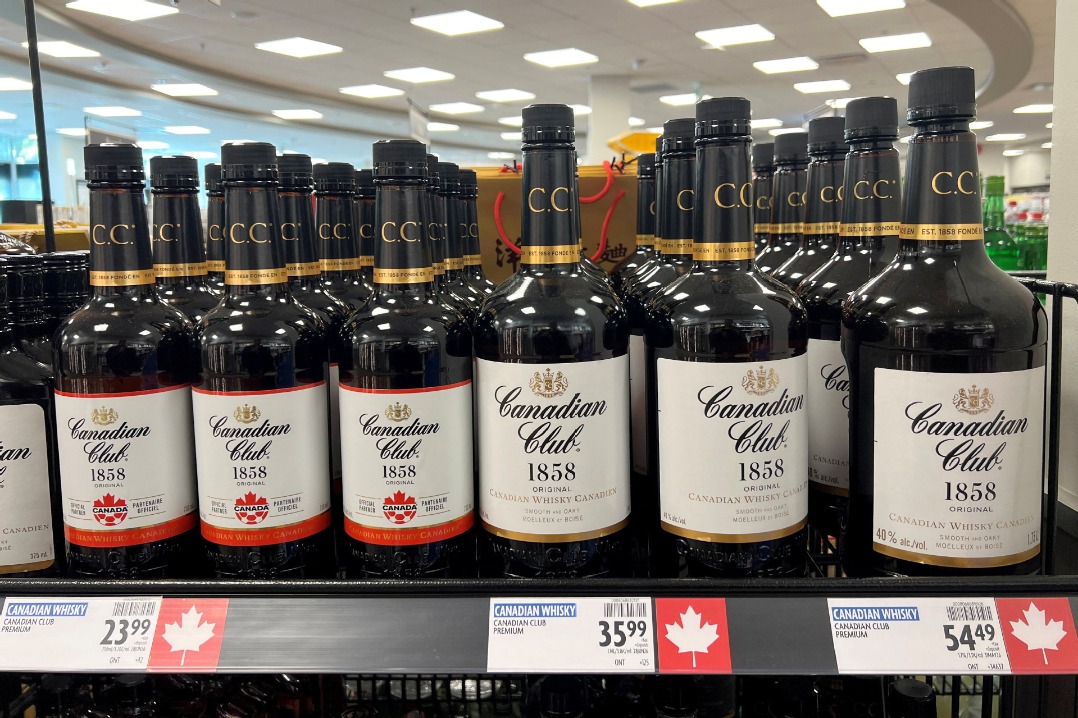
Escalating trade frictions between the United States and Canada have entered a new phase after the Trump administration unveiled a steep 50% tariff on a targeted set of Canadian imports, a move analysts frame as both a high-stakes negotiating tactic and a strategic shift in legal authority that carries significant risks for bilateral economic relations. Announced publicly by U.S. President Donald Trump on Monday, the new tariffs apply to a range of Canadian goods including wine, hockey sticks, and cement, covering nearly $20 billion in annual cross-border shipments, according to trade experts. The White House has justified the measure as a response to what it calls discriminatory trade practices from Canada, encompassing Canadian restrictions on U.S. alcohol distribution, the country’s longstanding dairy supply management system, and existing automobile import quotas. Canadian Prime Minister Mark Carney swiftly issued a sharp condemnation of the new tariffs, characterizing the action as the latest in a string of unilateral trade measures imposed by Washington that directly violate the terms of the Canada-United States-Mexico Agreement (CUSMA), the regional trade pact that has governed North American commerce for years. Despite the condemnation, Carney stressed that Canada remains open to intensive talks to resolve outstanding trade disputes, noting that a negotiated settlement would deliver mutual benefits for citizens of both countries. The announcement has also sparked pressure from Canadian subnational leaders: Ontario Premier Doug Ford, whose province is among Canada’s largest exporters to the U.S., called on the federal government in Ottawa to hit back with reciprocal measures. In a social media post, Ford wrote, “I’ll never stop fighting to protect Ontario. If these tariffs proceed, Canada should respond tariff for tariff, dollar for dollar.” Trade analysts and academic experts say the latest tariff announcement marks two key shifts in the Trump administration’s approach to trade pressure on Canada. First, it leverages a little-used legal authority from the 1930 U.S. Trade Act, known as Section 338 – a departure from the 1962 and 1974 trade acts that the administration relied on for earlier tariffs, which have run into legal challenges. Dave Townsend, a partner in Dorsey & Whitney’s International Trade Group, explained that this new legal framework allows the Trump administration to impose duties even on goods that are normally granted duty-free access under the terms of CUSMA. The tariffs are set to go into effect 30 days from the announcement date, and Townsend noted their timing is tightly tied to the ongoing, stalled negotiations between Washington and Ottawa. “Canada has thus far not agreed to a new framework trade agreement with the United States, and the White House explicitly noted that only Canada and China have failed to reach such pacts, with both countries having retaliated against earlier U.S. tariffs,” Townsend explained. “Thus, the higher tariffs for goods from Canada appear to be aimed at encouraging an agreement between Canada and the United States, or in retaliation for the failure to reach such agreement, or both.” The new measure raises the risk of further deterioration in already strained bilateral relations, Townsend added. “The question now is whether the two sides can reach such an agreement or whether a cycle of escalation and retaliation takes hold between the two countries.” Ronald Stagg, a history professor at Toronto Metropolitan University, pointed out that turning to the 1930 Trade Act carries historical echoes of economic catastrophe: the act’s original use in the 1930s triggered widespread retaliation from trading partners that deepened the global Great Depression. Stagg also noted that the announcement caught many Canadian policymakers and observers off guard, as public attention had been focused on Trump’s recent threats to penalize Canada over wildfire smoke that drifted across the border, where he accused Canada of failing to manage its forest resources properly. Just days before the tariff announcement, Trump was publicly attacking Canada over the wildfire issue, making the trade move an unexpected shift in focus. Stagg added that the tariff move aligns with a long-observed pattern in Trump’s approach to international negotiations, where he seeks to extract financial or political concessions from counterparties. He pointed to the years-long hold-up of the Gordie Howe International Bridge, a critical new cross-border infrastructure project connecting Detroit, Michigan, and Windsor, Ontario, as a clear example. “His refusal to allow the Gordie Howe Bridge to open until the United States, or possibly the owner of the competing Ambassador Bridge, a significant donor to the Republican Party, received additional compensation, is a good example,” Stagg said. “This demand came despite Canada having paid for the construction, in cooperation with Michigan. The issue for Trump is, on what grounds can he demand money for the United States, or his financial supporters, or his family in each situation.” With the new tariffs in place, the ball is now in Canada’s court to decide how to respond, Stagg noted. “The question now is, will Canada retaliate, or will the Canadian government complain, but try not to ‘poke the bear’?”