As Glasgow prepares to welcome a newly condensed Commonwealth Games, the head of global Commonwealth sporting governance has defended the event’s enduring value, framing it as a critical launching pad for emerging athletic talent even after a major host crisis threatened the future of the 96-year-old competition.
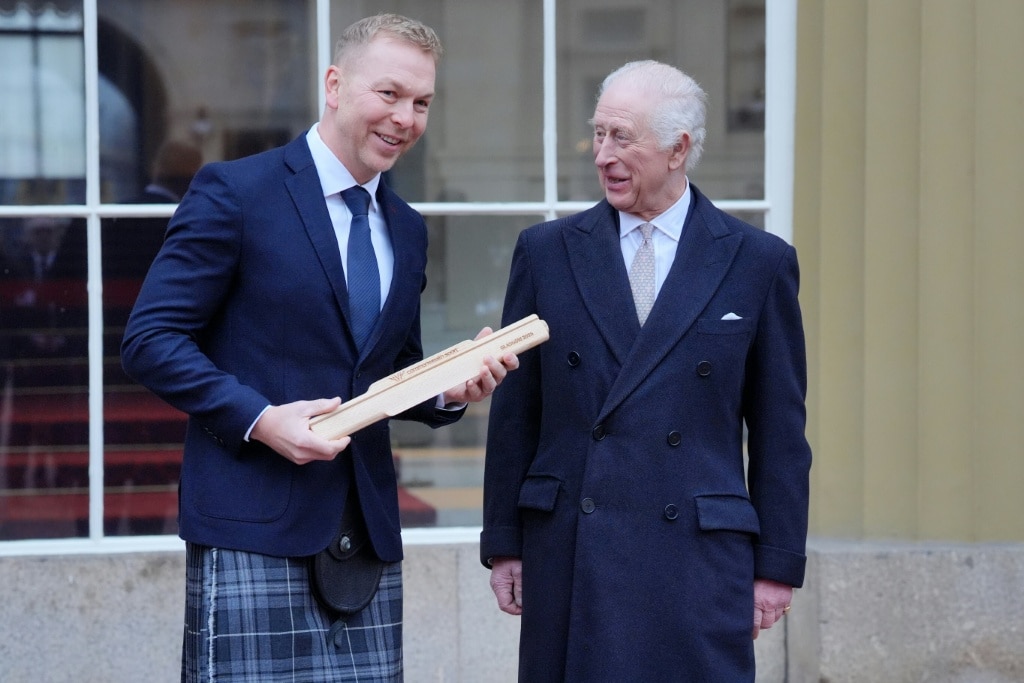
Commonwealth Sport President Dr. Donald Rukare shared his perspective in an interview with AFP, just days ahead of the opening ceremony for the 2024 Games, which will see King Charles declare the event officially open. The Games were pushed into uncertainty last July, when the Australian state of Victoria pulled out as the originally scheduled host, citing ballooning costs that made the original event model unfeasible.
Stepping in at short notice, Glasgow — which previously hosted the event 12 years ago — stepped up with a practical solution: a scaled-back format that repurposes existing venues to cut down on public spending and keep the Games alive. This year’s competition will feature just 10 core sports and six para-sports, a significant reduction from the 19 sports and eight para-sports offered at the 2022 Birmingham Games. Despite the slimmed-down structure, Rukare emphasized the event’s core mission remains unchanged.
“We had that dark cloud over us in terms of having no Games, but Glasgow stepped in. Scotland the brave as we say,” Rukare noted.
First launched in 1930 as the British Empire Games, the modern Commonwealth Games now brings together 74 nations and territories, most of which have historical ties to the British Empire. Positioned every four years, two years on either side of the Olympic Games, the event has long served as a key developmental milestone for up-and-coming athletes preparing for top-tier international competition.
“It’s about the athletes,” Rukare added. “For some of the athletes, they’re going to be representing their countries, their territories, for the first time and we believe that the Commonwealth Games is where champions are made.”
To make hosting more accessible for future organizers, governing bodies have already restructured the event’s requirements: now, only swimming and athletics are designated as compulsory sports, giving potential hosts far more flexibility to design a programme that fits their infrastructure and budget. Rukare said he is optimistic about the event’s trajectory, pointing to already confirmed future host plans as evidence of growing stability.
India’s Ahmedabad has already been locked in as the host of the 2030 centenary Commonwealth Games, while multiple countries including New Zealand have expressed formal interest in hosting the 2034 edition. Rukare confirmed that the 10-sport model used in Glasgow is not a permanent change. “It won’t remain at the 10 sports for sure, but we’re looking at probably something in the range of between 15 and 18 sports going forward,” he said. “At the end of the day, what we’re looking for is how do we have a sustainable, smart, agile model, but also responding to the needs and aspirations of the athletes.”
The 2030 Ahmedabad Games marks a pivotal moment for the future expansion of the Commonwealth Games, which has been largely concentrated in a handful of countries over recent decades. Six of the last seven editions have been hosted by either the United Kingdom or Australia, and the event has only been held in Asia twice in its history. Notably, it has never been hosted on the African continent, despite dozens of African nations being part of the Commonwealth sporting family.
For India, hosting the 2030 Commonwealth Games in Ahmedabad is widely viewed as a critical stepping stone to the country’s ultimate goal of securing the 2036 Olympic Games. Indian authorities hope a successful Commonwealth Games will establish the world’s most populous nation as a global premier sporting destination.
Rukare, a Ugandan sports administrator, highlighted that expanding hosting across the full Commonwealth membership aligns with the event’s core identity as a celebration of global diversity. “We’d like to see that the Commonwealth family, Commonwealth Sport, reflect the diversity, the multicultural cultures that we have,” he said. “Going to one of the biggest countries in the Commonwealth, building on from Delhi 2010, there’s no doubt that India now is a different place. They are ready to go.”
He added that a successful 2030 Games in India could pave the way for even more geographic diversity in future, including a future Games hosted on the African continent. “We’d like to see how India will definitely put on a good show, maybe down the road sometime in the future, Africa could host the Games. So we’re really trying to commit to the Games right across the Commonwealth, to be able to show the whole mosaic of the culture and beautiful tapestry that we have of all our 74 territories.”