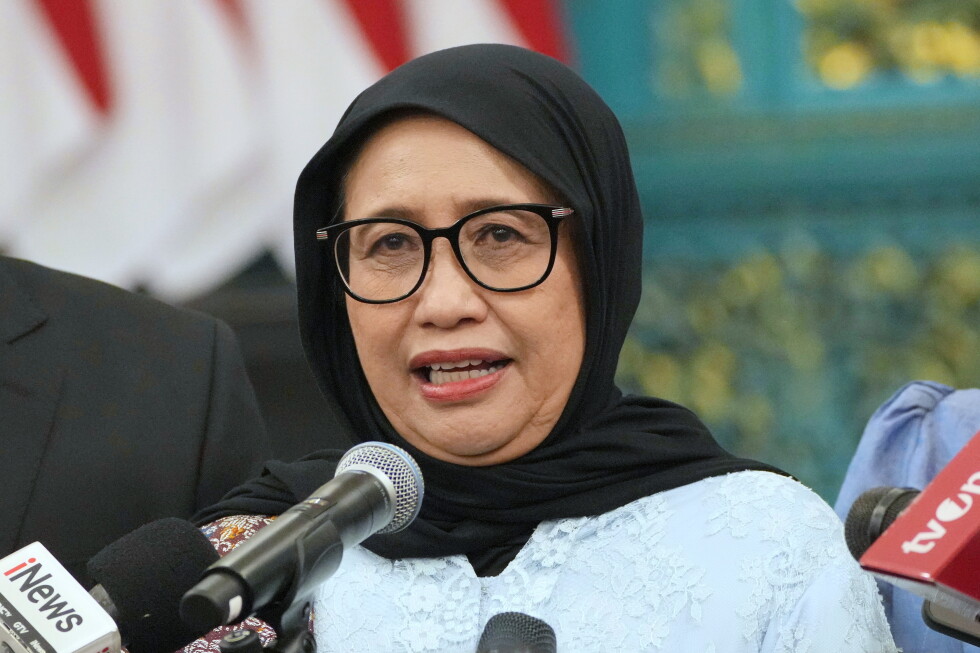
Just six weeks after taking the helm of Indonesia’s signature multi-billion-dollar free meals initiative, the program’s top leader has stepped down, throwing the already troubled flagship policy of President Prabowo Subianto into fresh doubt.
Nanik S. Deyang, who was inaugurated as head of the National Nutrition Agency in early June, announced her resignation Wednesday, citing an urgent need for cardiac medical care overseas. Her departure comes only 45 days after she replaced Dadan Hindayana, who was removed from the post and arrested over corruption allegations tied directly to the program.
Launched to deliver on a core campaign pledge from President Prabowo, the ambitious initiative was designed to tackle widespread malnutrition across Indonesia by providing free daily meals to nearly 90 million children and pregnant women. From its early rollout, however, the program has been plagued by controversy: beyond the high-profile corruption scandal that took down its first leader, it has faced sharp public and policy criticism over its ballooning $15 billion annual price tag, and multiple reported outbreaks of food poisoning among participating schoolchildren.
In a public statement posted to her Facebook page Wednesday, Deyang confirmed her exit, noting that President Prabowo had accepted her resignation out of concern for her health. “I conveyed my deepest apologies to the president that I must step down as Head of the National Nutrition Agency for health reasons,” Deyang wrote. “The president was sympathetic and agreed to my request, though he asked that I continue to support the agency in an advisory capacity moving forward.”
During her short 45-day tenure, Deyang oversaw a notable adjustment to the program’s budget, cutting the annual allocation from 268 trillion rupiah (equivalent to roughly $15 billion) to 229 trillion rupiah, around $12 billion. Agency officials have framed the budget adjustment not just as a cost-cutting measure, but as part of a broader push to refine distribution systems. A spokesperson for the agency noted that teams have completed a full review of program beneficiaries, with the current priority being to make distribution of free meals more efficient, effective, and targeted to the communities that need the support most.
As of Thursday, the Indonesian government has not yet announced a replacement for Deyang, leaving the day-to-day leadership of the signature program in limbo as it works through its ongoing reforms. The repeated turnover at the top of the initiative has raised new questions among policy analysts about whether the government can deliver on Prabowo’s campaign promise while addressing the corruption, safety, and cost concerns that have dogged the program since its launch.