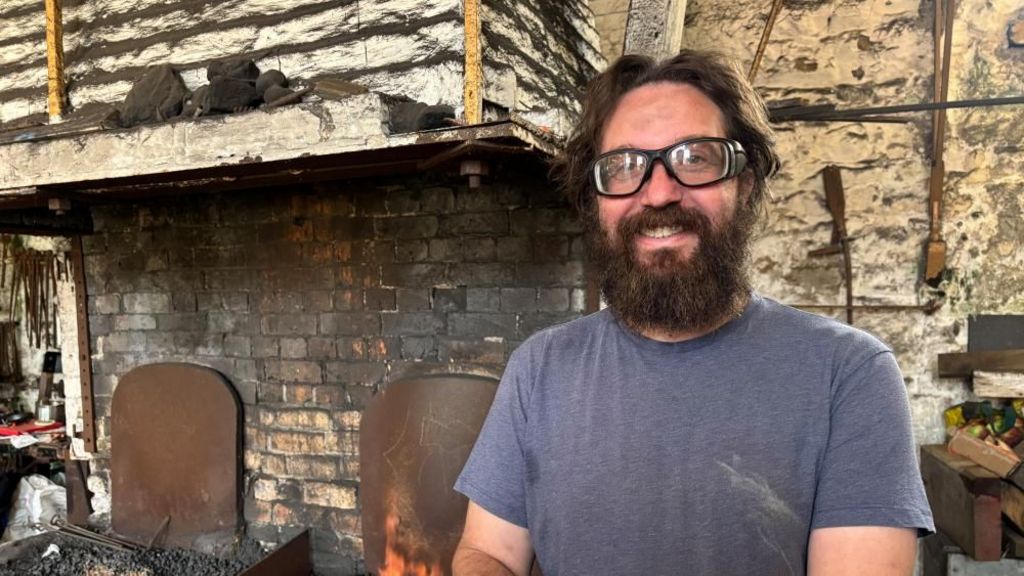
For nearly 15 years, Rowan Taylor has honed his craft as a blacksmith based in Ellesmere, Shropshire, and this summer he is set to embark on what he describes as the professional opportunity of a lifetime. Taylor and two colleagues from the UK’s National School of Blacksmithing (NSB) have been invited to join an international experimental archaeology initiative in Aggersborg, Denmark, tasked with forging a fully functional, historically accurate 8th-century-style anchor for a reconstructed Viking longship named Huld.
The project, led by world-renowned bloomery iron specialist Jens Olesen, was first conceptualized during informal discussions at the close of Denmark’s annual historic market season, when Olesen and organizers from the Aggersborg Viking Craft Meeting began brainstorming an ambitious large-scale forging project that would strictly adhere to authentic Viking-era materials and methods. Olesen, who had previously collaborated with Taylor on archaeological projects in Ireland, said he immediately thought of the British blacksmith when the anchor project moved forward. Taylor, who has spent years researching ancient Viking anchor design and forging techniques, admitted he jumped at the offer the second it was extended: “I nearly bit Jens’ hand off” to secure the role, he told the BBC.
What sets this project apart from museum replicas is its uncompromising commitment to historical accuracy: rather than relying on modern steel or 19th-century Victorian wrought iron, the team will work exclusively with bloomery iron, the exact low-carbon ferrous material Viking smiths used to craft tools and hardware more than 1,200 years ago. When complete, the anchor will measure 70 centimeters tall and weigh approximately 10 kilograms, making it one of the largest single objects forged from bloomery iron produced since the early 1800s, according to Taylor.
Beyond creating a decorative display piece, the team aims to produce a fully operational anchor that will be permanently installed on the Huld, a reconstructed Viking vessel that sails from Aggersborg. For Taylor, the project is a rare chance to test years of academic observations and archaeological research in a real-world setting, rather than leaving the findings locked in academic papers or displayed as static museum pieces. “Just having this anchor on a boat will allow us to test its capability… we can then compare whatever data comes out of that to the archaeological record and ongoing research,” he explained. He added that he hopes to confirm his theories about traditional Viking joinery techniques, proving they are not just historically plausible but structurally sound for everyday use.
Taylor, who works as a course tutor at the NSB based at Holme Lacy College near Hereford, is bringing two additional members of the school’s team along for the project: fellow tutor Mischa Kunkel and technician Ernestas Jakubauskas. While the Aggersborg Anchor Project remains an independent initiative, Taylor credits the UK’s world-leading blacksmith training programs for giving his team the specialized skills needed to take on the unique challenge. “The UK probably has the best blacksmith training in the world,” he noted, explaining why he believes the international team reached out to UK craftspeople for the work.
With preparations complete, Taylor said he has spent weeks counting down the days until he departs for Denmark, describing the assignment as a long-awaited “dream work trip” that aligns perfectly with his years of research into ancient Norse craft traditions. The finished anchor is expected to be installed on the Huld later this year, where it will contribute to ongoing global research into Viking maritime technology.