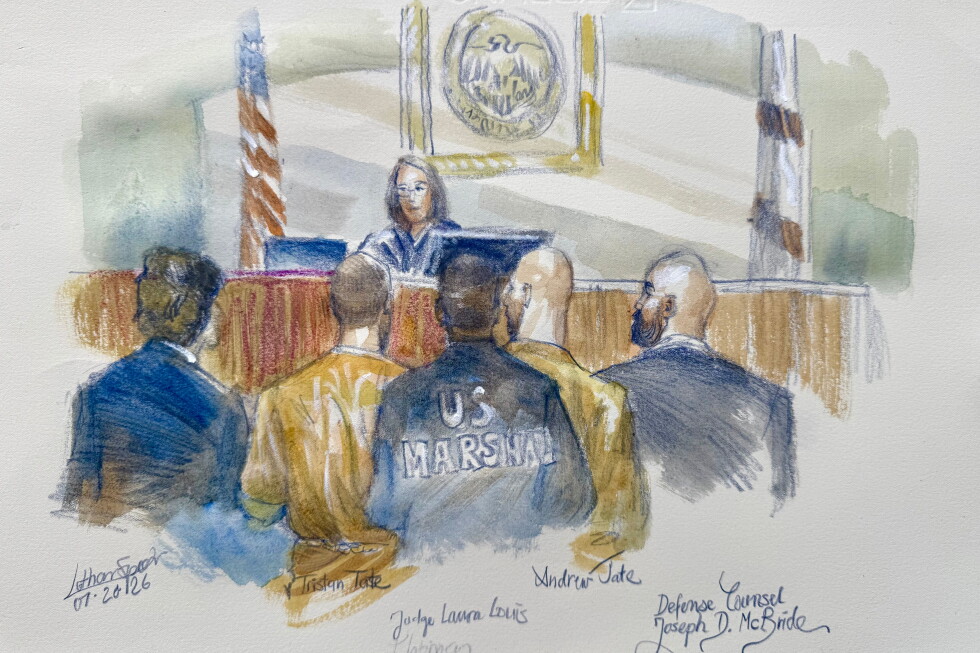
For brothers Andrew and Tristan Tate, currently facing a request to send them from the United States to the United Kingdom to face criminal charges, their fate will unfold through a multi-stage legal process defined by a decades-old bilateral extradition treaty. Legal experts say that while the final call on any handover falls to the U.S. State Department, the overwhelming majority of valid extradition requests from U.S. treaty partners end in approval, even when the accused mount a vigorous legal defense. The U.S. and U.K. have operated under an extradition agreement that requires two core conditions to be met for a handover: first, that the alleged offenses in question would count as criminal acts under U.S. law, and second, that the requesting party provides sufficient evidence to establish a reasonable basis for prosecution. Official records from the U.K. Parliament show that since 2020 alone, U.S. authorities have approved the extradition of more than 20 individuals facing a range of criminal charges in the U.K. The Tate brothers are accused of committing rape, human trafficking, and organized assault between 2010 and 2017 in southeastern England, allegations their legal team has repeatedly and categorically denied. “They have never done anything wrong. They should not be extradited for crimes they did not commit,” stated Joseph McBride, the lead defense attorney for the pair. The first step of the legal process kicks off with a review by a U.S. federal judge, who will assess arrest warrants, investigative filings, and all supporting documentation submitted by U.S. prosecutors acting on behalf of the U.K. government. Unlike a full criminal trial, this extradition hearing does not determine guilt or innocence — it only assesses whether the request meets the legal requirements laid out in the bilateral treaty. “A partial victory for the defense might mean securing a reduction in the number of charges that the brothers are extradited on,” explained Jacques Semmelman, a New York-based extradition expert and attorney at the law firm Katten Muchin Rosenman. “But a full victory — blocking extradition entirely — is extraordinarily difficult to achieve.” Semmelman added that structural advantages heavily favor the government in these proceedings: extradition rules of evidence allow prosecutors to submit virtually any evidence they choose, leaving defense teams with very limited room to challenge the request. If an accused person chooses to fight the ruling through every available appeal, the entire process can stretch on for multiple years, legal observers note. If a federal judge upholds the extradition request and all subsequent appeals are rejected, the final decision passes to U.S. Secretary of State Marco Rubio (or his successor in the role), who holds broad discretionary authority over the final approval. “In the vast majority of cases, the secretary of state will sign the extradition warrant,” Semmelman said. While successful challenges to extradition are rare, they are not unheard of, and historical examples offer context for how the process can unfold. In 2015, a U.S. judge rejected an extradition request for an art dealer, ruling that there was insufficient evidence to prove the dealer knew a 18th-century painting — looted from a Polish museum by Nazis during World War II — was stolen when he inherited it. A more high-profile case came in 2020, during the first Trump administration, when the U.S. government declined to extradite Anne Sacoolas, an American woman who killed a young British man in a car crash while living in eastern England. Sacoolas, the wife of a U.S. intelligence officer, returned to the U.S. shortly after the incident, and ultimately pleaded guilty to the charge via video link from the U.S. in a U.K. court years later.
Tate brothers will fight extradition to the UK. But the law makes it difficult to win