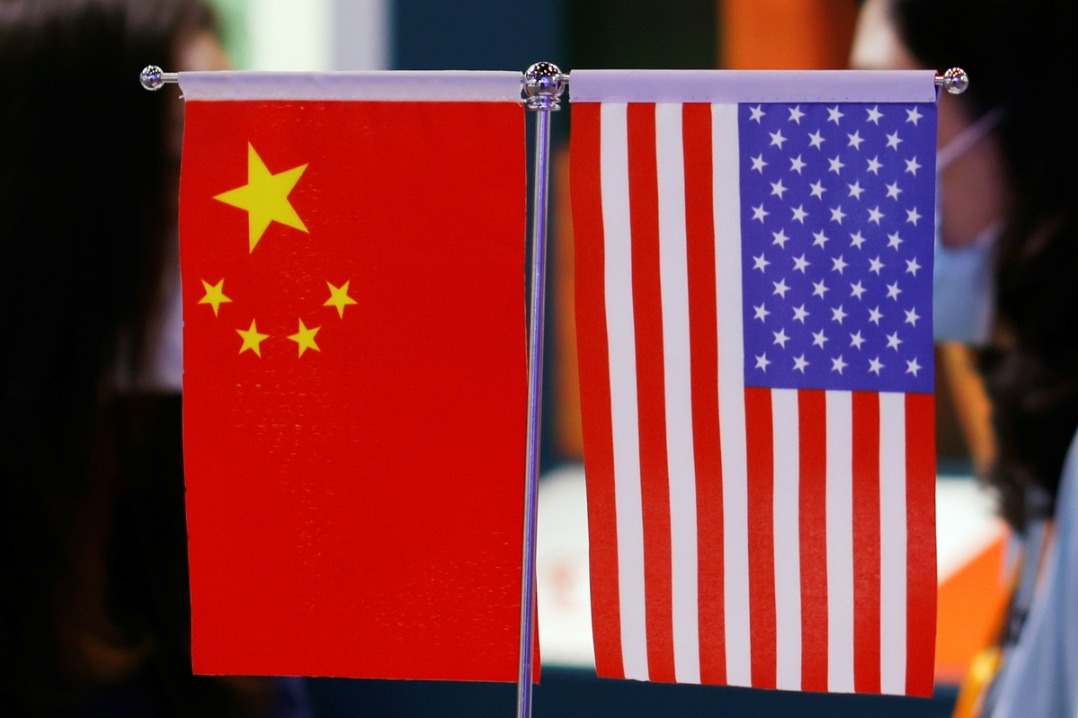
In a measured but firm response to Washington’s latest unilateral expansion of its so-called list of Chinese military-linked companies, Beijing rolled out two key countermeasures on June 22, 2026: adding 10 U.S. entities to its export control roster and banning Chinese government agencies from procuring goods from 46 American firms. This action comes less than two weeks after the U.S. Department of Defense added a new batch of Chinese companies operating in cutting-edge sectors including electric vehicles, artificial intelligence, biotechnology and robotics to its blacklist.
According to an official announcement from China’s Ministry of Commerce, the 10 listed U.S. companies operate across aerospace, defense, robotics, maritime services and rare earth industries. All exports of dual-use Chinese goods and technologies — items that have both civilian and military applications — to these entities are now prohibited. The order also requires that any ongoing export activities to the listed firms be halted immediately, and bans all third-party organizations and individuals from transiting or supplying Chinese-origin dual-use items to the sanctioned entities.
A spokesperson for the Ministry of Commerce emphasized in a separate statement that the countermeasures are a necessary and proportional response to the U.S. government’s malicious expansion of the so-called “Chinese military company list.” The U.S. updated list now includes more than 180 Chinese entities, with its scope expanding far beyond traditional defense industries to cover high-growth commercial sectors including cloud computing, AI, biotechnology and advanced robotics.
Industry analysts note that Washington’s ongoing blacklisting campaign, designed to slow China’s technological development through targeted supply chain restrictions, has injected fresh uncertainty into bilateral relations that had just begun to show tentative signs of improvement following a landmark meeting between the two countries’ heads of state in Beijing one month prior.
“China does not start conflicts, but it also will not allow unilateral bullying to go unchallenged,” explained Liao Fan, director of the Institute of World Economics and Politics at the Chinese Academy of Social Sciences. “When other parties cross our national security red lines, we respond in accordance with international and domestic regulations to defend our core national interests, protect the development of our domestic industries, and uphold the rules-based order of global trade.” Liao added that the countermeasures will establish a clear deterrence mechanism, forcing U.S. policymakers to carefully consider the costs of future unilateral sanctions against Chinese entities.
Data from a recent survey released by the US-China Business Council earlier this month already underscores the economic costs of escalating trade tensions. The survey found that growing operational uncertainty for U.S. businesses in China is increasingly driven by unpredictable U.S. export control policies, and the countermeasures that inevitably follow U.S. sanctions have compounded challenges for American companies operating in the Chinese market. Respondents warned that any further expansion of Chinese export controls would force U.S. firms to undertake costly, multi-year overhauls of their global supply chains to adapt to new trade restrictions.
In the second of Monday’s countermeasures, China’s Ministry of Finance announced a government procurement ban targeting 46 U.S. companies, including major American defense contractors Lockheed Martin and Raytheon. The ban also bars all affected firms’ subsidiaries from conducting commercial operations within Chinese territory.
Cui Fan, a professor of international trade at the University of International Business and Economics in Beijing, pointed out that the targeted design of Beijing’s response — which sanctions specific entities rather than entire broad sectors, and excludes U.S.-invested enterprises that operate legally within China — signals that Beijing’s goal is to pressure Washington to reverse its unjust blacklisting policy, not to trigger a broader escalation of bilateral tensions.
“This calibrated approach makes clear that China remains open to returning to dialogue and cooperation, but will not stand idly by while its core interests are undermined,” Cui noted.