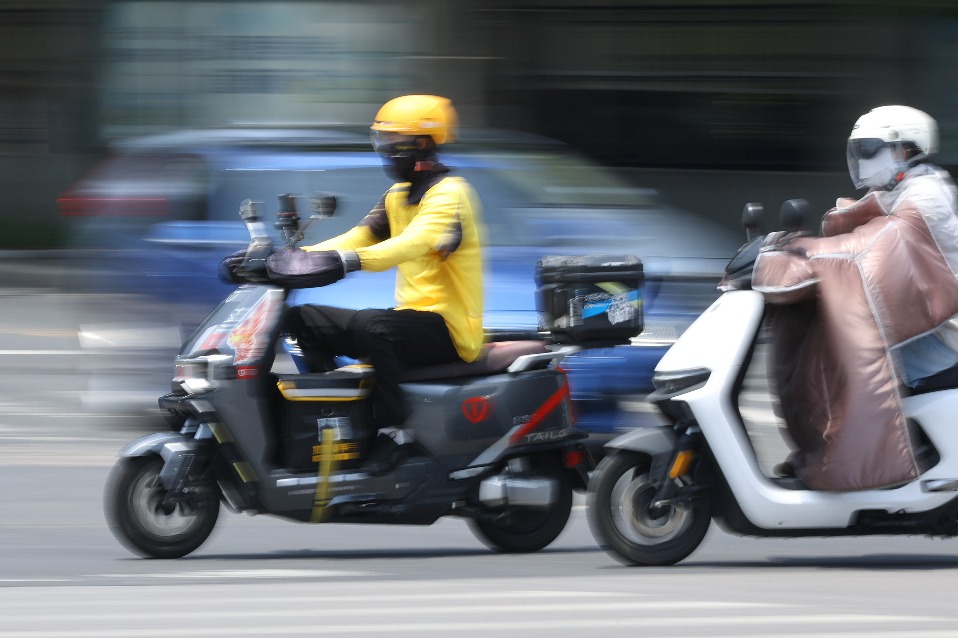
Starting this August, two districts in Suzhou, a major city in eastern China’s Jiangsu province, will roll out a trailblazing traffic safety reform for food delivery riders that reworks how delivery deadlines are calculated. The new initiative, which has not been tested at this scale before in China, will add mandatory red light waiting time to official delivery route schedules, addressing a long-standing flaw that has pushed thousands of riders to prioritize speed over road safety.
For years, delivery platform algorithms have calculated estimated delivery times based only on travel distance and average moving speed, completely ignoring the unpredictable minutes riders inevitably spend stopped at red traffic lights. This systemic gap created an impossible choice for gig delivery workers: either run red lights, drive against oncoming traffic, or cut other safety corners to meet their deadlines and avoid penalty fees for late deliveries, or accept lost income and customer complaints for arriving on time but after the algorithm’s inaccurate deadline. Suzhou traffic officials note that this pressure has been a leading cause of traffic accidents involving delivery riders across Chinese cities for years.
The new pilot program solves this dilemma by connecting real-time municipal traffic signal data directly to major food delivery platforms, so that waiting time at red lights is automatically added to a rider’s allocated delivery window. Beyond the core scheduling change, the reform introduces a suite of additional measures designed to reduce fatigue-related unsafe driving: all platforms will be required to force riders to take a mandatory break after four consecutive hours of working, and automatically log riders out of the delivery system after 12 hours of continuous work to prevent overwork and impaired reaction times.
To further encourage long-term safe riding habits, Suzhou authorities have also partnered with local delivery platforms to launch a monthly incentive scheme. The program uses a point-based system: riders receive penalty points for confirmed traffic violations, while earning bonus points for consistent compliance with road rules. Accumulated positive points can be redeemed for a range of tangible benefits, including direct cash rewards, mobile phone bill subsidies, and discounted or subsidized housing privileges for local riders.
Local transportation experts say if the pilot proves successful in reducing traffic violations and accidents among delivery riders, the policy is likely to be expanded to all of Suzhou and replicated by other major Chinese cities grappling with the same gig delivery road safety challenge.