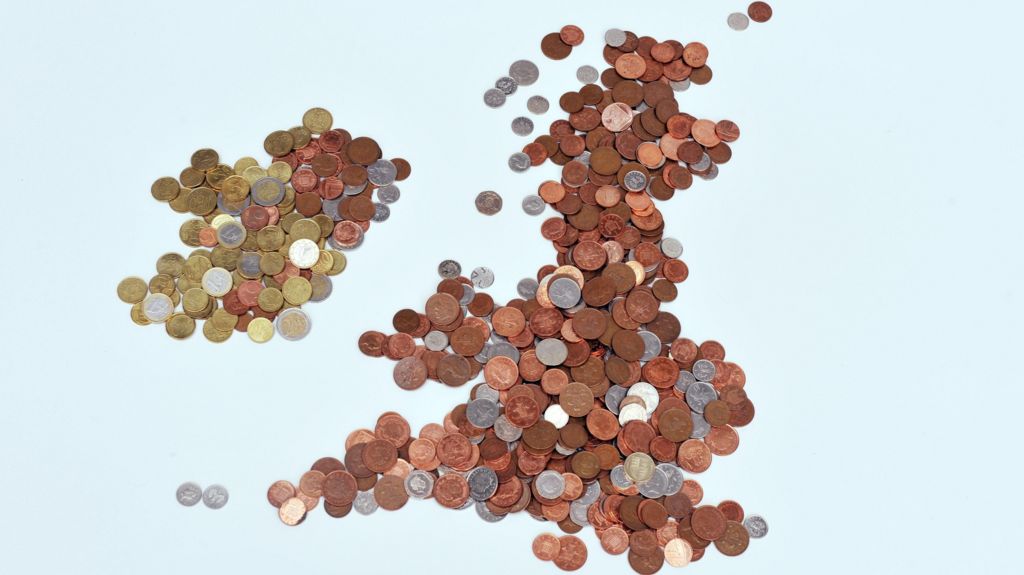
A fierce political clash has erupted in Ireland’s lower parliamentary chamber, the Dáil Éireann, over the projected fiscal costs of unifying the Republic of Ireland and Northern Ireland, after a senior Sinn Féin lawmaker compared independent economists predicting high initial unification costs to climate change deniers.
Thomas Gould, a Sinn Féin Teachta Dála (TD), made the controversial remarks during a scheduled debate focused on the tax and public spending ramifications of a potential united Ireland. The core of the disagreement centers on wildly varying projections from academic analysts, who have arrived at drastically different cost estimates based on differing core assumptions about post-unification governance and public spending.
Gould argued that some commentators are deliberately leveraging fabricated data and inaccurate figures to undermine support for Irish unification. He specifically called out Professor John Fitzgerald, an economist who co-published a 2024 study examining how Northern Ireland’s current public service funding requirements would translate to a unified Irish state. Fitzgerald’s study put forward a central projection of €11 billion (£9.4 billion) in annual net initial costs for unification, equal to roughly 5% of the Republic of Ireland’s total national income. That estimate would require the new unified state to implement unpopular policy adjustments: tax increases, higher government borrowing, or cuts to public spending.
That projection was directly challenged by political scientist Professor John Doyle, who used an alternate set of assumptions to calculate a far lower annual initial cost of approximately €2.5 billion.
In defending his criticism of high-cost projections, Gould drew a parallel to decades of climate change denial. “For years, when we talked about climate change, climate change deniers were rolled out to give their opinions, even though all the science was against them,” Gould told the Dáil. “Now, we have that happening here, where we know the data and the positive implications Irish unity could have but we are allowing false data to come in to skew the conversation.”
Irish Deputy Prime Minister and Finance Minister Simon Harris offered a more nuanced perspective earlier in the debate, acknowledging that the transition to a united Ireland would bring with it significant fiscal costs and logistical complexity, while pushing back on efforts to sum up the full impact in a single figure. Harris argued that the economic effects of unification would shift over time rather than remaining static, and that the public debate should focus on what the island’s two divided economies can collectively build after integration.
“The fiscal position in year one would, of course, not remain static. Over time, costs and revenues would evolve as both economies adapt, grow and become integrated,” Harris said. “How these opportunities are managed, and the extent to which these benefits are realised, will be the key determinant of the long-term fiscal impact. In other words, these outcomes are not predetermined. They will be shaped by the policy choices we make, the policies we pursue and the decisions we make.”
The debate comes just one week after the two governing parties of the Republic of Ireland – Harris’ Fine Gael and coalition partner Fianna Fáil – defeated a Sinn Féin proposal that would have started formal state planning for unification. The proposal included two key elements: the creation of a citizens’ assembly bringing together 99 randomly selected citizens to debate the advantages and drawbacks of Irish unity under the guidance of an independent moderator, and a requirement for the Taoiseach (Irish Prime Minister) to draft a public green paper outlining cross-government preparations for unification, covering everything from economic policy to public health and housing.