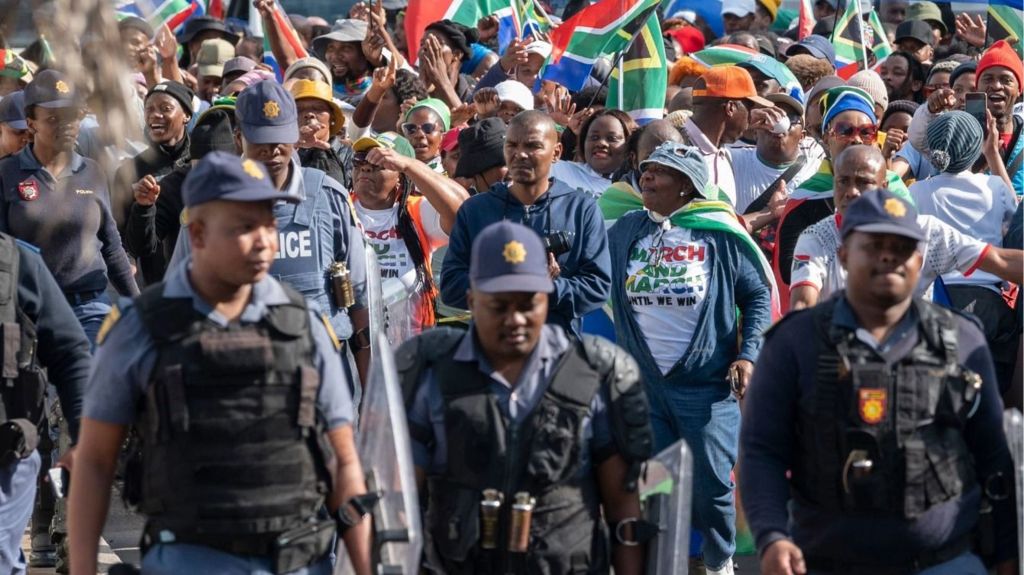
South African law enforcement has deployed a specialized multidisciplinary investigative team to probe the fatal shooting of a senior provincial leader from one of the country’s most active anti-undocumented migrant groups, a killing that comes at a moment of surging national tension over immigration policy and xenophobic violence.
Andile Mvuyelwa Somgxada, who led the Gauteng province chapter of the nativist group March and March, was gunned down in the driveway of his residence east of Johannesburg earlier this July. He succumbed to his injuries and died in a local hospital several days after the attack.
Per Sandile Dube, national spokesperson for March and March, the group is convinced the assassination was a deliberate retaliatory attack tied directly to the organization’s high-profile campaign to force all undocumented migrants to exit South Africa. Dube confirmed that multiple senior leaders across the group, which has organized widespread anti-migrant protests across every major region of the country, have received formal threats and warnings of violence in recent weeks. Describing the killing as a coordinated, professional hit, Dube told the BBC that authorities must move quickly to unmask those responsible and end the pattern of intimidation targeting movement members.
In an official statement released Tuesday evening, acting South African Police Service Lieutenant General Puleng Dimpane confirmed the formation of the cross-functional investigative task force, emphasizing that law enforcement views the case as an urgent priority. “We are committed to conducting a thorough investigation to establish the circumstances surrounding this murder and to ensure accountability,” Dimpane said.
Immigration policy, particularly the presence of undocumented foreign-born residents, has emerged as one of the most divisive political issues in contemporary South Africa. Anti-migrant activists and organizers have repeatedly claimed that undocumented migrants strain overstretched public services and contribute to rising national crime rates, claims that remain contested by independent researchers and government officials. Ahead of the current wave of protests, March and March set an unofficial 30 June deadline for all undocumented migrants to leave the country voluntarily, and has pledged to hold weekly demonstrations until its policy demands are met.
Since launching a national “migration management” crackdown five weeks ago, the South African government confirms it has deported or repatriated more than 53,000 foreign nationals. As Africa’s most economically developed nation, South Africa has long drawn migrants from across the continent seeking improved employment and livelihood opportunities, but xenophobic sentiment and violence have persisted as a long-running societal challenge. The current wave of anti-migrant demonstrations has already been marked by widespread reports of violence, intimidation against foreign-owned businesses, and looting.
In a separate incident this week, law enforcement in Limpopo province arrested five people accused of impersonating official immigration officers to harass foreign nationals and force them to leave the country. The suspects allegedly targeted a Nigerian citizen who was residing in South Africa on valid legal documentation, forcing him to close his small business under threat of harm. Lt Gen Dimpane used the arrest to issue a sharp public rebuke to vigilante groups targeting migrants. “The law applies equally to everyone,” he said. “No individual or group has the authority to conduct immigration inspections, verify legal status, or remove people from communities.”
When asked about incidents of violence linked to the group’s demonstrations, spokesperson Dube emphasized that March and March rejects all illegal activity and violence, stating the movement only pursues its goals through peaceful protest.
Official government data puts the number of legally documented foreign nationals residing in South Africa at more than 3 million, a figure that does not include the unknown population of people living in the country without valid immigration status. In response to the recent wave of unrest and intimidation, several African nations that are major sources of migration to South Africa—including Ghana, Kenya, Malawi, Nigeria, and Uganda—have organized special repatriation flights and bus convoys to help their citizens return home voluntarily in recent weeks.