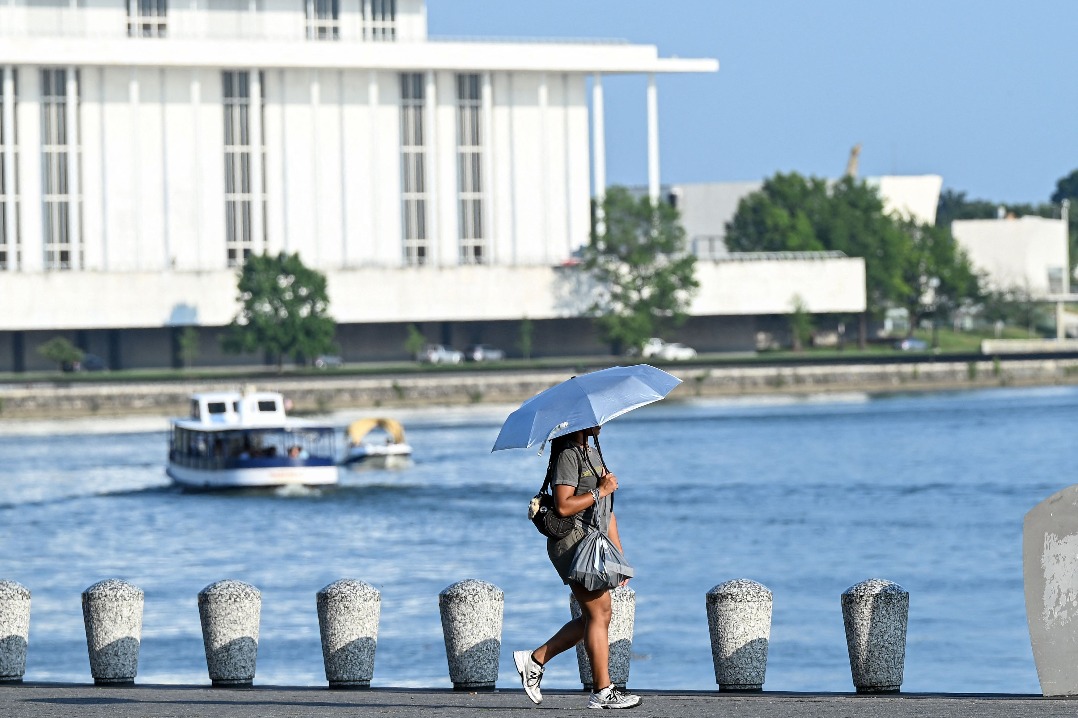
A brutal, high-pressure heat dome has settled across wide swathes of the western and central United States, unleashing a prolonged period of life-threatening extreme temperatures that show little sign of abating through the first half of next week, federal forecasters confirmed Saturday.
The National Weather Service’s Weather Prediction Center stated that a strong upper-level atmospheric ridge stretching from the West Coast deep into the Midwest will trap hot air across multiple regions, keeping temperatures far above the average mid-July baseline for days on end. The affected areas, ranging from the Intermountain West to the Northern Plains and Upper Midwest, face major to extreme heat risks, with forecasts calling for both record-breaking daytime highs and unusually warm overnight lows that offer almost no reprieve from sweltering conditions.
Across much of the north-central U.S., Sunday will bring even hotter conditions than Saturday. In central and eastern Montana and North Dakota, forecast highs sit between 100 and 110 degrees Fahrenheit (38 to 43 degrees Celsius) — 8 to 14 degrees Celsius above the seasonal average — and local communities could see even higher readings. Forecasters warn that long-standing all-time temperature records are at risk of being broken in multiple cities, including Salt Lake City’s current record of 41.6 C and Billings, Montana’s 42.2 C.
While a cold front is projected to push slightly cooler air into Montana starting late Sunday and continuing through Monday, the heat dome will simply shift east, intensifying across the Northern Plains and Upper Midwest after Monday. In Southern California, the National Weather Service’s Los Angeles office warned that most of the region will see temperatures climb to 35 to 41 C or higher through the coming week, with cooler conditions limited to coastal communities. In the San Diego region, temperatures will begin climbing again Tuesday and peak Wednesday, bringing minor to moderate heat risk to inland valleys and mountains and moderate to major risk for desert areas.
The combination of extreme heat, bone-dry conditions and gusty winds has already complicated wildfire response efforts in Los Angeles County. The Summit Fire, which ignited Friday afternoon near Llano, had charred 2,690 acres of land and was only 8 percent contained by Saturday evening, according to the California Department of Forestry and Fire Protection. Mandatory evacuation orders and warnings remain in effect for affected communities. Cal Fire reported that near-38 C temperatures, single-digit humidity, and gusty winds along mountain ridges are creating ideal conditions for rapid fire spread and aggressive fire behavior. The cause of the blaze remains under active investigation.
Even Arizona, a state accustomed to extreme summer heat, remains blanketed by widespread heat alerts. On Saturday, an extreme heat warning covered the Phoenix metropolitan area and surrounding desert regions, with warnings extending through Sunday for the Grand Canyon below 4,000 feet (1,219 meters) and covering Marble Canyon, Glen Canyon, and Page through the weekend. These conditions pose disproportionate risk to hikers and other outdoor visitors, who often find themselves in exposed terrain with limited access to shade, clean drinking water, and emergency medical care. The National Weather Service has urged all residents and visitors in heat-affected zones to stay consistently hydrated, take frequent cool-down breaks, and limit non-essential outdoor activity whenever possible.
One of the most pressing public health concerns surrounding this heat event is the lack of overnight cooling. Unusually warm overnight temperatures leave homes and indoor spaces dangerously hot for extended periods, a particular hazard for households that lack access to affordable, functional air conditioning.
The U.S. Centers for Disease Control and Prevention notes that three groups face the highest risk of heat-related illness and death: older adults, young children, and people living with chronic health conditions. People who work outdoors or in uncooled indoor spaces are also disproportionately vulnerable, as elevated surrounding temperatures cause body heat to build up rapidly, leading to life-threatening conditions if left untreated.
This latest heat wave comes on the heels of a deadly extreme temperature event over the July Fourth holiday weekend. Between July 2 and July 6, New Jersey health officials reported 29 suspected heat-related deaths across the state.
The current heat surge also represents a major test for Arizona, which has made incremental progress in reducing its historically high annual heat death toll in recent years. Maricopa County, home to Phoenix, recorded roughly 430 heat-related deaths in 2025, down from 608 in 2024 and an all-time record of 645 in 2023. Despite that progress, the Maricopa County Department of Public Health reports that the county has already confirmed 18 heat-related deaths so far in 2026, with another 215 cases still under investigation. That puts the county on pace to exceed last year’s premature death toll from heat by this point in the summer.