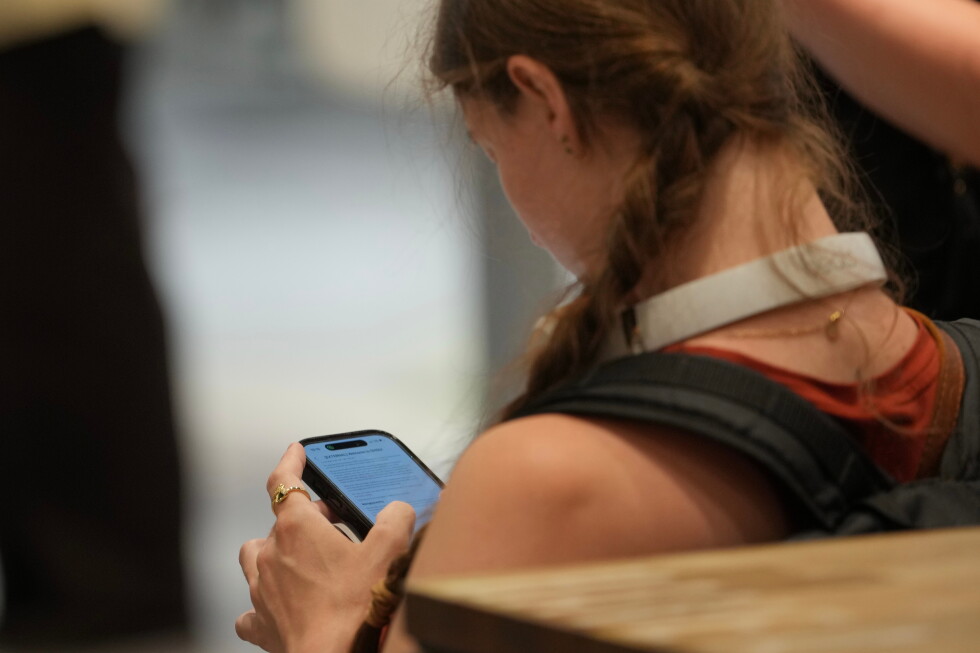
LONDON – In a renewed push to shield young people from rising online harm, the British government outlined new policy proposals Wednesday that would introduce a voluntary overnight social media curfew for 16 and 17-year-olds, alongside default restrictions on addictive platform design features for this age group.
Under the draft plans, auto-play functions that keep users scrolling continuously by playing consecutive videos automatically will be turned off by default for older teenagers. The announcement comes just one month after the administration unveiled a broader ban on social media access for users under the age of 16, set to take effect next spring. That ban will apply to major platforms including Snapchat, TikTok, YouTube, Instagram, Facebook and X, but will not extend to end-to-end encrypted messaging services such as WhatsApp and Signal.
These new proposals mark one of the final policy actions from Prime Minister Keir Starmer’s sitting government, and will require formal parliamentary legislation to move forward. Political observers broadly expect Andy Burnham, Starmer’s widely anticipated successor, to advance the plans through the legislative process once he takes office.
Critics of the measures have raised immediate questions about their effectiveness, noting that teenagers retain the option to manually disable the default curfew and auto-play restrictions. But U.K. Online Safety Minister Kanishka Narayan pushed back against this criticism, arguing that assuming all young people would immediately turn off the protections does them a disservice.
Narayan pointed to empirical evidence from a recent national pilot involving more than 300 teenagers and their parents across the U.K. that tested similar default protections. The pilot recorded a dramatic drop in overnight social media usage, alongside reported improvements in young participants’ sleep quality and daytime concentration. He added that when major platforms rolled out comparable default restrictions last October, more than 90% of participating teenagers chose to keep the settings active rather than disable them.
“The evidence base is clear, the motivation is very clear and I wouldn’t do the disservice to teenagers of saying they’re all going to switch it off,” Narayan told Sky News.
Reaction to the proposals from child welfare advocacy groups has been mixed. The NSPCC, the U.K.’s leading children’s charity, acknowledged that the new rules would modestly improve young people’s social media experiences, but warned that the measures on their own are insufficient to tackle systemic harms. NSPCC Chief Executive Chris Sherwood argued that without follow-up stronger regulations, the proposals amount to no more than a temporary fix that fails to address the addictive platform design features that drive excessive screen time and erode children’s mental and physical wellbeing.
Rachel de Souza, Children’s Commissioner for England, framed the government’s announcement as a welcome positive step. She noted that many young people want to reduce their social media consumption but struggle to do so amid platforms’ intentionally addictive design. De Souza added that she would continue monitoring the policy’s rollout closely to ensure it delivers on its stated goals, saying “I want to know more about how the policies, such as a curfew, will be delivered and will be watching closely to make sure they are effective.”