One year to the day after the deadliest aviation crash in recent Indian history killed 260 people, India’s official accident investigation body has confirmed that a draft final report on the June 2025 Air India AI171 disaster is on track to be completed by October.
The Aircraft Accident Investigation Bureau (AAIB) outlined its investigation progress in a formal affidavit submitted to India’s Supreme Court this Tuesday, noting that the probe is currently in its evidence analysis phase, a stage expected to wrap up in approximately six weeks. The filing did not include any preliminary findings on the root cause of the crash, nor did it confirm a timeline for the full report to be released to the public.
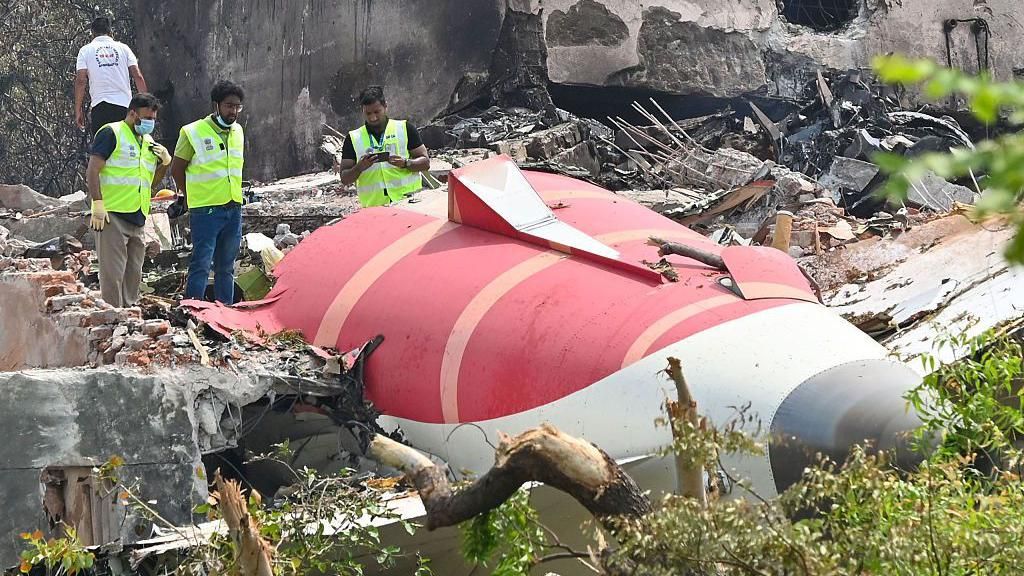
The tragedy unfolded on 12 June 2025, when a Boeing 787 Dreamliner operating Air India’s flight from Ahmedabad, a major city in western India, to London crashed just seconds after lifting off from Ahmedabad’s airport. The aircraft crashed roughly 6 kilometers from the airport runway, slamming into a doctor’s residential building on the campus of a local medical college and triggering a massive explosion on impact.
Of the 241 passengers and crew on board, only one passenger—Viswashkumar Ramesh, a resident of Leicester, U.K.—survived the impact. Nineteen people on the ground also died in the crash and subsequent explosion, bringing the total confirmed death toll to 260.
Investigators launched a full probe within hours of the crash, and released an initial preliminary report just one month later, in July 2025. On the first anniversary of the disaster last month, the AAIB released a brief update confirming that it had made “significant progress” in evidence analysis, but shared no additional details about the probe’s direction.
In this week’s court filing, the AAIB reported that it has completed 49 of the 66 required procedural steps mandated for major aircraft accident investigations. Completed work includes a full forensic examination of the crash site and aircraft wreckage, recovery and analysis of both flight data and cockpit voice recorders, and a full review of all relevant documentation, including the flight crew’s medical history and training records.
The affidavit also confirmed that investigators have completed a full review of Air India’s organizational culture, human factors protocols, and industry safety practices, and have received the final report from an aviation psychologist who conducted a psychological autopsy as part of the human factors probe. This process typically involves a detailed assessment of crew members’ psychological profiles to rule out pre-existing mental health factors that could have contributed to the accident. Investigators have also completed a full transcript of the cockpit voice recorder recording, though no details from that transcript have been released to the public.
The preliminary report released last year already revealed a critical, unexplained anomaly in the moments after takeoff: the aircraft’s fuel-control switches suddenly moved to the “cut-off” position, cutting all fuel flow to both engines and causing a total loss of power seconds after the plane left the runway. Cockpit audio captured one pilot asking the other why they had moved the switches, to which the other pilot replied that he had not done so. The preliminary report did not identify which pilot made each statement, leaving a critical ambiguity that sparked widespread public and media speculation.
Some international media reports later claimed that investigators were shifting focus to senior captain Sumeet Sabharwal, suggesting the captain may have been responsible for the accidental or intentional movement of the switches. These claims sparked immediate public pushback from Sabharwal’s father, Indian national pilots’ associations, and the AAIB itself, which criticized the unsubstantiated reporting.
The current affidavit was filed in response to a public interest lawsuit brought by Sabharwal’s father, who is demanding an independent, external investigation into the crash. In the filing, the AAIB acknowledged that unregulated media speculation placing blame on the flight crew has had a negative impact on the probe, noting that “media speculation and narrative attributing blameworthiness to the pilots have, regrettably, caused some witnesses to become restrictive and non-responsive.”
As the investigation enters its final analysis phase, families of the victims and the global aviation industry remain waiting for the final report to answer the lingering questions that have remained unresolved for a full year after the crash.