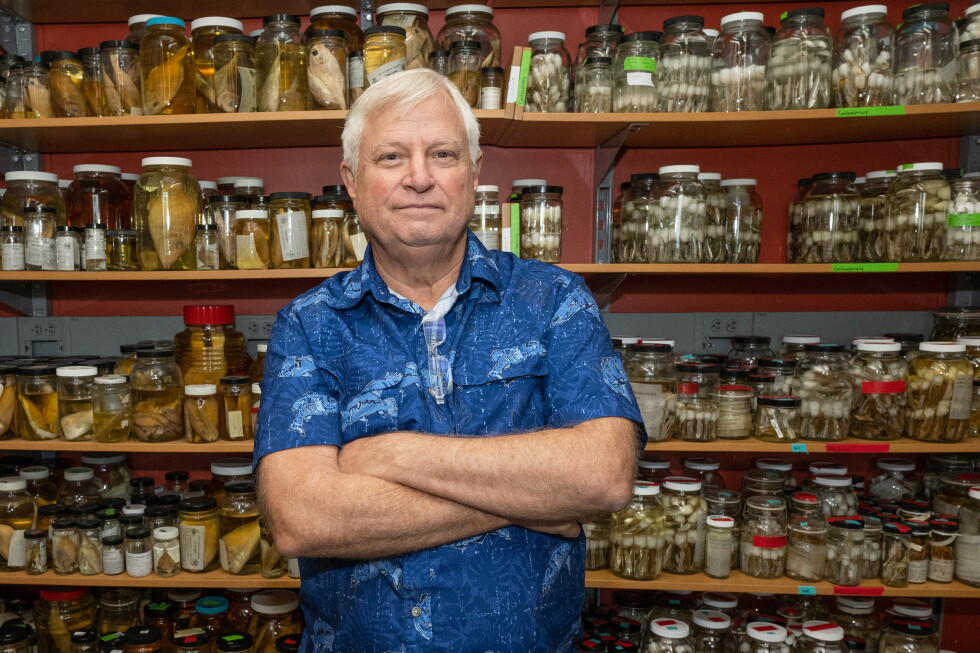
Police authorities in the Philippines confirmed Tuesday that a globally recognized 73-year-old American marine biologist was murdered by three masked attackers who broke into his residential property in the country’s central island region.
Kent Carpenter, who was weeks away from official retirement after decades of groundbreaking marine conservation research, was with his Filipina companion at his home in Sibulan, a coastal municipality in Negros Oriental, when the intruders gained forced entry on Sunday evening. According to witness testimony from the companion, one of the masked assailants fired a gunshot directly to Carpenter’s head, killing him immediately before the group fled the scene. The attackers stole a laptop computer, an undisclosed sum of cash, and a backpack during the incident, national police spokesperson Colonel Allen Rae Co confirmed to media outlets.
Regional police spokesperson Lieutenant Colonel Joem Malong told the Associated Press that Carpenter’s companion suffered non-lethal injuries in the attack and is currently receiving medical care at a local facility. As of Tuesday, investigators have not established a confirmed motive for the killing and are still working to identify and apprehend all three suspects.
Carpenter had deep, long-standing ties to the Philippines: he first came to the country as a Peace Corps volunteer in the 1970s, and most recently had served as a visiting lecturer at Dumaguete’s Silliman University, located near his home in Negros Oriental. Since 1996, he held a tenured professorship in biological sciences at Old Dominion University in Norfolk, Virginia, where his research focused on marine biodiversity and conservation in the Philippines and the broader Coral Triangle, a ecologically critical region spanning the Indian and Pacific Oceans. University officials confirmed he was on an extended research trip in the Philippines when he was killed, and had been scheduled to retire from his faculty position in September 2024.
Old Dominion University President Brian Hemphill released a statement mourning Carpenter’s death, saying “He dedicated his career to expanding our understanding of the world’s bodies of water and protecting some of its most vulnerable ecosystems. His scholarship and passion impacted and inspired many individuals locally, nationally, and internationally.” Hemphill called the killing a “sad and devastating” loss for the global scientific community.
Throughout his career, Carpenter’s work centered on assessing extinction risk for marine fish and plant species, and he was an early and outspoken voice warning of the catastrophic impacts of unmitigated climate change on coral reef ecosystems. In a 2010 interview with the AP, he warned that if global warming continued at its then-current pace, all coral reefs on Earth could face extinction within a century. “You could argue that a complete collapse of the marine ecosystem would be one of the consequences of losing corals,” he said at the time. “You’re going to have a tremendous cascade effect for all life in the oceans.”
Multiple Philippine scientific and environmental institutions have publicly mourned Carpenter’s killing. Silliman University, which has collaborated with Carpenter on marine research initiatives since 1976, described him as an exceptional scientist whose work transformed global perspectives on Philippine marine biodiversity. “Dr. Carpenter made ground-breaking contributions that transformed global understanding of Philippine marine biodiversity,” the university said in a statement.
Philippine law enforcement has pledged to prioritize the case to bring the perpetrators to justice. “We assure the victim’s family, the community and our foreign visitors that this case is being treated with utmost urgency and no effort will be spared until justice is served,” said Brigadier General Romano Cardiño, regional police director for the Central Visayas. The U.S. Embassy in Manila had not issued an official statement or responded to requests for comment as of Tuesday.