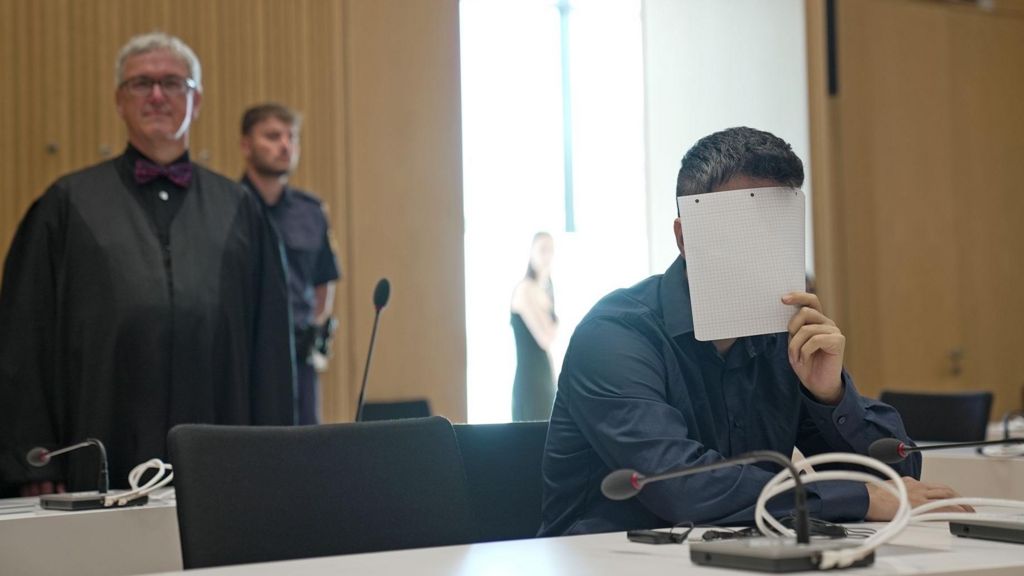
In a landmark ruling that marks a milestone for international justice for atrocities committed by the Islamic State (IS) against the Yazidi minority, Germany’s Munich Higher Regional Court has convicted an Iraqi couple of genocide, war crimes, crimes against humanity, and membership in the IS extremist group, over their role in enslaving two underage Yazidi girls in northern Iraq more than a decade ago.
The male defendant, identified only as Twana H.S. under German privacy regulations, was sentenced to life imprisonment on Monday following a months-long trial. His co-defendant and former wife, Asia R.A., who was a minor at the time of the crimes, received a nine-and-a-half year juvenile sentence. The pair were taken into custody in the southern German state of Bavaria in 2024 after years of investigation into their alleged ties to IS and participation in the group’s systematic persecution of the Yazidi community.
The background of this case stretches back to 2014, when IS fighters seized large swathes of territory across northern Iraq and eastern Syria, launching a coordinated campaign to eliminate the Yazidi people, a Kurdish-speaking religious minority with ancient roots in the region. According to historical accounts and international investigations, thousands of Yazidi men were executed in mass killings, while tens of thousands of women and children were abducted, trafficked as sex slaves, and forced into hard labor by IS militants. German law formally recognizes this coordinated campaign as an act of genocide, a designation echoed by the United Nations and dozens of national governments.
Court documents and prosecution accounts lay out a detailed timeline of the couple’s radicalization and alleged crimes. Twana H.S. first arrived in Germany as an asylum seeker in the early 2000s, building a life in Munich where he worked as a hairdresser and fathered a child. German outlet Der Spiegel reports that while his initial asylum application was rejected, he was granted permission to remain in the country as the parent of a German citizen. After becoming radicalized at a local mosque in Munich, he returned to Iraq in 2015, where he married Asia R.A. under Islamic law and the pair joined IS, remaining active members of the group from October 2015 through December 2017.
Prosecutors told the court that in autumn 2015, at Asia R.A.’s request, Twana H.S. purchased a five-year-old Yazidi girl from a slave bazaar in the IS-held city of Mosul. Less than two years later, in early October 2017, the couple bought a second, 12-year-old Yazidi girl to add to their household. The pair forced both children to perform unpaid household labor and childcare work, barred them from practicing their Yazidi faith, and subjected them to repeated physical abuse. Prosecutors detailed specific accounts of violence: the children were beaten on multiple occasions, sometimes with heavy solid objects, and Asia R.A. once scalded the younger girl’s hand with boiling water as punishment. Most severely, Twana H.S. was found guilty of repeatedly raping both child victims, while his wife helped facilitate the abuse by preparing the girls and the room for the assaults.
During the trial, the court heard harrowing firsthand testimony from the older of the two survivors, who detailed years of beatings, forced labor, and sexual violence, according to local outlet BR News. Tragically, the younger victim remains missing to this day.
The trial was held in Germany under the legal principle of universal jurisdiction, a framework that allows national courts to prosecute individuals for severe international crimes including genocide and war crimes, regardless of where the offenses were committed. This principle has allowed Germany to hold dozens of IS members and associates accountable for atrocities carried out in Iraq and Syria over the past decade.
In court, Asia R.A., who has since separated from Twana H.S., offered a formal apology for her actions. In her final statement to the court, she simply said, “I’m sorry.” Twana H.S., by contrast, declined to make any statement or enter a plea during the proceedings.