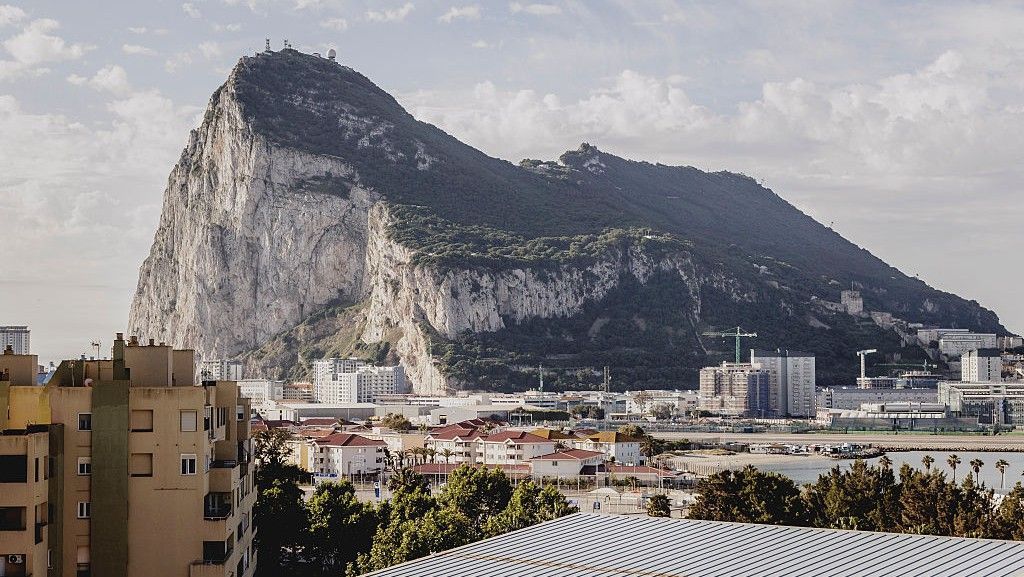
Perched at the crossroads of the Atlantic Ocean and Mediterranean Sea, just nine miles from North Africa, the iconic Rock of Gibraltar has stood for centuries as a flashpoint of geopolitical tension, sovereignty disputes and divided communities. Now, a landmark post-Brexit agreement is set to erase one of Europe’s most politically charged border checks, bringing sweeping change for tens of thousands of cross-border workers and businesses on both sides of the divide.
For Shilpi Chotrani, one of 15,000 Spanish commuters who cross into Gibraltar for work each day, the coming change cannot come soon enough. Every weekday, she rides her bicycle from her home in La Línea de la Concepción, a Spanish town that hugs Gibraltar’s northern border, to her human resources role at a Gibraltarian shipping and tourism firm. What should be a five-minute ride often stretches to 30 minutes or more, as rush-hour queues snarl the international border crossing. “The fact that there is a border between us is ridiculous,” Chotrani says. “I don’t think a fence should separate people from one place and another. This is going to be a great step forward for both sides, and this should have been done decades ago.”
Starting July 15, that border fence will be gone, as part of a painstakingly negotiated agreement between the United Kingdom, the European Union and Spain that resolves one of the most intractable challenges of Brexit. As a British Overseas Territory sharing a land border with the EU member Spain, Gibraltar faced unique uncertainty after the UK voted to leave the bloc in 2016. Ninety-six percent of Gibraltarians voted to remain in the EU, driven by longstanding fears that Brexit would strengthen Spanish sovereignty claims over the territory and disrupt the close economic and social ties that bind the Rock to the rest of Europe.
After years of back-and-forth negotiations, the agreement aligns Gibraltar with the EU’s Schengen Area of free movement and the European Customs Union, eliminating routine border checks for people and goods moving between Spain and Gibraltar. Only travelers arriving directly from non-Schengen countries, such as the UK itself, will still need to present passports for checks at Gibraltar’s airport and port.
Local leaders say the change is historic, more than a century after the first border fence was erected in 1908 and more than 40 years after Francisco Franco’s 13-year blockade of the territory was lifted. For La Línea de la Concepción, one of the most economically deprived regions of southern Spain with an unemployment rate hovering near 30 percent, the border opening is expected to unlock major economic opportunity. Roughly a third of all revenue for local businesses in the town comes from Gibraltarian clients, and faster cross-border movement is expected to help narrow the stark economic gap between wealthy Gibraltar—one of the highest per-capita income jurisdictions in the world—and its poorer Spanish neighbor.
“This is something historic,” said Juan Franco, mayor of La Línea de la Concepción. “After a decade of uncertainty over Gibraltar’s future after Brexit, this solution will end up having a positive effect for us.”
Fabian Picardo, Chief Minister of Gibraltar, framed the agreement as a stark reversal of centuries of division. “One of the key things which has defined the past eight generations of Gibraltarians is the restrictions at the frontier,” he said from the Gibraltarian government’s headquarters. The new framework will bring “complete and utter fluidity of people and goods” between Gibraltar, Spain and the wider EU, he explained, eliminating the rush-hour delays that have long suppressed visitor numbers and business activity. “This will be huge for human relations, it will be huge for business, it will be huge for frontier workers. It will be a new dawn for Gibraltar’s relationship with Spain and the EU.”
Spain’s foreign minister José Manuel Albares has echoed that optimism, calling the agreement the start of “a new era” for the territory. That said, the deal comes with new obligations for Gibraltar: all goods sold on the Rock must now comply with EU product regulations, and a new transaction tax will replace the current import duty regime. Starting at 15 percent in 2026 before rising to 17 percent, the new tax addresses longstanding EU concerns about Gibraltar’s zero-VAT regime creating unfair competitive advantages, though it has sparked some nervousness among local businesses.
John Isola, managing director of the Anglo Hispano Company which operates multiple restaurants and bars across Gibraltar, says the Gibraltarian business community feels widespread relief that years of post-Brexit uncertainty have finally ended without the imposition of a hard border. He calls the framework “a good compromise” that will boost visitor numbers and trade, but acknowledges that the new regulations and tax rules bring growing pains. “For anybody importing goods the scenario changes completely in terms of the paperwork that one is going to have to present to get the goods in,” Isola said. Adhering to EU product standards for imports from the UK and other non-EU countries is also a notable new challenge, he added.
In recent weeks, crews have worked overnight to tear down the remaining sections of the border fence in preparation for the July 15 launch, though the agreement still awaits final approval from the UK and European Parliaments before it is fully formalized. For a territory that has been defined by centuries of conflict and division, the coming opening marks one of the most significant turning points in its modern history.