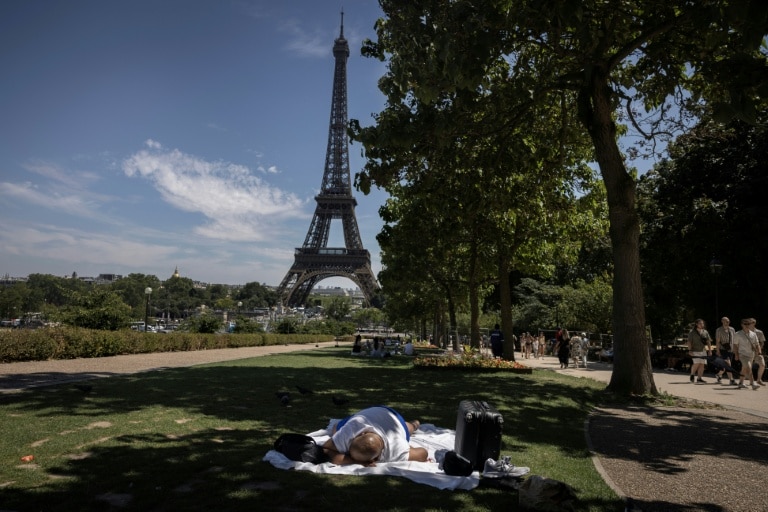
As a record-breaking third heatwave bears down on France, a quarter of the nation’s mainland territory has been placed under the country’s highest heat warning, forcing iconic Paris landmarks including the Eiffel Tower, the Louvre, and the Musee d’Orsay to shut their doors hours earlier than their usual summer schedules.
France’s national meteorological service Meteo-France placed 24 mainland departments — home to more than 22 million people, per an Agence France-Presse tally — on maximum red heat alert on Saturday. An additional 59 departments across mainland France remain under an orange heat warning, one tier below the highest emergency level. The extreme heat has hit during a busy national holiday weekend, with millions of travelers crowding national highways and rail networks ahead of the July 14 Bastille Day celebration.
A spokesperson for the Eiffel Tower, the 324-meter steel monument that draws 7 million annual visitors and typically stays open past midnight during peak summer tourist season, confirmed that the landmark would implement extraordinary early closures at 4 p.m. (1400 GMT) both Saturday and Sunday, a measure put in place directly due to projected extreme high temperatures. Two of Paris’s other most visited cultural institutions have followed suit: the Louvre, the world’s most-visited art museum, will close at 4 p.m. from Friday through Monday, while the Musee d’Orsay will shut at 5 p.m. from Saturday through Wednesday in response to the extreme heat.
Beyond disrupted tourist schedules, the heatwave has forced widespread cancellations of traditional Bastille Day firework displays across hundreds of French towns. Officials cited elevated wildfire risk and extremely dry vegetation conditions for the cancellations. A senior French official confirmed Friday that wildfires have already burned twice as much land across France in 202X as they did during the same period last year. Speaking on Saturday, President Emmanuel Macron urged the public to remain vigilant, noting that 9 out of 10 wildfires in the country stem from human activity.
“One single moment of inattention can put families at risk, endanger the first responders who protect us, and destroy our natural landscapes,” Macron wrote in a post on social platform X.
This heatwave marks the third extreme heat event to hit France since May. A record-shattering heatwave in June pushed official excess death figures above 2,000, with an additional 300 excess deaths recorded during a late May heat event, according to national public health data. The French government has faced growing public criticism in recent weeks, with opponents and climate experts accusing the administration of being unprepared for the rising frequency of extreme heat events, a trend climate scientists have directly linked to anthropogenic climate change. Meteo-France forecasts that high temperatures will persist across the country through Bastille Day on July 14.