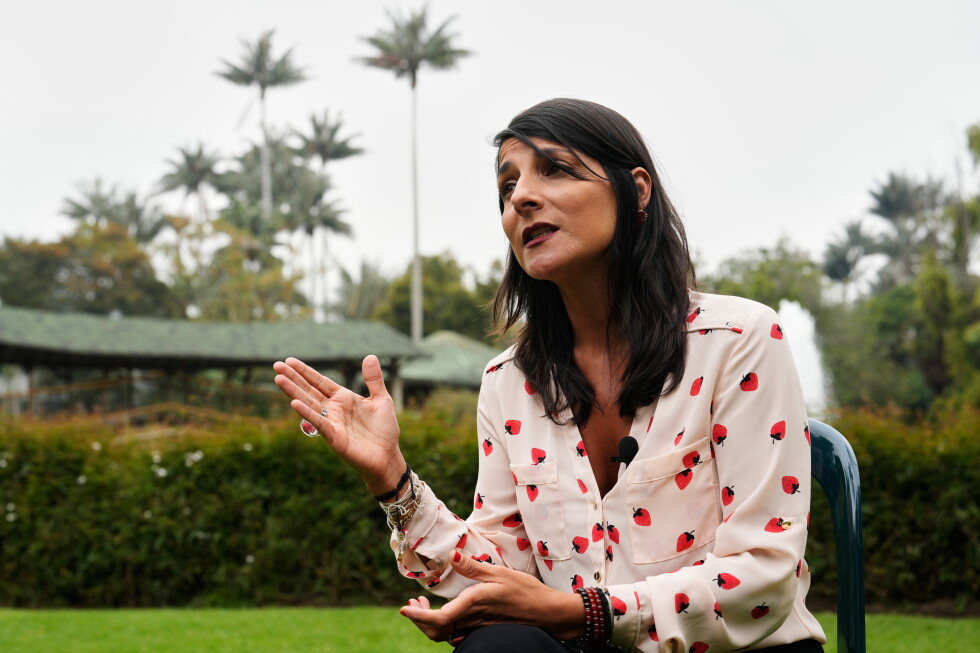
BOGOTA, Colombia — As Colombian politics undergoes a sharp rightward shift ahead of the August 7 inauguration of President-elect Abelardo de la Espriella, outgoing Environment Minister Irene Vélez Torres has issued a stark public warning that the new administration could unravel years of hard-won progress on climate action and conservation. In an exclusive interview with the Associated Press, Vélez laid out multiple grave concerns about the incoming government’s policy priorities, which she argues put Colombia’s most fragile ecosystems and communities at immediate risk at a time when the country is already grappling with worsening climate impacts.
Colombia is currently contending with the extreme weather effects of El Niño, the natural climate cycle that warms Pacific waters and triggers devastating droughts, severe flooding and record-breaking heat across much of the country. Against this backdrop of growing climate vulnerability, Vélez warned that the incoming administration’s open embrace of climate skepticism and fossil fuel expansion is a dangerous course for the nation. “Arriving with an attitude of climate denialism is absolutely dangerous,” Vélez emphasized.
Over the past four years, the outgoing administration led by President Gustavo Petro positioned Colombia as a leading global voice on climate action, making the protection of the Colombian Amazon— which covers 42% of the country’s total territory— and a just transition away from fossil fuels central pillars of its environmental agenda. The government also made unprecedented strides in centering Indigenous territorial governance as a core strategy for rainforest protection, formally recognizing Indigenous authorities as key decision-makers on environmental issues and funding community-led conservation initiatives.
But de la Espriella, who secured a narrow election victory with campaign backing from former U.S. President Donald Trump, campaigned on a platform centered on reviving Colombia’s stagnant oil sector, opening new areas to hydraulic fracturing (fracking), and leveraging the country’s abundant natural reserves to drive short-term economic growth. Environmental activists and Indigenous community leaders have repeatedly warned that an increased focus on extractive industries will bring unprecedented pressure to the Amazon and other environmentally sensitive ecosystems, undoing years of progress in curbing deforestation.
For Vélez, one of the most pressing at-risk gains is the expansion of Indigenous environmental stewardship in the Amazon. She expressed deep fear that the new administration will walk back recent legal recognition of Indigenous decision-making power and slash funding for community-led territorial governance programs that have proven effective at reducing deforestation rates.
Beyond Amazon conservation, Vélez also raised the alarm over the incoming government’s hints that it could resume the aerial spraying of glyphosate on illicit coca crops, a practice the previous administration ended over public health and environmental concerns. The World Health Organization has classified glyphosate as a probable human carcinogen, and decades of widespread spraying in Colombia have left lasting contamination of water sources and chronic health impacts for rural communities, according to multiple peer-reviewed studies.
Vélez also warned that expanded fossil fuel exploration and industrial mining could be approved for Colombia’s unique páramos, high-altitude wetland ecosystems that act as natural water towers supplying clean drinking water to millions of Colombians across the country. These fragile mountain ecosystems support hundreds of endemic species and act as natural carbon sinks, making their protection critical to both climate adaptation and biodiversity conservation.
The incoming administration has pushed back against some of Vélez’s characterizations. Fabio Arjona, a marine biologist tapped by de la Espriella to serve as the next environment minister, has argued that environmental policy debates have become overly ideological, criticized what he labels “environmental hysteria,” and defended fracking as a viable energy source so long as it is carried out under strict regulations and excluded from protected areas including national parks and páramos. As of publication, neither representatives for de la Espriella nor Arjona had responded to requests for additional comment on Vélez’s warnings.
In closing, Vélez emphasized that the progress made over the past four years on cutting deforestation, restoring degraded ecosystems, and strengthening protections for the Amazon, páramos and wetlands should transcend political divisions. “We have a legacy that, despite our differences, should be preserved,” Vélez said. “It would be an unforgivable mistake to abandon this agenda simply because it comes from a different political sector. Social and environmental justice must remain at the center of the political agenda.”