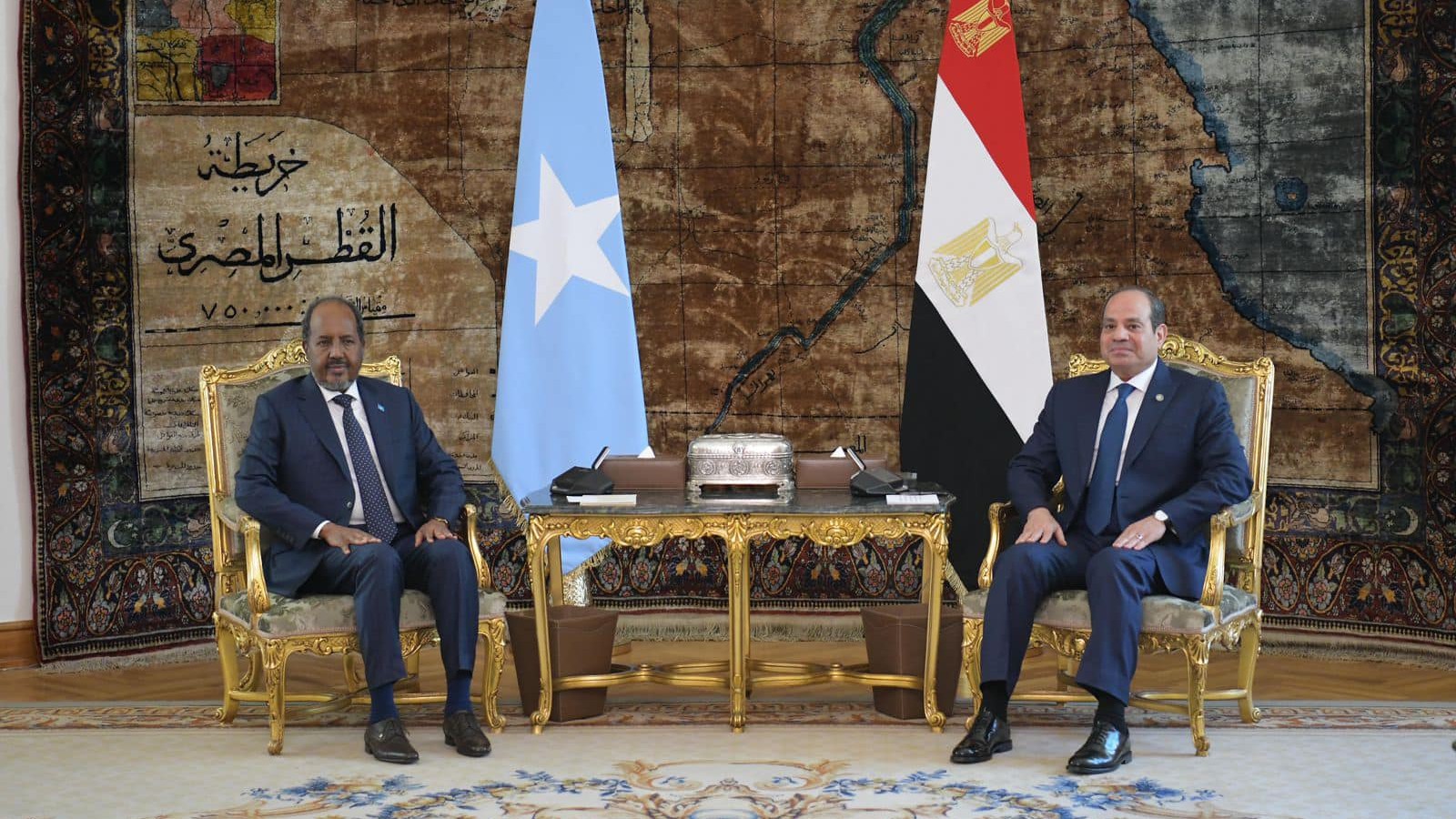
On Thursday, Somalia’s federal government signed a formal memorandum of understanding (MoU) with Egypt focused on expanding bilateral cooperation in maritime transport and port development. This new agreement comes just six weeks after Egypt finalized a separate Red Sea port connectivity deal with Eritrea, marking the latest step in a rapidly shifting alignment of power across the Horn of Africa.
According to Somalia’s official national news agency, the MoU lays out a structured cooperation framework between Egypt’s Ministry of Transport and Somalia’s Ministry of Ports and Marine Transport. Mohamed Nur, Somalia’s top ports and marine transport official, emphasized that the pact delivers multiple strategic benefits for his country. It deepens cross-border international collaboration in the maritime sector, advances Somalia’s core national strategic priorities, lends critical support to the country’s National Transformation Plan, and solidifies Somalia’s expanding influence in both regional and global maritime industries.
The latest agreement follows a high-profile June summit held in Cairo between Egyptian President Abdel Fattah el-Sisi and Eritrean President Isaias Afwerki, where the two leaders agreed to deepen defense coordination and bilateral cooperation. At that meeting, Cairo and Asmara issued a clear joint stance: all governance and security matters for the Red Sea and Gulf of Aden must be handled exclusively by nations that border the waterways. This carefully worded position deliberately excludes landlocked Ethiopia, which has held no sovereign Red Sea access since Eritrea gained independence in 1993.
This unified front has sparked sharp pushback from Addis Ababa. As early as May, Ethiopia’s Ministry of Foreign Affairs publicly accused Egypt of pursuing a deliberate “encirclement” strategy designed to undermine Ethiopia after the country prioritized gaining sovereign direct access to the Red Sea as a core national goal. Ethiopian Prime Minister Abiy Ahmed has repeatedly framed direct Red Sea access as an “existential question” for Ethiopia, tying it to the country’s long-term economic growth and strategic survival, while consistently maintaining that Ethiopia will pursue this goal through peaceful means.
The growing tripartite alignment between Egypt, Eritrea, and Somalia traces its origins to January 2024, when Ethiopia signed a separate MoU with the breakaway region of Somaliland to secure commercial and naval access to the Red Sea. That deal immediately triggered widespread backlash from Somalia and its regional partners. By October 2024, Sisi, Afwerki, and Somali President Hassan Sheikh Mohamud gathered for a tripartite summit in Asmara, where they agreed to strengthen cross-border cooperation on security and border protection. The summit’s final communiqué stressed “unequivocal respect for the sovereignty and territorial integrity of all states”, wording widely interpreted as a direct rebuke of Ethiopia’s deal with Somaliland.
Bilateral alignment between Egypt and Eritrea has continued to deepen in the months following that meeting. In October 2025, Afwerki traveled to Cairo for talks with Sisi, where the two leaders confirmed their governments hold fully converging views on political and security developments in both Sudan and Somalia. The pair reaffirmed their unwavering commitment to upholding the territorial integrity of all nations, voiced explicit support for Sudan’s official Sudanese Armed Forces, and opposed the creation of any parallel governing entities within Sudan.
The new Somalia-Egypt maritime MoU makes clear that a cohesive regional bloc stretching from the Gulf of Suez at the northern end of the Red Sea all the way to the Gulf of Aden in the south is now fully taking shape. Regional analysts have increasingly described the Egypt-Eritrea-Somalia partnership as an emerging “axis of power” that is positioned to exert coordinated diplomatic, military, and economic pressure on Ethiopia from multiple directions. This dynamic compounds existing tensions between the parties, which already include a long-running, unresolved dispute over the Grand Ethiopian Renaissance Dam on the Nile River.
Beyond economic and maritime cooperation, Egypt has also been steadily expanding its military footprint within Somalia as part of the African Union Support and Stabilisation Mission in the country. That expansion has included deploying military personnel, running specialized training programs for Somali security forces, shipping military equipment, and planning joint military exercises with Somali national troops.