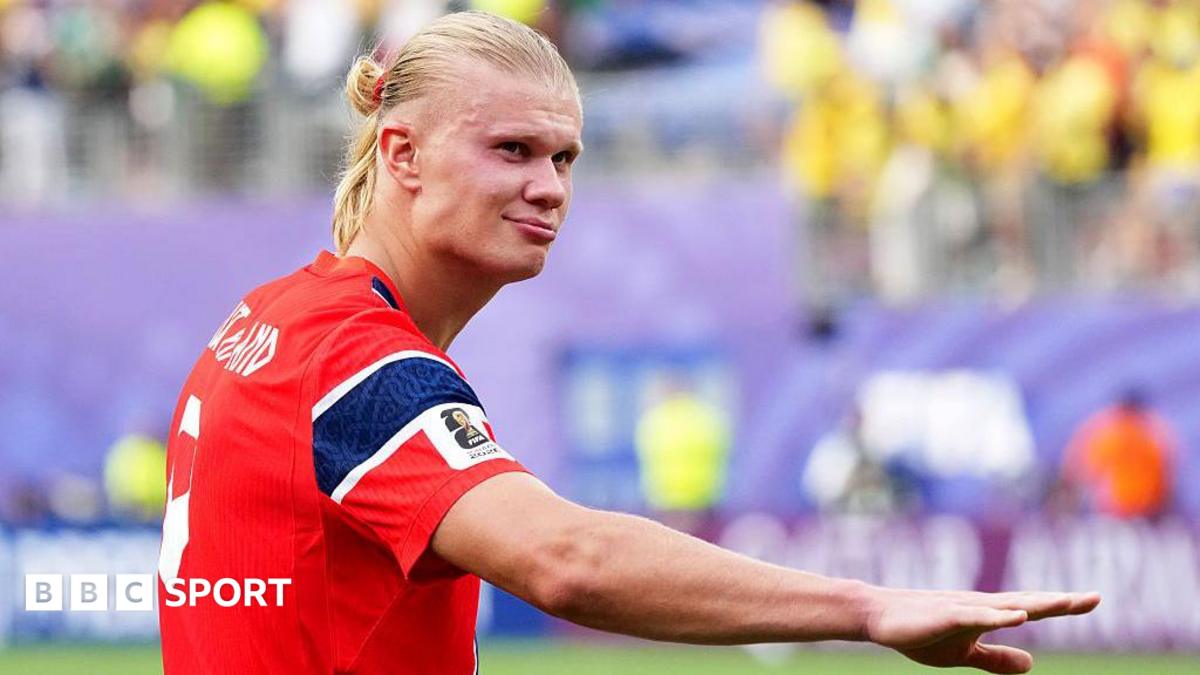
Ahead of one of the most anticipated quarterfinal matches of the 2026 FIFA World Cup, European dark horse Norway has defied pre-tournament expectations to reach the final eight, and all eyes are now on how Thomas Tuchel’s England side can shut down Stale Solbakken’s in-form attacking unit led by lethal striker Erling Haaland.
Few predicted Norway would advance this far, even with their status as an early dark horse pick. After finishing second in Group I ahead of Senegal, the Scandinavian side has knocked out both Ivory Coast and Brazil, netting 12 goals across five matches with Haaland already notching seven tournament goals to his name. Their success stems from a flexible, multi-faceted attacking system built around intelligent build-up play and dynamic off-ball movement that has confounded every opponent they’ve faced so far.
At the root of Norway’s offensive efficiency is their varied approach to playing out from the back. Starting with goalkeeper Orjan Nyland, who has turned in elite distribution throughout the tournament, Norway typically opens with a short build-up: Nyland joins a wide four-man backline to create a numerical overload in the defensive third, while two holding midfielders drop into central spaces to offer passing options. When short passing lanes are closed off, Nyland has a reliable backup: playing long diagonal balls to 6ft 5in target man Alexander Sorloth, who lines up on the right wing to win aerial duels and bring the ball under control. This puts England’s left-back Nico O’Reilly, a 6ft 4in physical defender, in a far more evenly matched aerial battle than Sorloth has enjoyed in previous rounds.
To disrupt this well-oiled build-up structure, Tuchel has two primary tactical options, each carrying distinct trade-offs. The most straightforward approach is a full-pitch man-to-man press, which eliminates Norway’s numerical advantage and puts O’Reilly in position to win physical battles against Sorloth. The major risk of this approach, however, is that it leaves Haaland one-on-one with a single center-back in open central space, a matchup nearly any striker in the world would favor. Most coaches would opt to leave an extra defender near Haaland to crowd him out, but that leaves England outnumbered in the press against Norway’s three-man central build-up.
The second option is a dropped defensive block that prioritizes cutting off passing lanes and limiting space. This approach also carries downsides: it runs counter to Tuchel’s preferred front-foot, aggressive identity, and it allows Norway to control possession, slow the match tempo, and frustrate opponents with patient circulation—something they executed masterfully against Brazil, with playmaker Martin Odegaard dropping deep to dictate play and make it nearly impossible for opponents to win the ball back. This intelligent game management has become a hallmark of Norway’s tournament run.
Drawing lessons from Brazil’s largely successful tactical approach against Norway could give England an edge. The Seleção successfully forced Nyland onto his weaker left foot by cutting off passing options on the right half of the pitch, positioning wingers to pressure Norway’s full-backs and central attackers to mark holding midfielders and free center-backs. Even with Nyland reliably finding Sorloth from long left-footed passes, forcing this pass and committing players to win the second ball around Sorloth could disrupt Norway’s rhythm. For England, which typically lines up with a front two of Harry Kane and Jude Bellingham, pushing holding midfielder Declan Rice higher up the pitch to add extra pressing numbers can create chaotic, high-turnover situations that play to England’s strengths.
While disrupting build-up is important, the biggest challenge remains stopping Haaland, who has already proven unmarkable for most defenses this tournament. The most effective strategy to mute Haaland is cutting off his service rather than trying to mark him one-on-one, and Norway creates most of his chances through intelligent wide movement and overlapping runs. Left-back David Moller Wolfe makes regular underlapping runs that pull opposition midfielders deep, opening up space for left wingers Antonio Nusa and Andreas Schjelderup to cut inside and deliver deep in-swinging crosses to the back post—one of Haaland’s favorite goal-scoring scenarios, alongside runs onto through balls on the left and attacking cut-backs against retreating defenses.
Crowding Haaland out with multiple defenders is one of the only proven ways to limit his influence, as West Ham demonstrated in a 1-1 draw against Haaland’s Manchester City last season, when they used three center-backs and a holding midfielder to man-mark him closely. For England, the challenge is that doubling up on wide players to stop crosses leaves Moller Wolfe free to receive the ball and deliver his own cross into the box—a tricky tactical puzzle that Tuchel must solve.
It would not be surprising to see Bellingham drop deeper into a five-man midfield when England is out of possession to add extra defensive cover, matching the dynamic attacking structure that Norway uses. Beyond defense, one of England’s best tools to neutralize Norway is sustained possession: keeping the ball pins Norway back and allows England to create their own chances using similar wide attacking dynamics that Norway relies on. Just as Moller Wolfe’s underlaps open space for Norway’s wingers, England’s Nico O’Reilly can use the same runs to create 2v1 opportunities against Norway’s full-backs, with pacy wingers drawing defenders deep and cutting the ball back for late arriving attackers— a tactic that has worked for Anthony Gordon throughout the tournament.
Finally, Norway’s commitment to attacking possession often leaves them short of defenders when they turn the ball over. Brazil created multiple high-quality chances on the counter-attack after winning the ball back against Norway, and England’s pacey attacking options including Gordon, Bellingham, Rice and Noni Madueke are well-suited to exploit the open spaces left by Norway’s high pushing defense.
With a spot in the World Cup semifinals on the line, both sides will look to impose their tactical identity, with England tasked with solving a complex puzzle to neutralize one of the most dangerous attacking sides in this year’s tournament.