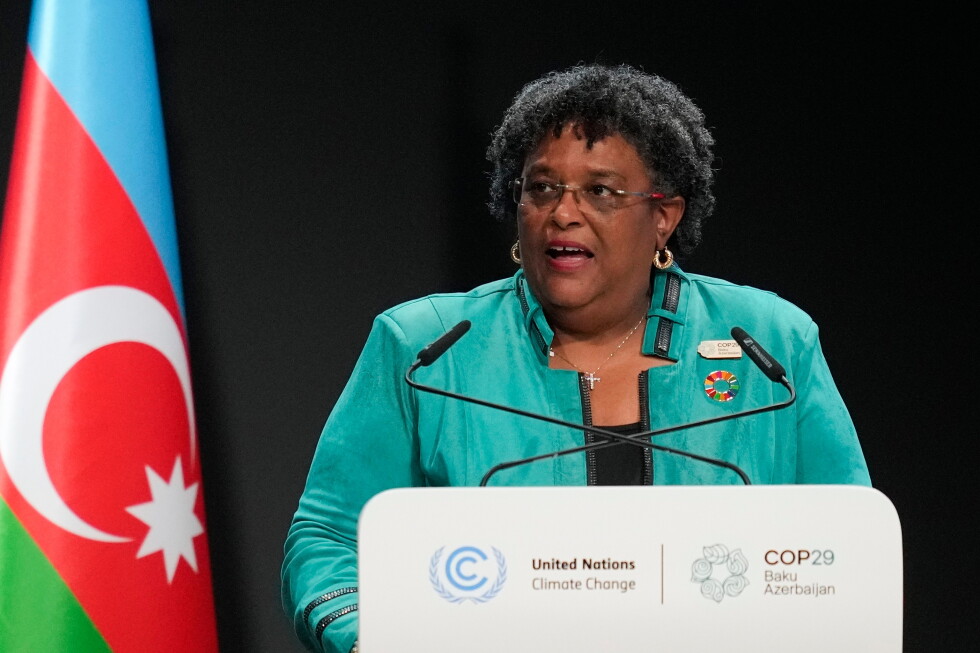
A fiery debate over colonial-era reparations has erupted after a senior former British official triggered widespread backlash across the Caribbean with her extraordinary claim that former British colonies should repay the United Kingdom for supposed historical investments made during imperial rule.
Mia Mottley, the widely respected prime minister of Barbados, delivered a scathing rebuke of the comments this week, labeling the suggestion as nothing short of “asinine” in a public post on the social platform X Thursday evening. In her response, Mottley pushed back forcefully against the narrative that has been put forward, arguing that the idea that descendants of enslaved African people should be expected to compensate former colonial powers for the systems that brutalized and exploited their ancestors is unfathomable.
“The Caribbean does not owe Britain for slavery, for colonial extraction, or for laws that treated African people as chattel,” Mottley wrote. “We are not asking for charity. We are asking for justice, and history itself has already told the truth.”
The controversy stems from remarks made earlier this month by Suella Braverman, a former British Home Secretary who now holds a position with the right-wing, anti-immigration Reform UK party. Braverman made her original comments in a July 3 X post reacting to news that Jamaica intends to file a formal official petition for slavery reparations before the end of 2024. In her post, Braverman claimed the British Empire left a largely positive legacy across the globe, and argued that if the current UK government moves forward with any consideration of reparations claims, former colonies should reimburse Britain for the infrastructure, institutional development and resources the empire put in place that she claims underpin modern democratic systems in former colonies today.
Mottley’s public pushback comes directly on the heels of a key regional gathering this week in St. Lucia, where Caribbean leaders from the Caribbean Community (Caricom), the region’s primary intergovernmental trade and policy bloc, convened to coordinate their collective push for reparations for the transatlantic slave trade and centuries of colonial rule.
The Barbadian leader also suggested that Braverman’s comments are rooted in domestic UK political posturing rather than good-faith engagement with the history of colonialism. “I do not doubt there are some British parliamentarians who want to distract people from the domestic politics of the United Kingdom,” she said. “Those who wish to speak on this matter should first take the time to read enough history to understand it. The Caribbean will not be used as a prop for anyone’s politics.”
Mottley has emerged as one of the most prominent global voices pushing for reparations for colonial-era harms. Just last month, she led a special subcommittee of Caribbean leaders to launch an updated formal reparations manifesto during an international reparations conference held in Accra, Ghana. Under her leadership, Barbados made historic changes to its constitutional status in 2021, formally severing its final ties to the British monarchy as the country transitioned to a full republic. A globally recognized advocate for climate justice as well as reparatory justice, Mottley won a third consecutive term as prime minister in national elections held this past February.
For years, the UK government has maintained a firm stance refusing to offer reparations or formal apologies for the harms of the transatlantic slave trade and colonial rule. In contrast, Caribbean leaders have continued their diplomatic push, calling for a full formal apology from the British Crown and government alongside tangible remedial measures including full cancellation of outstanding sovereign debt held by former colonial states.
Global human rights leaders have backed the Caribbean reparations movement, with United Nations High Commissioner for Human Rights Volker Türk confirming that an estimated 25 million to 30 million African people were forcibly displaced from their home continent during the transatlantic slave trade. Millions of those displaced were sent to Caribbean and American nations to work as chattel labor on colonial plantations, building wealth for European imperial powers while leaving generations of Black communities facing systemic intergenerational harm that persists today.