Across the European continent, decades of rising temperatures tied to climate change have turned wildfires into a growing public health and humanitarian catastrophe, leaving a staggering trail of fatalities over the past 10 years — and scientists warn the death toll will climb even higher in the years ahead if current warming trends continue.
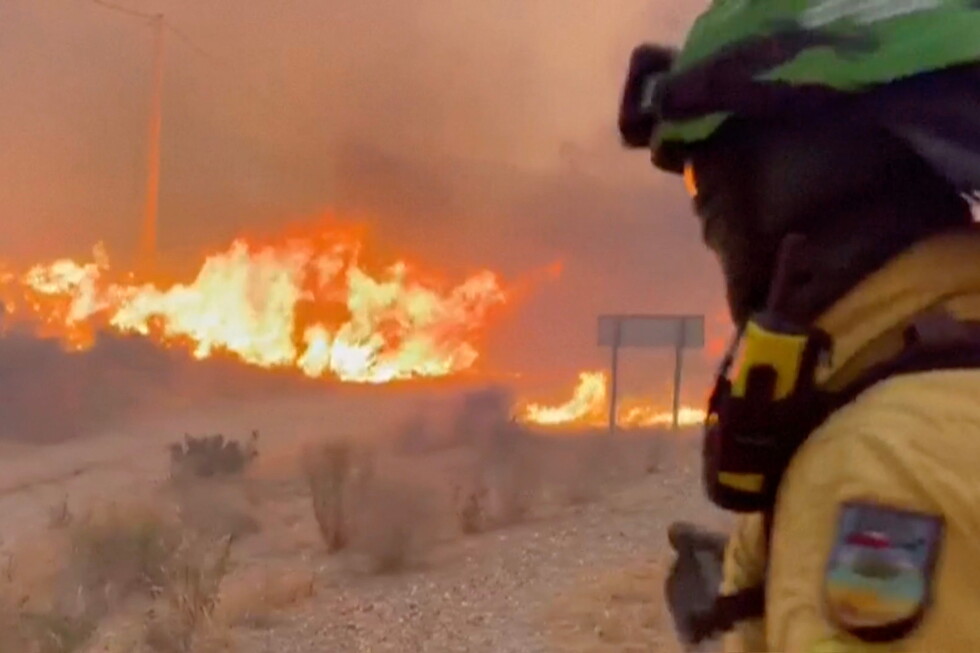
The most recent deadly incident unfolded overnight into Friday, when an intense wildfire tore through southern Spain amid a countrywide heatwave, killing at least 11 people. Separate updates later confirmed the death toll had risen to at least 12, with another 23 residents still unaccounted for, marking this blaze as one of the deadliest wildfire events in Spain’s modern recorded history.
Data from the European Union’s Copernicus Climate Change Service confirms Europe is warming faster than any other continent on the planet. Since the 1980s, regional temperatures have risen twice as quickly as the global average, and 2025 ranks as the third hottest year ever recorded globally, bringing a string of severe, prolonged heatwaves that gripped much of Europe. Climate scientists agree that human-caused warming, driven largely by the combustion of fossil fuels including gasoline, oil, and coal, has worsened extreme heat and drought conditions across the continent. These shifts have dramatically increased both the frequency and intensity of wildfires, leaving many populated and forested regions far more vulnerable to catastrophic blazes.
To understand the scale of the threat, a look back at the deadliest European wildfires of the past decade reveals the consistent human cost of this growing crisis:
In 2018, Greece suffered its deadliest wildfire event on record, when a massive blaze swept through Mati, a popular seaside town just east of Athens. The fire spread so rapidly that it trapped residents and visitors as they tried to escape, leaving more than 100 people dead. Some of those victims drowned while attempting to swim away from the advancing flames. Just five years later, in 2023, another season of extreme wildfires across Greece killed more than 20 people. Among the dead were 18 migrants trapped by what became the largest single wildfire ever recorded in Europe, as they crossed a forested area in northeastern Greece. Last week, the country recorded another fatal loss: a 12-year-old boy and his father were killed by a fast-moving wildfire in northern Greece.
In northwestern Turkey, 10 firefighters and rescue workers lost their lives last July while battling a major wildfire in the forested landscapes of Eskisehir province. The victims included both professional forestry workers and volunteers from the AKUT search and rescue organization. Forestry Minister Ibrahim Yumakli explained at the time that sudden, unexpected shifts in wind direction pushed flames to rapidly surround the team, cutting off their escape route. One of the fallen workers was a 28-year-old man who had returned to his post just two days after returning from his honeymoon, and one AKUT volunteer had spent a full month leading rescue efforts after the catastrophic February 2023 southern Turkey earthquake just months earlier.
Portugal’s deadliest wildfire disaster struck in 2017, when a blaze near Pedrogao Grande, 120 miles northeast of Lisbon, killed 66 people. Most of those victims died trapped in their cars on a single road as they tried to outrun the fast-spreading flames. By the end of that devastating fire season, additional late-year blazes pushed Portugal’s total annual wildfire death toll to more than 120, making 2017 the deadliest year for wildfires in the country’s history. Victims included a one-month-old infant and the baby’s parents. In response to the catastrophe, the Portuguese government implemented sweeping reforms to improve wildfire prevention and response: public education campaigns targeting accidental fire ignition, a new rapid-response firefighting task force, thousands of kilometers of fuel-reducing firebreaks, and expanded access to firefighting equipment and resources across high-risk regions.
On the Mediterranean island nation of Cyprus, officials have directly linked growing wildfire severity to long-term climate change, with at least six people killed in extreme blazes over the past five years. In July 2021, the most destructive wildfire in Cyprus’ modern history swept through mountain villages, leaving the charred remains of four Egyptian laborers found outside a burned-out community. Last July, another major blaze killed an elderly couple, whose bodies were found inside their gutted car on the side of a mountain road. That blaze burned roughly 50 square miles of forested hillside in just hours, a speed of spread that led President Nikos Christodoulides to note there had never been a wildfire of that scale or ferocity in the country’s recorded history. The blaze was fueled by a perfect combination of extreme conditions: strong gusty winds, record high temperatures, and extremely parched vegetation after three consecutive winters of far-below-average rainfall.
Last August, a major analysis by international climate research initiative World Weather Attribution confirmed the link between human-caused climate change and extreme Mediterranean wildfire severity. The study found that warming-driven temperature increases and reduced rainfall made massive 2023 wildfires across Turkey, Greece, and Cyprus burn far more intensely than they would have in a pre-warming climate.