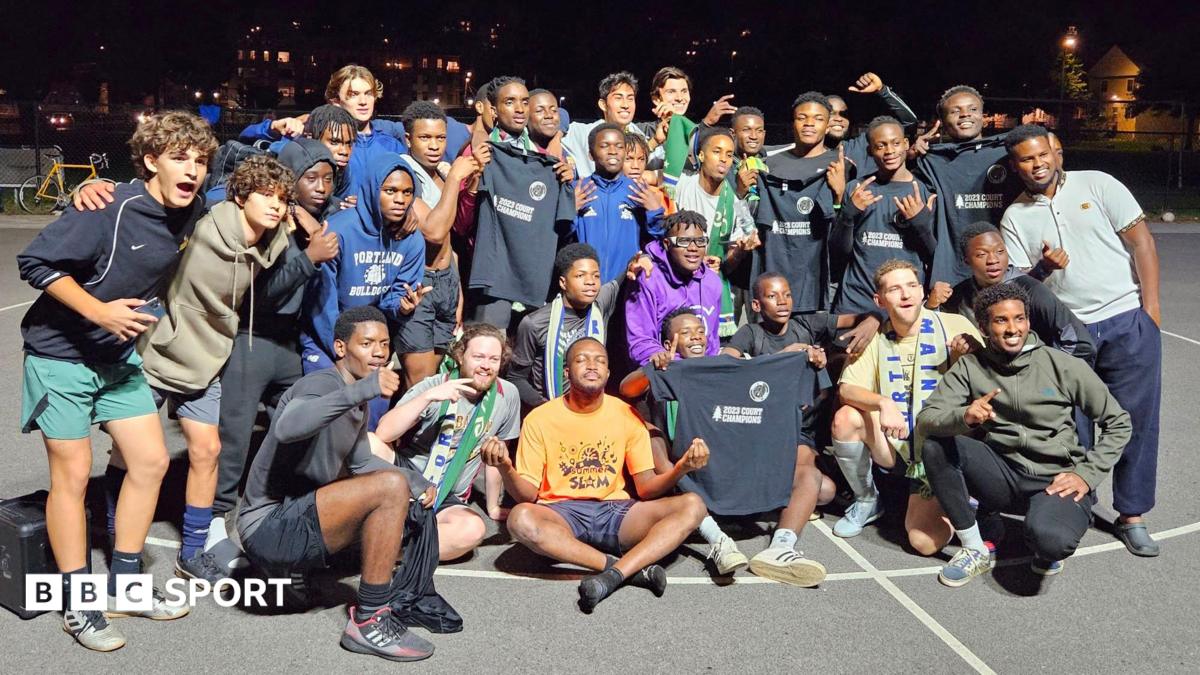
Far from the packed stadiums and global spotlight of the 2026 FIFA World Cup being hosted across North America, a rough asphalt pitch in Portland, Maine’s Kennedy Park is demonstrating just how transformative football’s unifying power can be for vulnerable communities. For hundreds of immigrants and refugees who gather here for informal pick-up matches, the beautiful game has become far more than a pastime: it is a lifeline, a common language, and the foundation of a tight-knit support network that has sustained its members through one of the strictest immigration crackdowns in recent U.S. history.
What began as a casual weekly gathering in 2021 has grown into a diverse community connecting players from more than 40 countries, all bound by their shared love of football and experiences of building new lives in a foreign country. For teenagers like George Lusolo, who arrived in the U.S. from the Democratic Republic of Congo in 2018 with his mother to seek asylum, the Kennedy Park pitch offered a sense of belonging when everything else felt unfamiliar. After being held in immigration detention in Texas and staying at a New York shelter before resettling in Portland, Lusolo stumbled on a social media post about the pick-up games and immediately found his people.
“I really didn’t know the language. I didn’t know anyone here,” Lusolo, now 19, recalled. “Everything was so hard for me and my mom when we first arrived. But when I got to the pitch, I saw people who had gone through the same struggles as me. Soccer has always been my therapy – I’ve played since I was a little kid growing up in Kinshasa. Playing alongside people who understand what you’ve been through? It feels like home.”
Fellow Congolese immigrant Deji Kuribanza, who resettled in the U.S. after passing through Angola, echoed that sentiment, noting that football acts as a universal bridge that eliminates language barriers. “You don’t need to speak the same language to play,” the 18-year-old explained. “Just point to your feet, gesture for the ball, and you’re connected. It’s such a simple, beautiful thing.”
That tight bond has been put to the test in recent months, as the second Trump administration has ramped up enforcement actions by U.S. Immigration and Customs Enforcement (ICE). The independent Migration Policy Institute estimates that ICE has arrested at least 400,000 people nationwide since January 2025. While the federal government maintains that only people who threaten public safety and national security are targeted, and says legal residents face no risk, immigrant communities across Maine have been thrown into panic by widespread raids that rights groups say have swept up dozens of innocent people with no criminal records.
For the Kennedy Park community, the fear hit close to home last year, when 17-year-old regular player Joel Andre and his entire family were detained by ICE. After their initial asylum application from DR Congo was denied, the family tried to cross into Canada to file a new claim, unaware of a bilateral agreement that forces asylum seekers to file their claim in the first safe country they enter. That technicality led to their detention when they returned to the U.S.
In the wake of the raids, many players and their families were too afraid to leave their homes, with several immigrant students missing weeks of school, said Anthony Fiori, the local photographer and community organizer who coordinates the Kennedy Park pick-up games. But rather than fracture the community, the crisis brought its members closer together. Organizers arranged more than 70 grocery deliveries to housebound families, and the entire community rallied behind a public campaign to secure Andre’s release from detention. After four months of advocacy, they won the teenager’s release, though he still carries lasting psychological trauma from his time in custody.
“The conditions in those detention facilities are terrible – the food is inadequate, and some holding cells are kept freezing,” said Todd Pomerleau, the attorney who represented Andre’s family. “Joel is a talented young footballer, a bright kid with so much going for him. But this experience changed him. Anyone who goes through that never comes out the same – he and his family need ongoing support to heal.” Andre and his family are now continuing to fight their asylum case in U.S. federal court.
Despite the fear and uncertainty that hang over the community, many players see their regular matches on the Kennedy Park asphalt as a way to challenge negative stereotypes about immigrants and build acceptance in their new home. “A lot of people here only see immigrants as stereotypes, that we come here and take things and don’t contribute,” Kuribanza said. “But when locals walk past the park and see us laughing, playing, enjoying the game together, it changes how they see us. It shows we’re just people who want the same things everyone else wants.”
Fiori, whose own family has lived in Maine for nine generations, notes that the community fills a unique gap in a state that remains one of the least demographically diverse in the country. “To have a space where people from every background, every country, every generation can come together, play, and become friends? That’s really special,” he said.
With the 2026 FIFA World Cup taking place just a few states away, the community has been swept up in tournament excitement, especially after DR Congo – the home country of many Kennedy Park players – reached the last 16 of the competition, its first World Cup knockout stage appearance in more than 50 years. For many of the young players, the tournament has stoked big dreams for their own futures. Kuribanza says he harbors a dream of one day playing on the World Cup stage himself, while Lusolo hopes to turn his love of football into a professional career representing DR Congo internationally.
Whether they make it to the global stage or not, the players of Kennedy Park already embody the core message of the World Cup: football transcends borders, backgrounds, and hardship to bring people together. For these immigrants and refugees, a simple asphalt pitch in a small Maine park has become a place to call home.