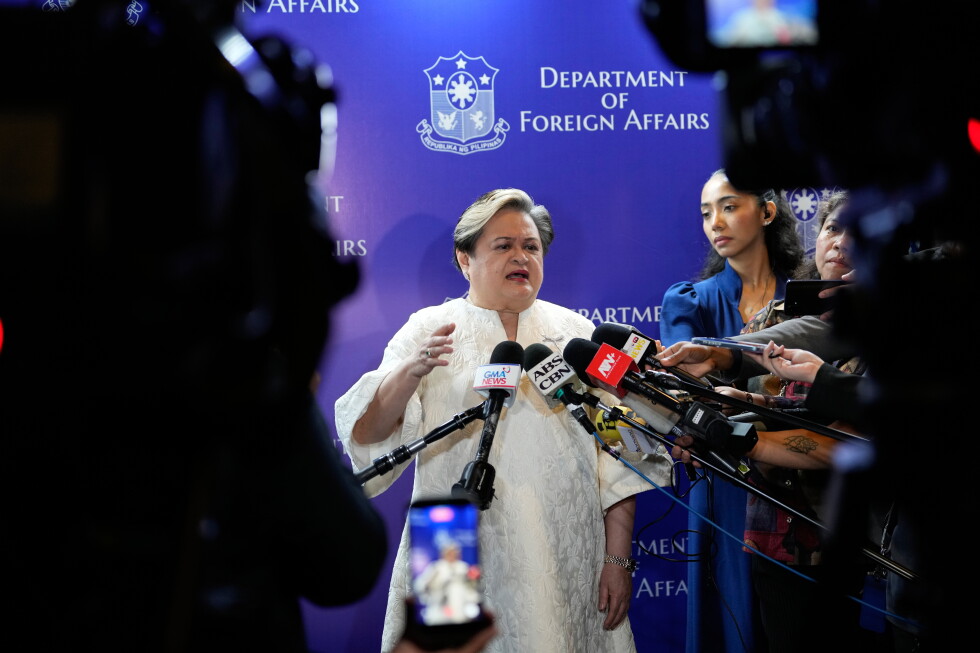
Eight years after a landmark international arbitration tribunal delivered a historic ruling that reshaped global discourse over the contested South China Sea, the Philippines held official commemorations on Friday to reaffirm the legality and enduring importance of the 2016 decision. The ruling, which emerged from an arbitration case Manila launched under the United Nations Convention on the Law of the Sea (UNCLOS) in 2013, invalidated Beijing’s broad territorial claims across the key strategic waterway, and has since been adopted by Western powers and regional allies as a cornerstone for challenging China’s growing maritime assertiveness.
China has consistently refused to acknowledge the process or the outcome of the arbitration. Beijing has labeled the July 12, 2016 ruling from the UNCLOS-backed tribunal “illegal, null and void,” calling the entire proceeding a political sham. To this day, China maintains territorial claims to nearly the entire South China Sea — a critical global trade route that carries an estimated $3.4 trillion in annual commerce, and one that is the site of overlapping competing claims from the Philippines, Vietnam, Malaysia, Brunei and Taiwan. For decades, the overlapping claims and frequent standoffs have marked the region as one of the most dangerous potential flashpoints for armed conflict in Asia.
In remarks released ahead of the anniversary, Philippine Foreign Secretary Maria Theresa Lazaro emphasized the legally binding nature of the ruling, framing it as a steady guide for nations navigating competing maritime demands. “When the waters grow turbulent, when unilateral claims cloud the horizon and when the shadow of coercion looms, nations need something far more permanent than political convenience,” Lazaro said. “They need a lighthouse.”
The United States, which is the Philippines’ oldest defense ally in Asia, has repeatedly pressured Beijing to comply with the 2016 ruling. Successive U.S. administrations — from the prior Biden administration to the current Trump administration — have reaffirmed that Washington is legally obligated to come to Manila’s defense under their 1951 mutual defense treaty if Philippine military assets, commercial vessels or aircraft come under armed attack in the disputed waters.
Australia has also joined the international pushback against Chinese maritime activity. Australian Foreign Minister Penny Wong used the anniversary to criticize Beijing, stating that Australia would “continue to register our concerns about China’s vessels engaging in destabilizing and dangerous conduct in the South China Sea.”
As of Friday, China had not issued an immediate public response to the commemorations. But in a recent statement released through its embassy in Manila, Beijing reiterated its long-held position that it will never recognize the ruling. “The award will not alter the historical and factual basis for China’s sovereignty over the islands of the South China Sea and their adjacent waters,” the embassy said. It added that the ruling “will not weaken China’s resolve and determination to safeguard its sovereignty and maritime rights and interests.”
The 2016 tribunal’s ruling, which sided overwhelmingly with the Philippines on most core claims, explicitly stated that UNCLOS provided no legal foundation for China’s claims to historic resource rights across large swathes of the South China Sea that fall outside its internationally recognized territorial sea and exclusive economic zone. UNCLOS, the global treaty that establishes the legal framework for all maritime activity and national ocean claims, entered into force in 1994 and has been ratified by more than 170 nations and parties — including both China and the Philippines.
In recent years, territorial confrontations in the South China Sea have grown more frequent, with the most persistent standoffs occurring between Chinese maritime forces and fishing fleets on one side, and Philippine and Vietnamese counterparts on the other.