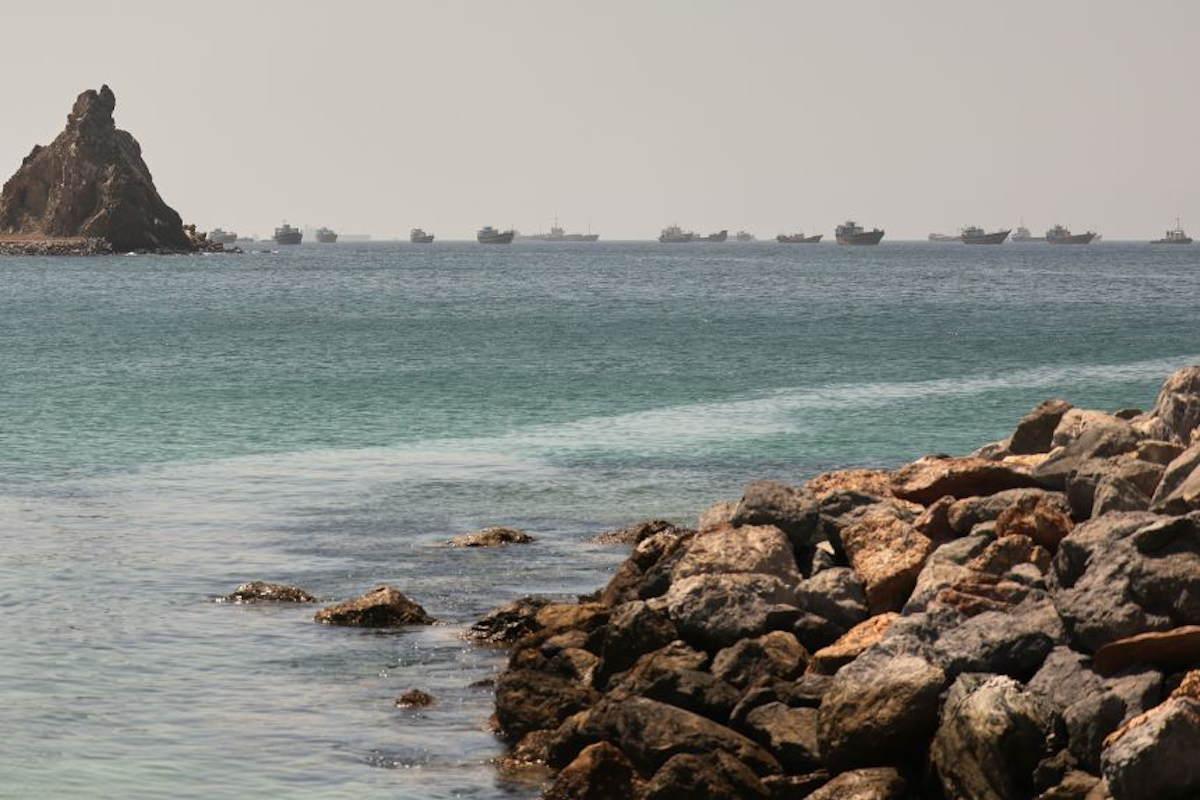
Tensions around the strategically critical Strait of Hormuz have escalated sharply in recent weeks, following a series of Iranian actions on commercial shipping that have drawn a direct military response from the United States and thrown global energy markets into uncertainty. What Tehran frames as a defensive assertion of sovereignty over its adjacent waters is increasingly being analyzed as a high-risk short-term tactical gambit — one that could backfire spectacularly, leaving Iran politically and economically isolated across the Middle East if Tehran does not adjust its course quickly.
The United States has launched a new wave of military strikes targeting Iranian assets, with an unclear timeline for operations but a clear, bounded core goal: guaranteeing unimpeded passage through the strait, which Iran has asserted full sovereign control over. This new round of confrontation has opened the door to both new negotiating possibilities and catastrophic escalation for Tehran.
Shipping data underscores the immediate disruption of Iranian actions: on July 8, only 13 oil tankers completed transits of the strait, down from a seven-day daily average of 33 crossings prior to the escalation. The sharp drop in traffic came after Iranian forces targeted at least three commercial vessels, reigniting open hostilities with U.S. military forces deployed in the region.
Global oil markets have not yet adjusted pricing to account for a full closure of the Strait of Hormuz, through which roughly 20% of the world’s daily oil supplies transit. But analysts warn market volatility and anxiety will spike sharply in the coming week if the two sides fail to reach a temporary truce to de-escalate.
Current discussions around a potential truce center on a vague compromise framework under which Iran would drop open threats to block the strait, without formally committing to unrestricted passage in writing. This tactical, short-term agreement masks far deeper medium- and long-term strategic calculations for all involved.
By following through on threats to disrupt Hormuz traffic, analysts argue Iran has already squandered its most powerful long-term strategic leverage: the implicit threat of closing the strait, a tool that only retained value as long as Tehran never actually used it. As regional powers move to bypass the choke point entirely, that leverage has been permanently weakened. Gulf Cooperation Council states have already accelerated development of alternative pipeline routes that would carry oil exports around Hormuz, connecting production fields directly to the Indian Ocean and Mediterranean Sea. Once these alternative routes are fully operational, the only oil that will remain dependent on Hormuz transits is Iranian crude itself, leaving Tehran trapped by the very blockade it imposed.
Some factions within Iran’s leadership argue that leveraging the strait for short-term gain is a net strategic win. Their calculation holds that even a partial disruption of traffic, limited to sporadic attacks on commercial shipping rather than a full closure, can be enough to push global insurance premiums for shipping through the strait higher, driving up global oil prices and achieving maximum geopolitical impact with minimal direct military commitment. Even with 90% of traffic continuing as normal, the elevated risk premium would shift global markets in Iran’s favor, per this reasoning.
In response to this threat, hardline factions in U.S. policy circles have floated a far more extreme option: a full military occupation of Iran’s Kharg Island, the major oil export terminal that controls northern access to the Strait of Hormuz. Critics warn this is a reckless proposal that would drag the U.S. into another open-ended Middle Eastern quagmire, echoing the costly failures of the Vietnam and Iraq wars. If U.S. forces occupied Kharg, they would immediately become fixed targets for Iranian missile batteries that have been pre-positioned and hidden across the Iranian mainland, forcing the U.S. to escalate further to protect occupying troops and sinking Washington deeper into an unwinnable conflict.
While Israeli leadership has openly pushed for full regime change in Tehran to eliminate Iran’s nuclear program and regional influence, most other major regional powers — including Turkey, Saudi Arabia, Egypt, and Pakistan — oppose this outcome. These states currently maintain a transactional, pragmatic alignment with the U.S. but have fraught, tense relations with Israel. A full regime change that installed a pro-U.S., pro-Israel government in Tehran would completely upend the regional balance of power, forcing every state in the Middle East to renegotiate their strategic relationships, a prospect no existing government views as desirable. While no regional power supports a nuclear-armed Iran or Iranian control of the strait, a pro-Israel Tehran is seen as a far greater threat to their national interests.
Against the backdrop of already overlapping global crises — an open, grinding war in Ukraine, tense undefined strategic competition with China, and accelerating nuclear rearmament in North Korea — analysts question whether launching an open-ended military adventure in Iran makes any strategic sense for the U.S.
Currently, Iran’s entire strategic approach to the standoff remains rooted in short-term calculus, combining ongoing threats to Hormuz with incremental progress in enriching fissile material for a potential nuclear weapon. Both the U.S. and Iran are currently pursuing competing election-tied strategies: the Trump administration is seeking a quick resolution to the standoff to avoid it becoming a liability for Republican candidates in November’s midterm elections, while Iran aims to keep the threat of disruption alive through the election cycle to extract maximum concessions.
But this Iranian strategy, much like its threats to block Hormuz, has a very limited shelf life. Trump’s willingness to negotiate concessions will disappear almost immediately after the midterm votes are counted. Furthermore, the combination of Iran’s nuclear progress and its chokehold on Hormuz has created an unexpected convergence of interests among regional powers opposed to Tehran, cutting across pre-existing divides. Turkey, Saudi Arabia, Pakistan, and India all share an interest in pushing back against Iran’s actions, and with sufficient time and diplomatic outreach, could be convinced to join a coordinated effort to reopen the strait and roll back Iran’s nuclear program. Such a coordinated regional push would look very different from the U.S.- and Israeli-led efforts Iran has faced to date, creating new strategic openings and risks for both Israel and Iran. For Tehran, the window to adjust course and strike a favorable deal is closing rapidly.