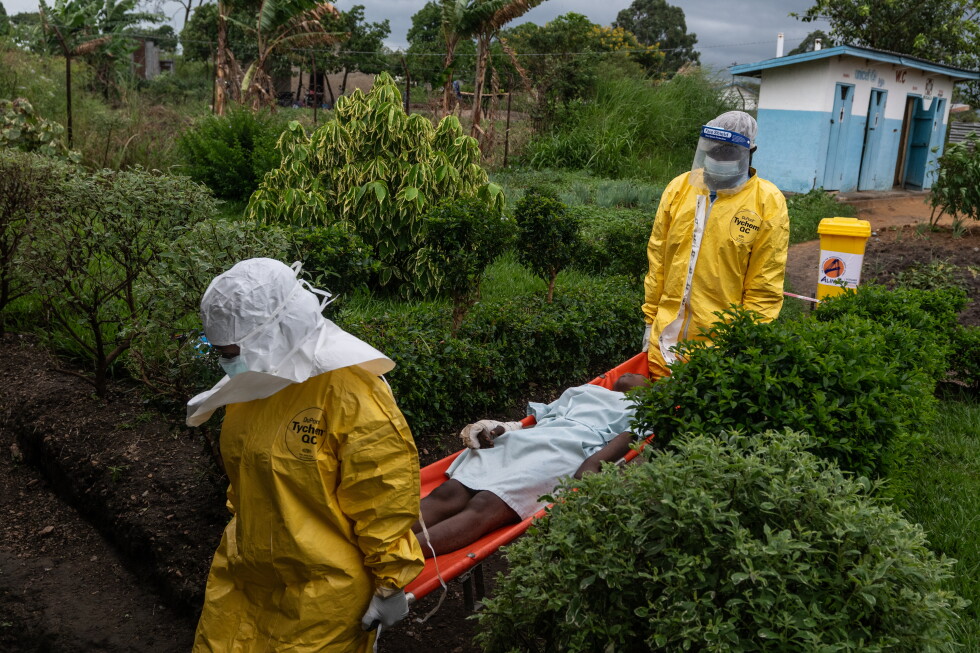
BUNIA, Democratic Republic of Congo – A growing crisis is unfolding at the epicenter of the latest Ebola outbreak in eastern Congo, where frontline healthcare and response workers have halted work to protest months of delayed salaries and benefits, putting national and international efforts to curb the rapidly spreading virus at severe risk.
The current outbreak, which was formally declared on May 15, has already become one of the most severe on record. Latest government data counts 1,708 confirmed cases and 580 fatalities, with health officials acknowledging the virus is spreading faster than response teams can contain it. Ituri province, one of three affected eastern provinces, bears the brunt of the crisis, recording the majority of cases and deaths.
Multiple frontline workers – including epidemiologists, surveillance officers, contact tracers, community outreach staff, burial teams, and security personnel – confirmed to the Associated Press that they have received no wages or hazard bonuses since the outbreak was first announced. Beyond unpaid pay, workers also report severe shortages of personal protective equipment and systemic unfair treatment from provincial and national response authorities.
“Since the Ebola outbreak was declared, we have been repeatedly demanding payment for the work we put in every single day,” Dr. Biensi Kano, a member of Ituri’s capital Bunia epidemiological surveillance committee, told AP. The lack of compensation, he explained, has pushed workers and their families into crippling financial instability: “Non-payment of our benefits exposes us and our families to significant socio-economic difficulties and seriously undermines our living conditions.”
Over the weekend, Ituri’s frontline workforce issued an official ultimatum to national and provincial authorities: pay all outstanding wages within 24 hours or face a full-scale strike. By Tuesday, dozens of workers had already suspended their duties, even before an official strike declaration was made. A group of workers organized a public protest outside the Rwampara Ebola Treatment Center on Monday, setting fire to tires and sparking brief local panic before police intervened to disperse the crowd and restore order.
Dr. Ben Bakule, a community contact investigator, described the frustration of putting his life on the line for no pay. Just weeks prior, Bakule narrowly escaped death when a group of hostile local residents attacked him and his team while they traced Ebola contacts in a village in Djugu territory, a common hazard for response teams working in the region. “We spend our own money on transport to get out to remote communities to do this work. We thought we would be rewarded for our service,” Bakule said. “At the moment, nothing is going right because we’re not being paid. We don’t deserve this sort of treatment. We risk dying for nothing – it seems like this government wants this epidemic to continue.”
Similar frustration was echoed by Dr. Ghislain Maneba, an epidemiologist and community investigator working in the Rwampara health zone, the center of the province’s outbreak response. “We are doing everything we can to make the public understand how dangerous this disease is. I came here to save people’s lives, but this is how I am thanked. We work day and night without a single payment,” Maneba said.
The outbreak’s timing adds another layer of gravity to the work stoppage: the strike comes just as enrollment is set to begin for clinical trials of new treatments for the Bundibugyo strain of Ebola, which is responsible for the current outbreak. The World Health Organization’s Dr. Anne Ancia, Congo’s top WHO representative, confirmed Tuesday that the virus is already spreading faster than expected, driven by widespread population movement and persistent insecurity in the region, with key treatment centers already operating near full capacity.
Akilimali Pierre, incident manager at Congo’s National Institute of Public Health, acknowledged payment delays may stem in part from the ongoing closure of Bunia’s airport, which has slowed the movement of supplies and funds into the outbreak zone. Ituri provincial officials said they have held meetings with protesting workers and are working to address their concerns, but the national government has not yet issued an official response to requests for comment.
Workers already face a litany of additional barriers to their work beyond unpaid wages and equipment shortages: repeated violent attacks from skeptical local communities, widespread misinformation about the virus, and systemic mismanagement from response leadership. Just last month, during a visit to Mongbwalu – the outbreak’s epicenter mining town – Congolese Health Minister Roger Kamba publicly promised response teams that the government was prioritizing their pay and working conditions, stating “All doctors, all nurses and all staff working on the response will be fully supported. We have the money for that.” But frontline workers say the promise has yet to translate into deposited paychecks.
For local residents in Ituri, where outbreak control measures have already disrupted local economies and left many facing financial hardship, the work stoppage has sparked deep anxiety that the crisis will only escalate. “I fear that response efforts will collapse, which will make daily life even harder for all of us,” said Anifa Kito, a Bunia market vendor selling tomatoes. “I would ask the authorities to resolve this situation before things get any worse.”