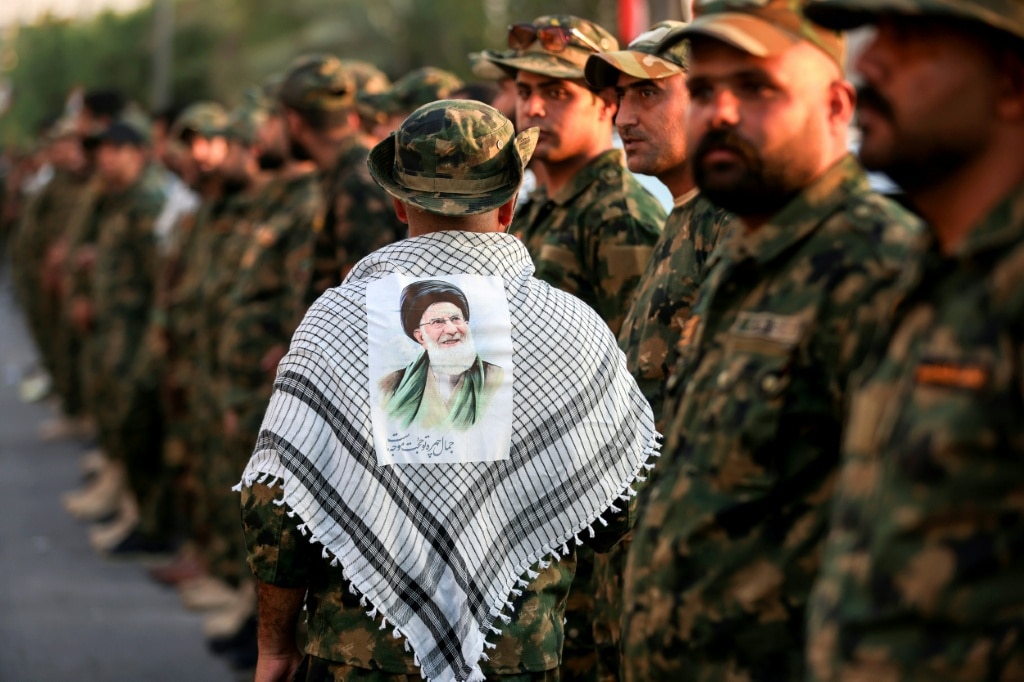
Crowds of mourners packed the boulevards of Iraq’s holy city of Najaf on Wednesday to honor the passing of Iran’s late supreme leader Ali Khamenei, as his casket was paraded through the city ahead of final burial in Iran later this week.
Khamenei was killed in a US-Israeli strike on February 28, alongside several of his relatives, triggering a new wave of open conflict across the Middle East. Iran has planned a six-day sequence of national funeral ceremonies to consolidate national unity and project regional strength in the aftermath of the attack, with a full day of events dedicated to neighboring Iraq, a major Shia-majority state with deep religious and political ties to Tehran.
The Najaf processions unfolded as fresh fighting erupted between the United States and Iran in the strategic Strait of Hormuz, further dimming already faint hopes for a negotiated ceasefire to end the escalating regional conflict. The US military announced it had targeted dozens of Iranian positions in retaliation for Iranian attacks on three commercial vessels in the strait; shortly after, Iran’s Islamic Revolutionary Guard Corps confirmed it had struck US military installations in Bahrain and Kuwait in response.
Senior Iraqi political leaders and government officials received Khamenei’s remains at Najaf International Airport on Tuesday night, with Iranian President Masoud Pezeshkian and one of the late leader’s sons in attendance at the handover. Iraqi authorities declared Wednesday a national public holiday to allow residents to participate in the commemorations, with processions kicking off at 6 a.m. local time.
Thousands of security personnel were deployed across the city to manage the swelling crowds, as thousands of mourners pushed toward the truck carrying Khamenei’s casket to touch the wooden surface, on its route toward the Shrine of Imam Ali — one of Shia Islam’s most sacred sites. Dozens of senior Shia clerics waited at the shrine to lead prayers over the casket before it was transported north to the city of Karbala for a second public procession. Khamenei’s final burial is scheduled for Thursday in his native northeastern Iranian city of Mashhad.
While Khamenei’s eldest son Mostafa was present at the airport handover, his successor Mojtaba Khamenei — appointed supreme leader just days after his father’s killing — has not made any public appearances since taking the role, releasing only written statements to communicate with supporters.
Many mourners traveled for hours across Iraq to participate in the processions. Mohammed al-Bayati, a 30-year-old Iraqi who made the trip to Najaf, called the event “an opportunity not to be missed to participate in the funeral of the person who challenged the power of America and Israel.”
As the center of global Shia religious scholarship and home to Grand Ayatollah Ali Sistani, Iraq’s highest-ranking Shia religious authority, Najaf holds unique spiritual significance for Shia Muslims worldwide. Many of the faith’s most senior clerics, including Khamenei’s predecessor Ayatollah Ruhollah Khomeini, have studied, taught, or lived in the city’s historic seminaries.
After the Najaf ceremonies conclude, Khamenei’s remains will travel 60 kilometers north to Karbala, home to the shrines of Imam Hussein and his brother Abbas — another pair of the faith’s most revered figures. The seventh-century death of Imam Hussein in battle remains the defining event of Shia history, drawing millions of pilgrims to Karbala and Najaf every year. Banners hung across Karbala ahead of the procession read “we bid you farewell” and “the one who humiliated America,” alongside large portraits of the late leader. Hundreds of volunteer stalls along the procession routes in both cities offer free food and water to mourning attendees.
The spiritual and political bond between Iran and Iraq runs deep for the two Shia-majority nations, though the relationship has shifted dramatically over the past four decades. Esmail Qaani, head of the IRGC’s Quds Force, told Iranian state media that the extensive preparations for the funeral by Iraqi authorities and civilians “show the depth of the spiritual bond between the two great nations of Iraq and Iran to the whole world.”
Ties between the two countries were openly hostile during the 1980s, when Iraqi dictator Saddam Hussein — who violently repressed Iraq’s Shia majority — launched a brutal eight-year war against the newly formed Islamic Republic of Iran. But after Saddam was ousted from power in the 2003 US-led invasion, and Shia-dominated governments rose to rule in Baghdad, the two states formed a close strategic alliance. Today, Iran wields significant influence over Iraqi politics and backs a network of armed factions within the country, many of which joined the regional war after Khamenei’s killing by launching attacks on US targets inside Iraq.
Haidar Jaafar, a mourner who traveled from the southern Iraqi city of Basra to attend the procession, predicted millions would turn out to honor Khamenei. “Even those who do not align with Iran, just because he was killed by Israeli-American hands,” he explained, would come to pay their respects.