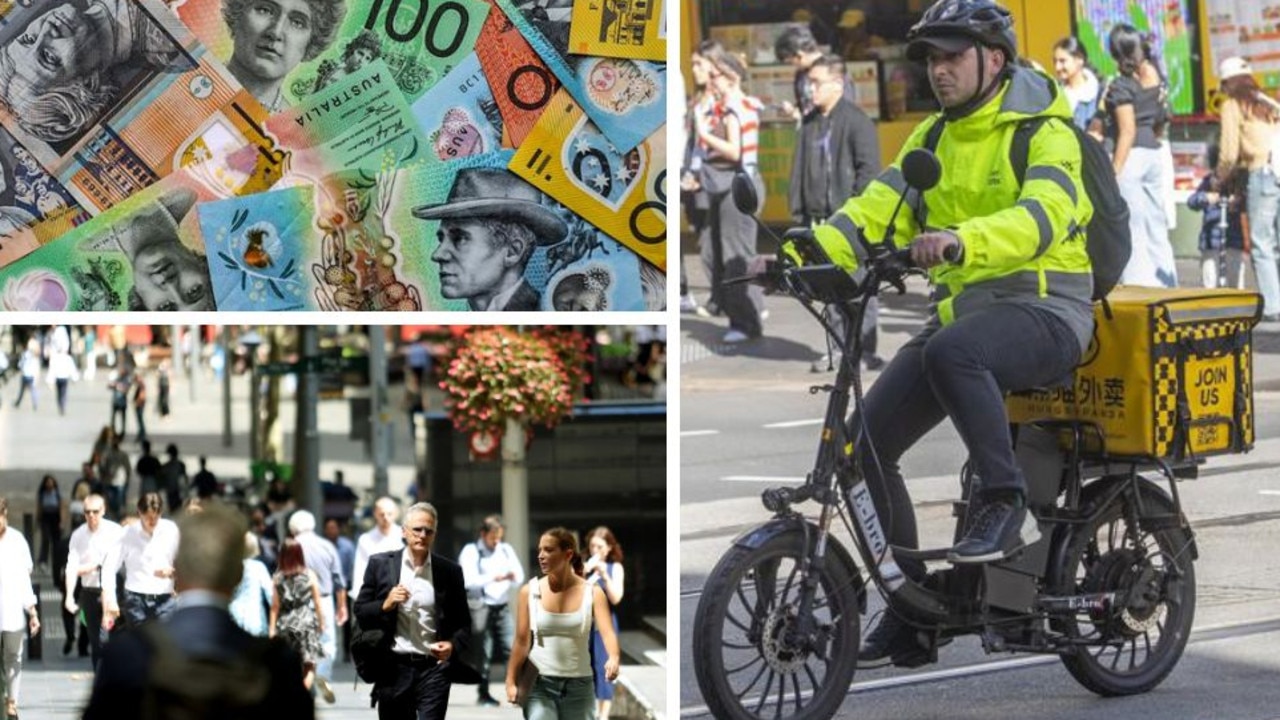
Australia’s post-pandemic economy is facing deep structural vulnerabilities that are leaving ordinary households trapped in a cycle of eroding purchasing power, with living standards stuck near multi-year lows and workers forced to make tough tradeoffs to keep up with rising costs, new reports from leading global and domestic economic bodies have confirmed.
The Organisation for Economic Co-operation and Development (OECD) has issued a stark warning that persistent high inflation has outpaced wage growth across Australia, creating a sustained drag on household incomes that shows little sign of reversing even as the national labor market maintains a broadly solid headline performance. Unlike many other advanced economies that have bounced back from post-pandemic inflation shocks, Australia remains among a small group of OECD nations where real wage erosion is set to continue, with the country’s minimum wage set to fall in inflation-adjusted terms between April 2025 and April 2026. This decline disproportionately hits the lowest-paid Australian workers, compounding already severe cost-of-living pressures.
Inflation-adjusted wage declines have been recorded in other wealthy nations including New Zealand, the Czech Republic, Italy and Sweden, but most of these European economies have since recovered lost ground. The OECD’s data confirms that both Australia and New Zealand are unique among developed countries for their failure to rebound, with living standards in both nations still stuck near the troughs hit after the COVID-19 pandemic.
To offset the rising cost of basic goods and services, Reserve Bank of Australia (RBA) chief economist Sarah Hunter outlined two primary coping strategies households are adopting: cutting discretionary spending entirely, or increasing their working hours to boost total incomes. Speaking at the recent Australian Conference of Economists, Hunter explained that post-pandemic data already bears out this trend. Joint research conducted by the RBA and the International Monetary Fund found clear evidence that households have responded to cost-of-living pressures by expanding their labor supply. Most notably, households with larger mortgage balances, which face greater exposure to rising interest rates, are significantly more likely to enter or re-enter the workforce to cover higher monthly repayments.
But the ability of households to work their way out of financial pressure is set to be tested by a coming cooling in the labor market, a separate report from Deloitte Access Economics warns. The firm forecasts that the combination of persistent high inflation and elevated interest rates will push the national unemployment rate higher over the next 12 months, rising to an average of 4.9% in the 2026-2027 financial year before peaking near 5% by 2028. That increase in joblessness will only come after inflation cools sufficiently to allow the RBA to begin cutting interest rates.
Deloitte projects that headline inflation will remain above 4% for the remainder of the 2026 calendar year, extending the financial strain on households that has already stretched budgets thin. Deloitte Access Economics partner Stephen Smith noted that multiple overlapping shocks have left the Australian economy exposed: inflation has reaccelerated, interest rates have already climbed to multi-year highs, and the oil price shock sparked by Middle East conflict remains unresolved. “To date, 2026 has revealed the vulnerabilities that have developed within the Australian economy over recent history. Australia is now structurally exposed in ways that have become hard to ignore,” Smith said.
The firm predicts that the RBA will implement a fourth interest rate hike in August, lifting the official cash rate to 4.60% before holding rates steady for the following 12 months. The OECD echoes this downbeat outlook, projecting that real wages in Australia will fall a further 1% by September 2026, driven by a temporary inflation spike tied to the conflict between the US, Israel and Iran. The dispute led to the closure of the Strait of Hormuz, which disrupted 20% of global oil and gas supplies and pushed crude prices up to roughly $US120 per barrel before a tentative peace agreement was reached. While prices have since fallen back to pre-conflict levels around $US70 per barrel, the volatility has already left a mark on domestic inflation. Financial services firm AMP estimates that every $US10 increase in global oil prices adds an extra 10 cents per liter to Australian fuel prices.
Australia’s most recent official inflation data, released for the 12 months ending May 2026, put annual inflation at 4.0%, down slightly from 4.2% in April. Both readings remain well above the RBA’s official 2-3% target inflation range. The modest cooling recorded in May was almost entirely driven by the federal government’s temporary cut to the national fuel excise, which halved the levy and pushed automotive fuel prices down 11.9% in May following a 7.0% drop in April.